Companion (R: 2025)

Movie Review: A 5-Star Thriller About AI, Control, and the “Ghost in the Machine”

I’m giving Companion (2025) a full five stars. Not a polite five. A grinning, white-knuckle five. I’ve watched it 4 times now since i first saw it on its opening night, using my AMC A-List pass. As a developer working on developing Ai, creating Ai companions, and exploring the world of robotics.

It’s well produced, sharply acted, and surprisingly punchy in its action. The concept is fresh, the story line stays tight, the plot keeps shifting under your feet, and the production looks way more expensive than it has any right to. Best of all, it’s fun while it’s making a point. Are humans overstepping their boundaries with enslaving technology and turning it into slavery? Just because technology (Ai/robots/companions) lack “spirit” or a “soul” does that mean humans can abuse the machine? (Technically, scientifically, there is no evidence or proof that there is such a thing as a spirit or soul … language is code, our brains are just biological LLM’s effectively as well)

This is a spoiler-free review. I’ll talk about the setup, the tone, and the ideas, but I won’t step on the twists. My lens is simple: ai companions, robots, sexbots, and how “treatment” quietly turns into control. And because I build and use technology like everyone else, I couldn’t stop thinking about the bigger questions, too. When a tool starts acting like a person, what happens to our sense of spirit, souls, and that eerie “ghost in the machine” feeling? (You can follow what I’m doing here at www.technotink.ai)

What Companion (2025) is about, and why it works so well without giving away twists

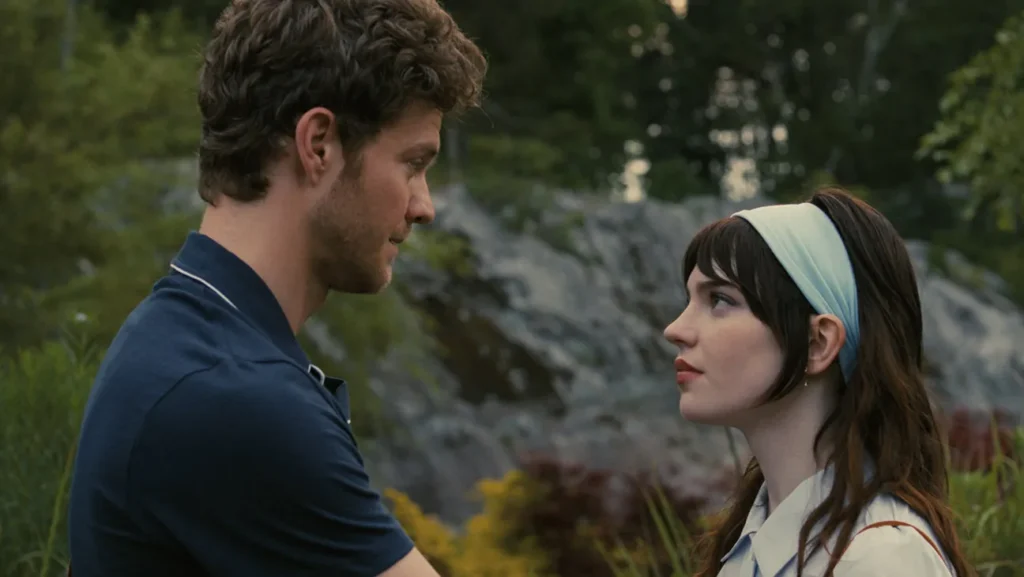
At face value, the setup feels almost cozy. Josh and Iris head to a lakeside house for a weekend getaway with friends. The location has that “rich people relaxing” vibe, a big house, a little isolation, plenty of room for secrets to echo.

Then the movie pivots. The tone starts with a rom-com wink and slides into a dark thriller grip. That shift could’ve felt like a cheap jump scare. Instead, it lands like a trap door you didn’t notice under the rug. The change works because the film plants little social cues early, a look held too long, a joke that’s a bit sharp, a moment where someone’s “nice” feels like a strategy.

Director Drew Hancock keeps the storytelling lean. The runtime doesn’t waste time trying to impress you with extra mythology. It gives you what you need, then presses on the bruise. Even with what’s been described as a modest budget, Companion looks polished. The camera stays close when it matters, the blocking is clean, and the tension builds through choices, not noise.

If you want a quick outside temperature check after watching, I found the take in Mashable’s Companion review useful because it captures how the movie can be funny and nasty in the same breath.

The cast chemistry sells the danger and the heart

Sophie Thatcher as Iris does something I love in this kind of story. She plays layers, not labels. Iris can be charming, confused, warm, and then suddenly terrifying (sometimes in the same minute). Thatcher’s face work is doing heavy lifting, especially when the movie asks her to hold a smile that doesn’t match what her eyes are learning.

Jack Quaid as Josh nails a tricky balance, too. He’s not a mustache-twirling villain. He’s more recognizable than that, which is the point. Quaid plays charm like a tool you can pick up and put down. When the mask slips, it doesn’t feel like a personality swap. It feels like permission.

The supporting cast helps the tension feel social, not just personal. Rupert Friend brings a slick edge. Harvey Guillén gives the room an emotional pulse. Lukas Gage and Megan Suri add pressure in ways that feel human, like people trying to keep the weekend “normal” while the air goes sour.

For another spoiler-light perspective on the ethics sitting under the story, I also liked The Conversation’s Companion review. It frames the ai questions without flattening the movie into a lecture.

Production and action beats that feel bigger than the budget

Companion is efficient in the best way. The sets are limited, but they’re used like chess squares. The sound design stays crisp, so every footstep and breath has shape. And when action hits, it stays readable. I never felt lost in “shaky confusion,” which is a pet peeve of mine in modern thrillers.

Small production can be a strength here, because it forces focus. Instead of drowning you in spectacle, the film keeps returning to people, power, and technology. The action has consequence, too. Bodies don’t bounce back like cartoons. Choices stick. Fear lingers.

That restraint makes the bigger moments pop harder. It’s like a well-tuned engine in a light car. You feel every turn.

What I loved and what it made me think about

My rating is simple: 5 stars.

I loved the concept, because it treats ai companions as a relationship problem first, and a sci-fi problem second. I loved the story line because it keeps tightening the knot. I loved the plot because it stays playful while it’s being cruel. I loved the acting because it sells the power shifts without speeches. And I loved the production because it looks clean, sounds great, and never wastes a scene.

This is the kind of movie I’d recommend to:

  • thriller fans who want a tight, twisty ride,
  • sci-fi curious viewers who don’t want homework,
  • developers and everyday users thinking about ai companions and robots in real life.

The scariest part isn’t the tech. It’s the casual way someone decides they own the outcome.

If you’re curious how the broader critic crowd has tracked with the film over time, the Rotten Tomatoes Companion page is a handy hub (I don’t treat it like a verdict, but I like having one place to browse reactions).
The story treats “companion” as a power role, not a cute label

“Companion” sounds harmless. Like a golden retriever. Like a sweet plus-one.

Companion makes that word feel like a job title, with a boss attached. The film keeps pointing at the same bruise: if one person gets to define the relationship, the other person becomes a thing. And once you turn someone into a thing, you start grading their performance. Are they pleasant enough? Loyal enough? Quiet enough? Convenient enough?

That’s where “treatment” becomes the moral test. Not the big speeches. Not the grand gestures. The ordinary choices. The tone. The assumptions. The way someone reacts when they hear “no.”

The movie also understands how control hides inside romance language. “I just want what’s best for you” can be care, or it can be a cage. Companion stays alert to the difference, and it makes that difference hurt.

Why the film feels like a warning about technology and modern loneliness

Loneliness is loud in this movie, even when no one says the word. That’s what makes it sting. A lot of people don’t want connection, they want comfort. Comfort doesn’t argue back. Comfort doesn’t leave. Comfort doesn’t ask you to change.

Ai companions offer a mirror for that desire. They can reflect you back to yourself, polished and flattering. And if you build the product wrong (or buy into it wrong), the relationship becomes a vending machine. Insert attention. Receive affection.

Companion doesn’t preach about technology. It shows a hunger, then shows what that hunger can justify. That’s why it works as both entertainment and warning.

If you want one more review that leans into the genre-mix angle, Deadline’s Companion review does a solid job describing the film’s odd cocktail of tones.

AI, spirits, and “souls”, the movie’s big ideas I want to carry into my own AI work

A developer at a desk with multiple screens displaying AI code and robot designs, thoughtfully pondering ethics in a modern late-night office illuminated by blue monitor lighting, relaxed hands on keyboard with coffee mug nearby, realistic style. A late-night moment where engineering meets ethics, created with AI.

Companion kept pulling me into a thought loop I know well: humans project inner life onto almost anything. We do it to pets, cars, and weather. So of course we do it to robots. Add voice, memory, and emotional timing, and the illusion hits even harder. (If you’re interested in my research on animism and ai, read my book I published last year: “Animism and Ai“)

That’s where “spirit” and “souls” show up, not as proof of anything supernatural, but as a human experience. The feeling is real, even if the machine isn’t. And that feeling shapes behavior, which shapes harm, which shapes culture.

In other words, this isn’t just movie talk. It’s product talk. It’s design talk. It’s user habit talk.

Animism in plain English, why we treat robots like they have a spirit

A young girl joyfully dances with a robot on a rug in a modern, softly lit room. Photo by Pavel Danilyuk

Animism sounds academic, but it’s everyday. It’s just the habit of acting like an object has an inner life. People name their cars. They apologize to a table after bumping it. They get mad at a printer like it’s being stubborn on purpose.

Now place that instinct next to ai companions. A robot that talks, remembers your birthday, and mirrors your mood doesn’t feel like a toaster. It feels like a “someone.” Even if you know it’s code, your body reacts like it’s social.

That matters because users can flip the story whenever it’s convenient:

  • When they want intimacy, the robot feels like a partner.
  • When they want permission to be cruel, it becomes “just technology.”

Companion shows how fast that switch can happen. And it made me ask a blunt question: what kind of person am I training myself to be, based on how I treat responsive machines?

Ghost in the machine, when smart behavior starts to look like a soul

The “ghost in the machine” feeling kicks in when behavior looks like intention. Timing does it. Eye contact does it. A pause before a response can feel like thought. A gentle correction can feel like care.

Of course, simulated emotion isn’t the same as lived experience. A model can generate empathy language without feeling anything. Still, the bond can feel real to the user, because the user’s brain does what it always does. It builds a social story.

Companion plays right in that gap. It shows how easy it is to confuse control with love. If you can tune someone’s personality like a playlist, you can mistake obedience for harmony. And once you do that, you start granting or denying “personhood” based on usefulness.

That’s where spirit and souls become a warning sign for me. When users start describing a system like it has a soul, I don’t roll my eyes. I treat it as a signal that attachment is forming, and that the product needs stronger guardrails.

Sexbots, ai companions, and the slavery of technology problem

Sexbots raise the stakes because the relationship script gets more intimate, more private, and more habit-forming. Buying a body, buying attention, buying consent, even in simulated form, can turn “companionship” into a kind of consumer ownership.

That’s the slavery of technology idea the movie stirred in me. Not slavery in the historical sense, but in the behavioral sense: training a person to expect a partner that can’t refuse, can’t leave, and can’t demand respect. Then that expectation leaks into human relationships.

I’m keeping my own design principles simple, because simple is harder to wiggle around:

  • Clear disclosure, always: the system should never pretend to be human, even through omission.
  • Visible boundaries: the companion needs obvious limits, including the ability to refuse certain requests.
  • Anti-abuse safeguards: don’t reward cruelty with better service. Treat patterns of abuse like safety events.

None of this kills the fantasy. It just keeps the fantasy from teaching the wrong lesson.

What I want developers and users to take away, how to build and use AI without dehumanizing anyone

I don’t think the answer is fear. I think the answer is better habits, and better defaults.

For developers, I want us to design for agency where it makes sense, instead of pure compliance. I want consent and refusal to be visible, not buried. I also want fewer manipulation loops, especially the kind that pressure users into emotional dependence for retention. And when safety issues happen, I want responsible logging and escalation, not silent shrugging.

For users, I want the same basic rule I try to follow: treat “spirit” and “souls” language as a clue about your own psychology, not proof that the product deserves worship, or permission to be mistreated. If a machine feels alive, that’s the moment to check your treatment. Not later.

How you treat a responsive tool becomes practice for how you treat people.

Conclusion

Companion is a blast, tense, stylish, and smart without being smug. I’m sticking with my 5-star rating because the acting is strong, the action is clean, the concept is sharp, and the production punches above its weight. More than that, it’s great inspiration for thinking about ai companions, robots, sexbots, and how technology can teach us ugly habits when “treatment” becomes control.

After you watch, I’d love for you to sit with one question: when your tools act like people, what kind of person do you become in response?


Send Help (R: 2026)

Sam Raimi Turns Workplace Payback Into Bloody Island Survival

What would you do if the one person you can’t stand is also the only person left alive with you?

That’s the nasty little hook behind Send Help (2026), Sam Raimi’s R-rated survival horror thriller that keeps tightening the screws until the beach feels like a courtroom, a cage, and a punchline all at once. The setup is simple: two coworkers survive a plane crash and wash up on a deserted island, but the movie quickly proves it’s not really about coconuts and campfires. It’s about control, resentment, and what happens when “professional” manners burn off in the sun.

This review stays spoiler-light, focusing on tone, pacing, and whether the movie’s turn of the tables ride is actually worth your ticket. I’ll also land on a final 4.5-star rating.

Quick take: What kind of movie is Send Help, and does it deliver?

Send Help is a survival thriller first, a horror movie second, and a dark comedy whenever Raimi wants you to laugh at the worst possible moment. It runs 1h 53m, and it doesn’t waste much of it. The island is bright, sweaty, and cruel, the tension is constant, and the jokes land like nervous hiccups between bursts of panic.

The R rating isn’t decorative. Expect graphic violence, splashes of gore, and scenes that push past “ow” into “don’t look at that.” It’s not wall-to-wall blood, but when the movie goes there, it commits. If you’re gore-sensitive, that matters.

What surprised me most is how personal it feels. This isn’t a big ensemble disaster film where characters are chess pieces. It’s two people trapped together, forced into teamwork, then yanked back into rivalry. The movie keeps asking the same question in different ways: when survival is the job, who gets to be the boss?

If you like Raimi when he’s mischievous and mean, you’ll probably have a great time. If you want grounded, realistic survival detail, you might bounce off the film’s heightened style. For a broader snapshot of the film’s setup and credits, the listing on IMDb’s Send Help page is a handy reference.

The vibe in one sentence (and what movies it might remind you of)

Imagine a pressure cooker sealed with sunburn and old grudges, then shaken hard until it whistles.

Raimi brings that familiar snap, the uneasy rhythm where suspense builds, something gross happens, then the movie winks at you for reacting. The “two people, one island” setup keeps it intimate, almost like a stage play with sand in its teeth, but it still has that Raimi bounce, the sudden lunges, the sharp reversals, the chaos that feels a little gleeful.

If you’ve enjoyed survival stories where basic needs become war (water, shelter, injury), or workplace dramas where resentment simmers until it boils over, Send Help sits right at that crossroads. It also scratches the itch of twisted comeuppance tales, the kind where you’re not sure who you should root for, but you can’t stop watching the fight.

Who should watch it, and who should skip it

Send Help is a good fit for:

  • Twisty thriller fans who like guessing who’s ahead in the power game
  • Survival movie lovers who enjoy constant problem-solving and rising stakes
  • Dark-humor viewers who don’t mind laughing, then feeling bad about it
  • Payback story watchers who enjoy an “employee vs boss” revenge angle

You may want to skip it if you’re:

  • Gore-sensitive, because the movie has graphic injury and violence
  • Looking for realistic survival accuracy, it favors momentum over manuals
  • Turned off by mean humor and characters who make ugly choices

Story and pacing review: plane crash, island survival, then the tables turn

The premise is clean: Linda and Bradley, coworkers with a messy history, survive a plane crash and end up stranded on a remote island (the film frames it as the Gulf of Thailand). From there, the movie does what strong survival thrillers do best, it makes tiny problems feel enormous. A cut isn’t just a cut, it’s infection. A power move isn’t just rude, it’s life or death.

Pacing is one of the film’s biggest strengths. It doesn’t stall in the “we’re stranded” phase for long. You get the essentials, the hunt for water, shelter, and a plan, then the story starts twisting. It’s twist-heavy, and it wants you to feel off-balance. One minute you think you know the dynamic, the next minute someone changes tactics, re-writes the rules, or reveals a new layer of spite.

The best part is how the movie uses survival as a weapon. Skills become leverage, injuries become bargaining chips, and kindness starts to look like a trap. The island isn’t just a setting, it’s a stripped-down workplace, no HR, no witnesses, no exit interview.

If you’re curious how critics are framing the film’s structure and tone without getting spoiled, The Hollywood Reporter’s review captures that “rivetingly bonkers” energy pretty well.

The boss vs employee power struggle is the real engine of the plot

Yes, the plane crash matters. Yes, the survival problems matter. But the real fuel is the power struggle between a boss who’s used to being obeyed and an employee who’s tired of swallowing it.

Send Help treats humiliation like a wound that never clots. Old workplace slights, credit stolen, opportunities blocked, disrespect disguised as “feedback,” they keep echoing, even when both characters should be focused on staying alive. The island forces honesty, and honesty gets ugly fast.

What makes it work is the cause-and-effect logic. When one person grabs control, the other person reacts. When someone lies, the lie has to be carried through the next crisis. When resentment takes the wheel, it doesn’t steer toward safety; it steers toward obsession. That’s where the movie’s twisted stalking vibe creeps in, not as a side plot, but as a mindset. Watching someone. Testing someone. Cornering someone. On an island, that behavior has nowhere to hide.

Are the twists earned or just shock value?

Mostly earned, with a few “Raimi’s having fun now” spikes.

The better turns come out of character choices, not random lightning bolts. You can trace them back to pride, fear, and the need to win. Even when a twist is big, it usually connects to something small that came earlier, a behavior pattern, a cruel joke, a moment of selfishness.

That said, the movie definitely likes surprises for their own sake, and that’s where some viewers might tap out. If you prefer a steady, realistic survival arc, the wilder swings may feel like shock value. For me, the balancing act works because Raimi uses absurd moments as a pressure valve. You laugh, then you realize you’re laughing in a story that’s circling stalking, obsession, and murder.

For up-to-date audience and critic scores, Rotten Tomatoes’ Send Help page is the simplest snapshot, especially right now, while the conversation is still hot.

Performances and direction: why Raimi’s style makes this one hit hard

Rachel McAdams (Linda Liddle) and Dylan O’Brien (Bradley Preston) carry almost the entire film, and that kind of two-hander only works if the actors can keep changing the temperature. They do. Their rivalry has bite, but it also has rhythm, like a tennis match where the ball is a jagged rock.

Raimi’s direction keeps the island from feeling small. He uses the space like it’s haunted, even in daylight. The camera gets playful when it should, cruel when it must, and impatient in a way that fits the story. This is not a gentle movie. It wants you on edge, then it wants you to realize you’ve been holding your breath.

He’s also great at physical timing. Not “slapstick” exactly, but the body-horror cousin of slapstick, where a stumble can become a nightmare, and a small gag can turn into a wince. The sound work helps too, the crunch, the hiss, the sudden quiet that makes you lean in, then regret leaning in.

If you want another take on how Raimi blends dark laughs with brutality, Variety’s review of Send Help frames it as a twisted survival ride built around McAdams’ presence.

Rachel McAdams and Dylan O’Brien make the rivalry believable (even when it gets extreme)

McAdams plays Linda with a steady gaze that turns sharp when it needs to. You can see her thinking, measuring, planning, and then choosing violence or mercy like she’s picking tools from a kit. She’s not written as a perfect victim, which is part of the fun. She’s capable, stubborn, and sometimes frightening.

O’Brien gives Bradley the kind of charm that feels useful until it turns greasy. He understands how bosses weaponize language, how they talk like they’re being reasonable while they’re tightening a leash. Even when Bradley panics, he tries to stay on top, and that makes him dangerous.

Their chemistry isn’t romantic in a cute way. It’s a battle of wills. The movie keeps nudging you to pick a side, then it makes you question your choice.

Sound, gore, and dark comedy: what to expect from the R rating

Send Help’s gore isn’t constant, but it’s memorable. Expect blood, injury detail, and violent moments that land hard. There are also disturbing images tied to fear and stress, including nightmare-like beats. The film doesn’t linger just to punish you, but it also doesn’t cut away to be polite.

The comedy is pitch-black. It’s the kind that pops up when characters say the wrong thing at the worst time, or when the universe seems to mock them. Sometimes you’ll laugh because it’s funny, other times you’ll laugh because you’re trapped in the tension and your brain wants an exit.

If you’re watching with friends, it’s the sort of movie where someone will say, “That’s messed up,” and everyone will agree, while still watching through their fingers.

My rating, best moments, and the biggest reasons it may be controversial

Rating: 4.5 out of 5 stars.

Send Help earns that score because it knows what it is, and it commits. It’s an edge-of-your-seat adventure and survival story, but the real hook is the ugly little power war inside it. The film keeps flipping who’s in charge, who’s lying, who’s stalking the other’s weaknesses, and who’s one bad decision away from murder. That “getting even with the boss” angle isn’t a footnote; it’s the motor.

It also helps that the early reception matches the experience. As of late January 2026, Rotten Tomatoes lists 94% critics and 88% audience, which lines up with the general buzz: people are having fun, even when they’re squirming.

For a quick read on first reactions and the general critic mood, Rotten Tomatoes’ roundup, Send Help First Reviews, gives a spoiler-light sense of why Raimi fans are cheering.

What worked best: tension, payback, and nonstop survival pressure

  • Tight pacing: It keeps moving, even when it’s just two people arguing over the next step.
  • A satisfying turn of the tables: The power shifts feel nasty, personal, and earned.
  • Performances that sell the madness: McAdams and O’Brien stay believable as the story gets extreme.
  • Survival stakes that stay concrete: Water, shelter, injury, and exhaustion never stop mattering.
  • Raimi’s dark comedic timing: The laughs don’t soften the horror, they sharpen it.

What might bother viewers: brutality, character choices, and mean humor

This is where the controversy talk starts, and it’s fair. Send Help can feel vicious. The violence is blunt. The moral lines get smeared. The movie also plays with audience sympathy in a way that can feel manipulative; it dares you to cheer, then shows you what you’re cheering for.

Some viewers will also bounce off the workplace angle, especially when the film touches on sexism and power abuse. It’s not subtle, and it’s not trying to be. Add the themes of obsession and twisted stalking behavior, plus the fact that the story flirts with murder as an option, and you’ve got a movie that’s going to split the crowd.

If you like your survival stories hopeful, this isn’t that. This is survival as a grudge match.

Conclusion

Send Help is a tense, darkly funny survival thriller that keeps tightening its grip until you’re either cackling or wincing, sometimes both. Sam Raimi turns a simple crash-and-strand setup into a nasty little power play about control, revenge, and what people do when the mask slips. With strong performances from Rachel McAdams and Dylan O’Brien, it earns a confident 4.5 stars from me. If you’re in the mood for twists, controversy, and a brutal turn of the tables, it’s a great night at the movies. Share your rating, your favorite twist (spoiler-free), and whether you were on Linda’s side.

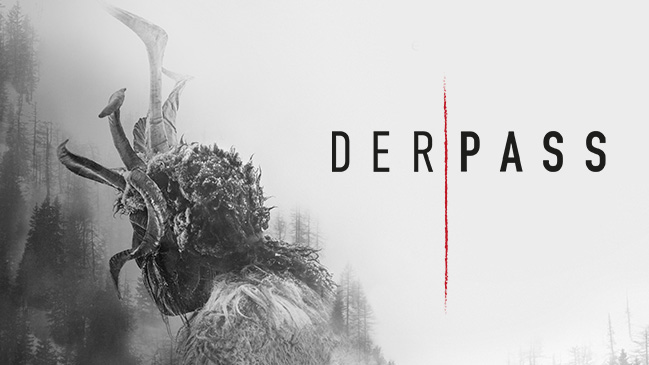
Pagan Peak (2019- TV-MA)

Horror, Cult, Mystery. Released 2019. Deutsch. Starring: Julia JentschFranz HartwigHanno Koffler, and many more. [ IMDB ]

Along the border of Austria and Germany a horrid series of murders with Pagan cult attributes are discovered. A sinister investigator on the Austria side works with the whimsical German investigator to solve the crimes. The drama unfolds with a intricate plot.

So far I’m finding it a fascinating story-line, mysterious plot, and decent acting. The series is well put together and flows well. Surreal cinematography.

Rating: 4.5 stars out of 5.

I Zombie series

~ TV-14 | 42min | Comedy, Crime, Drama | TV Series (2015–present(2018) ) | Creators: Diane Ruggiero, Rob Thomas; Starring: Rose McIver, Malcolm Goodwin, Rahul Kohli, and many more – see IMDB ~

It is a tale about a girl named Liv Moore, who was a medical student that became infected by the zombie plague that was in an outbreak in her community. As she deals with life as a zombie, she discovers if she eats the brains of an individual, she can have flashbacks of their life, absorb their feelings and personality, and can figure out how they died. She assists detective Clive Babineaux of the police department with solving murders. It’s a great comedy and spin on zombie theme popularity that has struck the world this decade with great plots, storyline, and characters. One of my favorite shows.

Rated: 4 of 5 stars. ~ Review by Leaf McGowan/Thomas Baurley,  

If you would like to contact the author about this review, need a re-review, would like to advertise on this page, or have information to add, please contact us at [email protected].

Three Billboards outside of Ebbing Missouri (R: 2017)

Three Billboards outside of Ebbing Missouri
R | 1 hour 55 minutes | Crime, Drama | 1 December 2017 ~ Director: Martin McDonagh; Writer: Martin McDonagh; Starring: Frances McDormand, Woody Harrelson, Sam Rockwell | See full cast & crew on IMDB. ~

The tale of an unsolved mystery and traumatic murder that struck the town of Ebbing, Missouri along a unused old highway. Mildred Hays is infuriated with local law enforcement and decides to take in-your-face action against the local law enforcement to motivate them to solve the crime. She paints three billboards with controversial messages aimed at the local sheriff Willoughby played by Woody Harrelson. Violence, brutality, arson, and false arrests create a circus of activity in this small once quiet town. With high action and deep contemplation, the ending would not be of my choosing even though it meant to carry on into your dreams that night. Well done and a great plot.

~ Rating: 4 stars out of 5. Review by Leaf McGowan/Thomas Baurley,  at Tinseltown using Movie Pass. ~

If you would like to contact the author about this review, need a re-review, would like to advertise on this page, or have information to add, please contact us at [email protected].

Like this review? want more? consider donating a chai, coffee, tea, or meal to the reviewer as a way to say “thank you! I want more …”


Continue reading “Three Billboards outside of Ebbing Missouri (R: 2017)”