Funny, Furious, and One-Sided
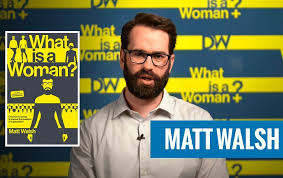
If you’ve heard someone bring up “What Is a Woman?” in 2026, odds are the conversation got loud fast. Matt Walsh’s 2022 documentary hasn’t faded into the streaming void because it’s calm or careful; it’s because it’s blunt, punchy, and built like a viral argument with a beginning, middle, and mic-drop ending.
It’s also a strangely watchable mix of road-trip interviews, uncomfortable pauses, and comedy beats that land like spit-takes, right before the film swings back into serious claims about medicine, youth, and definitions. That combo is exactly why people keep re-watching clips, sharing them, and fighting about what “fair” even means in a documentary.
Rating: 4 stars out of 5, because it’s sharply paced with memorable moments and a clear thesis, but it often feels one-sided and sometimes needlessly harsh.
What the movie is trying to prove, in plain language
At its core, What Is a Woman? keeps returning to one question: can “woman” be defined in a clear, stable way, or has the word become a moving target in modern gender debates? Walsh’s answer is not subtle. The film pushes a biology-first view, arguing that sex is real, and that “woman” should map to biological female, not self-declared identity.
This is not a traditional documentary that wanders around a topic and lets the audience build the conclusion. It’s closer to an argument with receipts, edited for momentum. It’s a Daily Wire release, directed by Justin Folk, and it came out in 2022 (basic production details are summarized on the film’s Wikipedia entry).
Instead of a scripted story, the movie uses a repeating pattern: Walsh travels, sits down with academics, clinicians, activists, and everyday people, then presses them to define “woman” without circling back to the word itself. The film treats the inability to answer cleanly as the point, and it builds its case through interviews, reaction shots, and a steady drumbeat of “why is this so hard to say?”

The basic “plot”: one question, many interviews, and a final punchline
Think of the structure like a stand-up set built from interviews. Walsh sets up the premise, asks the same question in different rooms, then lets the tension do the work. When people answer with phrases like “a woman is someone who identifies as a woman,” the film frames it as a loop with no exit.
The documentary saves its simplest moment for last. In a quiet, domestic scene, Walsh asks his wife the same question. She answers, “an adult human female.” It lands as a punchy wrap-up because it’s plain, fast, and filmed without the performance of a campus debate. The movie clearly wants the viewer to feel relief, like someone finally turned the lights on in a confusing room.

What it gets right about the conversation, even if you disagree
Even if you don’t buy Walsh’s politics, the film taps into a real frustration: lots of people want everyday words to mean something consistent. When definitions turn into slogans, conversation starts to feel like shadowboxing.
The movie is also easy to follow. Scenes are short, the central question stays the same, and it doesn’t ask the viewer to memorize theory. That accessibility is a big reason it keeps circulating years later, along with the way its reception remains split (you can see the divide reflected in the film’s listings and reviews on Rotten Tomatoes).
The most memorable scenes, and why they hit so hard
This documentary doesn’t rely on one big reveal. It stacks moments, some comic, some grim, and lets the contrast create a kind of whiplash. One minute you’re watching someone flounder over a definition, the next you’re hearing a personal account about medical outcomes. That swing is intentional, and it’s the engine behind the film’s emotional punch.
A lot of the scenes are memorable because the camera is patient. Walsh will ask a question, then wait. Silence becomes the soundtrack. For supporters, that silence reads as proof that the other side can’t explain itself. For critics, it reads as a filmmaker hunting for the most awkward seconds and calling it truth.
When interviewees cannot define “woman,” and the camera stays silent
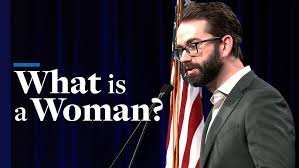
The film repeatedly puts professionals on the spot, including a professor-style exchange where defining “woman” without using the word becomes a trap. The tension comes from how long the pauses are allowed to hang there. It’s like watching someone try to describe “water” without saying “wet.”
Viewers take these scenes in totally different ways. Some see them as an honest exposure of circular reasoning. Others see a setup where the goal is not understanding, it’s embarrassment. Either way, the moments are sticky. You remember the discomfort, and discomfort is a powerful marketing tool, even when no one’s selling anything but an opinion.
Scott Newgent’s regret story, the film’s most serious section
The documentary’s tone changes when it brings in Scott Newgent’s account. Here, the movie steps away from word games and into human cost, health issues, and regret after medical transition. The edit slows down, the jokes fade out, and the viewer is asked to sit with consequences, not cleverness.
It’s also important to say plainly: experiences vary. Many trans people don’t describe their lives this way, and the film uses Newgent’s story as supporting evidence for its broader argument about medical risk and social pressure. That’s part of why the segment hits so hard. It’s one person’s pain, placed inside a film that wants that pain to stand in for a whole debate.

The Maasai village segment, and the argument it is trying to make
In Kenya, Walsh asks the same question in a Maasai village and gets a blunt, biology-based answer. The film uses the moment like a mirror held up to Western discourse: look how simple this is somewhere else.
Critics often bristle at this section because it can feel like it’s used to make Western debates look silly, or to flatten culture into a prop for a punchline. It’s memorable, though, because it’s filmed with bright, travelogue energy, then dropped into the middle of a very American fight.
Comedy, tone, and the “gotcha” style, fun for some, harsh for others
Walsh’s on-screen persona is a big part of the experience. The film uses humor and editing the way a late-night clip does: set up, awkward beat, reaction shot, release. If you like that style, it’s entertaining. If you don’t, it can feel like watching someone win an argument by controlling the microphone.
This is where the “gotcha” feel comes in. The movie often frames interview answers as proof of confusion, then reinforces that framing with music cues, lingering shots, and quick cuts. Documentaries always edit reality, but What Is a Woman? wants you to feel the edit.
The jokes that actually work, including the Jordan Peterson line
One of the cleanest laughs comes from Jordan Peterson’s quick line: “Marry one and find out.” It works because it breaks the tension without needing a long speech. It’s a pressure valve.
The kitchen scene with Walsh’s wife also functions as comedy through simplicity. No stage, no lecture, no jargon, just an everyday answer delivered like it’s obvious. The film treats that contrast as the punchline.
Where the tone can feel mean, and how editing shapes your opinion
The film often appears gentler with people who agree and sharper with those who don’t. That doesn’t require a conspiracy; it’s just how persuasion pieces work. Selective clips can make someone look evasive, even if their full answer was longer and more careful.
Reaction shots matter too. A raised eyebrow, a pause, a cut to Walsh’s face, suddenly, the viewer knows what to think. If you like Walsh’s worldview, the tone feels like justified mockery. If you don’t, it can feel like the documentary is laughing at people instead of challenging ideas.
The big controversies: fairness, consent, and what critics say the film leaves out
The film’s footprint isn’t just about its arguments; it’s about how it got them. Questions about consent and outreach have followed it for years, and those questions shape whether viewers trust what they’re seeing.
A documentary can be persuasive and still be fair, but this one invites skepticism because it often feels like the destination was chosen first, and the route was planned to make sure the camera got the right kind of footage.
Claims of deceptive recruiting, and why that matters for trust
Several participants have said they were approached under a neutral-sounding project name and later felt misled about how the footage would be used. Reporting has described claims that some interviewees believed they were participating in something like a “Gender Unity Project,” not a Matt Walsh film built for confrontation (see NBC News coverage on claims about being tricked into participating).
Why does that matter? Because consent isn’t just signing a release. Context matters, especially on sensitive topics. If participants feel ambushed, viewers start wondering what else was shaped to fit the message.
What supporters praise, and what opponents argue is missing
Supporters praise the film for challenging ideas they see as confusing, and for pushing a clear definition where others won’t. They also like that it keeps the argument simple and punchy.
Opponents argue it ignores many trans experiences, treats identity as a joke, and replaces empathy with ridicule. Two people can watch the same scene and leave with totally different feelings because the film rewards you for arriving with a side already picked.
A quick “watch or skip” guide for different viewers
If you’re deciding whether to press play, here’s the straight answer.
- Watch it if you want one conservative argument laid out clearly, or you’re curious why this film keeps getting referenced in gender debates (its basic info and audience response are easy to find on IMDb’s title page).
- Skip it if you want a balanced, multi-viewpoint documentary, or if the premise feels personally targeted rather than academic.
Content note: it includes heated language, tense interviews, and discussions of youth medical care and transition regret.
Conclusion
As a piece of persuasion filmmaking, What Is a Woman? earns its staying power: strong pacing, a clear argument, a few genuinely funny beats, and some heavy interviews that don’t evaporate when the credits roll. It also earns its backlash because it can feel one-sided and sometimes cruel in how it frames people who disagree.
That’s why it’s still a talking point in 2026; even without new reviews suddenly appearing, it remains a shared reference in an ongoing fight. My rating stays 4 out of 5. It’s effective, memorable, and often unfair.
After watching, the question that lingers isn’t only “what is a woman?” It’s this: should documentaries aim to persuade, or to understand, and can they do both?