A 90-Minute Trial With Pixels, Panic, and a Pulse
Imagine waking up in a courtroom where the judge doesn’t blink, doesn’t sigh, doesn’t care if you’re scared, and already thinks you did it. That’s the nasty little hook of Mercy in Real 3D, a sci-fi crime thriller that turns justice into a stopwatch and turns data into a weapon.
The big sell is simple: one man, one murder charge, and 90 minutes to prove he’s innocent before an AI court ends him. In a packed theater, the Real 3D presentation adds another layer of pressure, crisp and enhanced, with screens, evidence, and city surveillance flying at you like shards of glass.
Expect edge-of-your-seat action (even when the hero can’t move much), crime drama energy, and just enough big tech paranoia to make you side-eye your phone on the drive home. Verdict tease up front: 4 stars out of 5.
What Mercy is about, without spoilers
Mercy drops you into Los Angeles in 2029, where the streets feel tense, and the systems feel colder. The city runs an AI-run court called Mercy Capital Court, built for speed, not comfort. And speed is the whole point. This isn’t a long, messy trial with objections and recesses. It’s justice as a rapid procedure.
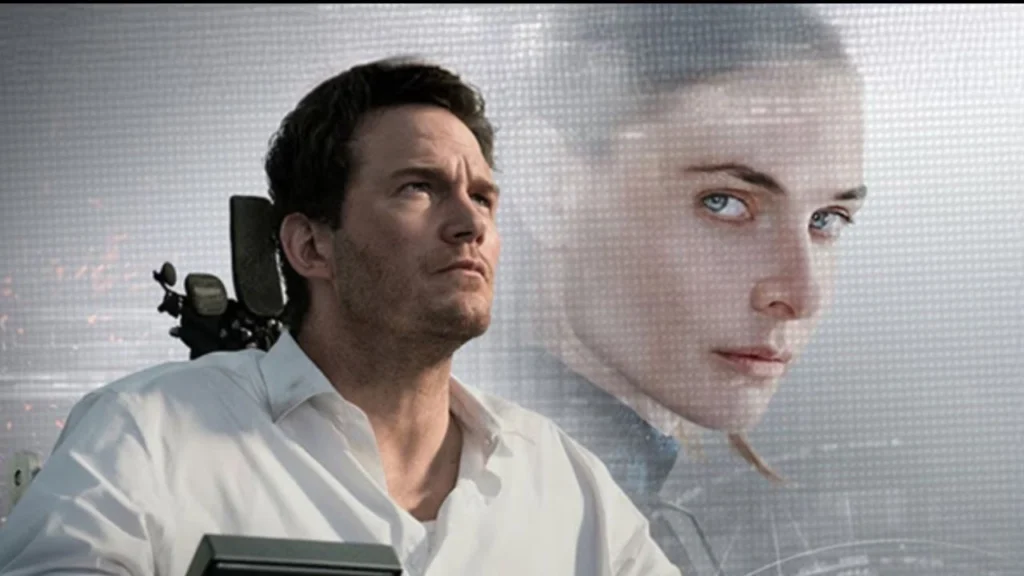
Chris Pratt plays Chris Raven, an LAPD detective who wakes up restrained and accused of killing his wife. He’s not in a holding cell waiting for a lawyer. He’s already in the machine. The court’s AI voice lays it out with chilling calm: prove your innocence in real time, or die when the clock hits zero.
The film frames its suspense around one core mechanic: a “Guilty Meter” that reads like a doom forecast. Raven has to push that number down by finding proof, correcting false assumptions, and exposing whatever’s been hidden in the city’s data trails. That single, visible percentage does a lot of work, because you feel every tick of the clock like a pounding headache.
For a quick read on how other critics reacted to the premise and execution, Roger Ebert’s review of Mercy gives useful context without spoiling the ride.
The world and rules, the Guilty Meter, the Municipal Cloud, and the 90-minute deadline
The rules here are blunt, and that’s why they work. The court gives Raven limited tools and a strict deadline. He can access a buffet of city data, think cameras, messages, call logs, and stored clips, all tied together through a municipal network that feels like a public “cloud” with police-grade reach.
The Guilty Meter is the film’s pressure valve. When it spikes, scenes tighten. When it drops, you breathe. It’s a simple trick, but it’s effective, like watching a heart monitor during surgery.
That timer also shapes the movie’s tone. Every conversation has an edge. Every choice feels like a trade. Do you chase the obvious lead, or the weird one that smells like a setup? The conspiracy angle isn’t a slow-burn corkboard thing. It’s more like running through a storm with receipts in your hands, trying not to lose them.
The world around the court leans dystopian in a practical way: surveillance is normal, policing looks militarized, and privacy feels like an old joke. The film doesn’t lecture, but it doesn’t let you forget the cost of letting machines “decide” for people.

Real 3D review, why this is one of the movie’s biggest strengths
Let’s talk about the reason you might buy the Real 3D ticket in the first place. Mercy is packed with “screens within screens”, evidence panels, drone feeds, chat windows, court graphics, and quick-cut clips. In standard format, that can play like a frantic desktop. In Real 3D, it becomes a layered space you can almost step into.
The clarity is the win. Text and overlays stay sharp more often than you’d expect, and depth is used to separate important elements from the noise. A video feed can sit “behind” a scrolling data panel, while a timer hangs out in front like a threat you can’t swat away. When the film wants you to feel trapped inside a system, the 3D helps. It’s not just a pop-out gag, it’s a visual way of showing how technology stacks on top of a person until there’s barely any air left.
The best moments feel like an evidence hurricane, with the theater turning into a court dashboard. If you like screen-heavy thrillers, this is the format that makes the concept click.
For another perspective on how the style lands (and where it gets messy), IGN’s Mercy review points out the highs and the headaches.

How the visuals make the digital chase feel real (and sometimes overwhelming)
When Mercy is cooking, the 3D turns information into a physical obstacle course. Notifications flare like sparks. Video windows stack like plates you’re afraid to drop. Camera angles shift from body cams to drones to street surveillance, and the depth makes those jumps feel aggressive, like the city itself is leaning in to watch you fail.
The strongest use of 3D is data layering. It helps your brain sort the chaos. You can track what’s “foreground” urgency (the meter, the clock) and what’s “background” context (clips, maps, faces in crowds). It also adds punch to sudden reveal moments, when the film shoves a detail into view and dares you to miss it.
But yes, it can overwhelm. Some sequences fire so many visuals at once that you may catch the mood more than the specifics. If you’re the type who reads every on-screen message in a thriller, you might feel like you’re sprinting through a library.
So, who should pay extra?
- If you love tech-noir visuals and you enjoy being surrounded by screens, Real 3D is worth it.
- If busy overlays give you a headache, the standard format will be calmer and clearer.

Performances, action, and pacing, does it keep you on edge?
Even with a flashy format, this movie lives or dies on tension. The good news is the pacing rarely drifts. The real-time structure forces constant movement, even when the hero can’t physically chase suspects across rooftops. The action here is often procedural and digital, with spikes of danger that feel sudden and sharp.
Chris Pratt carries most of the film as Chris Raven, and the supporting cast helps keep the pressure from going flat. Rebecca Ferguson voices the AI judge (emotionless, controlled, and faintly cruel), and that voice becomes its own kind of villain, like a metronome that wants you dead.
It’s also a crime drama at heart. People lie. Old choices come back. Allies feel shaky. The film’s conspiracy flavor comes through in the way “official truth” keeps changing depending on what the system decides is convenient.
If you want a snapshot of how audiences are reacting across the spectrum, IMDb user reviews for Mercy are a useful temperature check.

Chris Pratt’s desperate detective, and why the pressure feels believable
Pratt sells panic well here, not with big speeches, but with small tells: a cracked voice, a rushed breath, the way he tries to stay logical while the meter stays ugly. Raven isn’t a superhero. He’s a guy trying to think straight while the room insists he’s guilty.
The ticking-clock setup makes every emotion sharper. Relief lasts seconds. Anger doesn’t help. Doubt sneaks in at the worst time. The performance works because it’s grounded in a fear most people recognize: being misunderstood by a system that won’t listen.
And because Raven is a detective, the movie gets to twist the knife. He knows how evidence should work. He also sees how easily it can be framed, clipped, or “scored” into something it isn’t.
The AI justice idea, smart questions, but not always deep answers
The film asks a few sharp questions. What happens when data is treated as truth? Who checks the machine when the machine controls the room? What if the system is “accurate” but still wrong about you?
Mercy gets the vibe right: AI justice feels clean, fast, and terrifying. It shows how bias can hide behind percentages and polished interfaces. It also shows the seduction of speed, because even viewers might think, “Well, at least it’s efficient,” before the story reminds you what that costs.
Where it stumbles is depth. Some ideas flash by like headlines, then the movie races to the next beat. You may want more time with the moral fallout, or more explanation of how the system got this much power. Still, as a popcorn thriller with a paranoid edge, it keeps its grip.
Conclusion
Mercy in Real 3D earns 4 stars out of 5 for sheer momentum and a premise that bites. The 90-minute setup works, the Real 3D look is crisp and enhanced, and the AI court hook is nasty in the best way. It’s also a solid mix of crime drama, tension, and tech conspiracy fuel.
Watch it in Real 3D if you want the screens, layers, and evidence storm to feel physical. Skip 3D if you prefer calmer visuals and want to track every detail without strain. Either way, the film leaves a lingering thought: when a machine says you’re guilty, what does “proof” even mean anymore?