As I take a career and life journey’s “Walkabout” around Australia and Europe during the Summer of 2011, during my visit to the Australian National Museum I really for the very first time embrace the concept of the Australian Aborigine “Dreaming” and “Dreamtime” that I was first introduced to during my Anthropology of Religion class I took during my college years at Florida State University. Nevermore did the concept “sink” and “settle” in me more than at this time of my life that I could truly say in a “Stranger in a Strange Land’s” true essence of “grokking” the concept fully and spiritually. “The Dreaming” tells of the journey and actions of the Ancestral Beings when they were creating the natural world. An animistic narrative telling of a “timeless time” of formative creation and perpetual creating. This took place during a mythological era called “Dreamtime”. This is a sacred era when the ancestral Totemic Spirit Beings formed “The Creation”. The philosophy is infinite and demonstrates how the past and present is linked together to prophesize the future. The concept of “Dreaming” is often used to refer to a person’s or group’s set of beliefs and spirituality. The Australian Aborigine might refer to “Shark Dreaming”, “Kangaroo Dreaming”, or “Eucalypus Dreaming” and this would refer to particular natural items or life forms in their resident area or country, laying down patterns of life from which to follow. This creates their mythos, their creation stories, and their folklore as to why certain things have come to be. They believe that every person exists eternally in the Dreaming and represents both the spirit that existed before physical life began and is the spirit that exists after death as a “Spirit Being” or “Spirit Child”. The Spirit Being can only exist physically by being born from a mother, entering the fetus during the fifth month of pregnancy. Upon birth, that child is to become a special custodian of the land and country to which s/he was born, required to learn the stories, lore, and songlines of that particular place. Our natural world, especially that which is within one’s cultural heritage, race, and species, is what provides the link between the people and “The Dreaming”. The Act of Dreaming and the stories that are within them carry the truth from the past, blended together with the code for the Law, to operate and facilitate the present. Every story within “The Dreaming” weaved as creation through the “Milky Way” is a complete long complex tale, many of which discuss consequences and our future being. During the Dreamtime, the Australian Aborigines believed that the creators were both men and women who took on spiritual forms. These “cultural heroes and heroines” sometimes defined as spirits, other times as “God/desses”, would travel across a formless land, create sacred sites and significant places of interest during their travels weaving story and songlines that would guide the spirit beings they birthed in Creation. They joined together with various spirits to create the land, the waterways, the geographical features of the land, the skies, the seas, the plants, the animals, the stones, and all the other wo/men that exist. Every event that takes place would leave a record in the land. To the Dharawal, “Biami” the Great Spirit, went up into the skies to watch over their people and to make sure they obeyed his rules. Spirits habitating in waterholes, caves, and other spirit places to watch over or affect those people that lived near them. This was one of the reasons that another tribe would not conquer tribal lands for doing so would place them in a land full of strange and potentially hostile spirits. The Australian Aborigines believed in both good and evil spirits they called “Goonges”. Children would be warned not to go to certain areas for the “goonge will get them”. Same for the oceans, for they too contained spirits underneath the waters and explained deaths at sea, getting caught in a rip current, or attacks by various sea creatures. The Creators, or the Ancestral Spirits, were shape-changers who were half-human, both male and female, who used the powers, great wisdom, and intentions to create all of being. They lived and retired in the sky clouds. The Aborigine believed that every living creature were created by the Creators as “spirit-children” and/or “spirit animals” during the Dreamtime and were assigned to live in particular spirit places. They believed that their own birth was the result of a spirit child entering into the mother’s body and was brought into being during conception by the specific actions or designs of the creators to make spirit children in the Dreamtime. They also believed that after death their spirit would return to the spirit-place to await rebirth. It was in Dreamtime that the Creators and ancestral spirits created the world which we all live. The Australian aborigines embrace all of life and the phenemena that affects if as part of the vast and complex system of relationships that go back to the original acnestral Totemic Spirits of the Dreaming. The Dreaming establishes a culture’s and regional country’s laws, taboos, structures, and history in order to ensure the continuity of life and land in that area. Breaking these cause destruction to the areas that one’s spirit is meant to guard or caretake.
A treatise in 1989 on “Haitian Zombies”. Exploring Wade Davis’ work in Haiti with the compound made from tetrodotoxin utilized by witch doctors in creating real-life zombies as slaves.
Experience the full text of Thomas Baurley’s classic 1989 research paper, now in a convenient PDF e-book. This edition presents Baurley’s in-depth study from Florida State University on zombies and zombification within Haitian Vodou, with focused discussion of Wade Davis’s primary research and the lasting impact of these stories and beliefs. Baurley traces the journey of the zombie figure, from early cultural accounts rooted in Haitian tradition through the modern fascination found in comics, books, and movies. Drawing on ethnobiological and cultural studies, this work connects scientific, spiritual, and social explanations for zombification, making it a valuable resource for both scholars and curious readers.
As someone who has spent years examining the intersections of folklore and science in the Caribbean, I recognize the rigor and balance Baurley brings. His paper treats both Haitian belief and Western interpretations with care, challenging stereotypes without losing sight of local meanings. This edition is well-suited for researchers, students, and anyone interested in how a single concept can bridge culture, science, and global storytelling.
Product Features
Complete PDF e-book of Thomas Baurley’s original 1989 research
Thorough analysis of Haitian zombies and Vodou practices
Detailed discussion of Wade Davis’s work, including empirical and cultural findings
Historical overview: From slave-era Haiti to modern media depictions
References and citations for academic use
Easy digital access and searchability
Suitable for academic and general audiences
Pros and Cons
Pros
Delivers original academic insight not found in mainstream texts
Balances ethnographic, scientific, and media perspectives
Includes thorough documentation and references for further study
Written in a style accessible to broad audiences
Available instantly in digital format
Cons
Focused mostly on research up to 1989, with limited coverage of newer developments
PDF format may be less preferable for those wanting a physical copy
Uses some academic language that may require extra attention from casual readers
Baurley’s “Haitian Horror” stands out for its careful research, direct tone, and honest respect for Haitian cultural realities. This document invites further discussion and collaboration, making it a strong addition to any collection on anthropology, folklore, or global pop culture. If you have questions, wish to share your own research, or wish to connect on related projects, please reach out via the provided contact links.
Download your copy and join a deeper exchange on the roots and reach of the Haitian zombie.
Interested in the Original? Baurley, Thomas: 1989 Haitian Horror: Zombification as Myth or Reality?. Florida State University: 1989.
St. Michan’s Church Crypt, Dublin, Ireland
legendary inspiration for Bram Stoker’s Dracula
Vampires
A creature of lore, legend, folktale, and myth that is believed to be an undead human (human brought back from the dead) that either feeds on the blood or life force of living humans in order to survive. There is much controversy in the folkloric record on whether vampires either drank blood or just fed off the life energy of others. Some believe that “blood” is the best representation of “life essence” and is therefore what vampires need to survive. Vampires are mentioned and recorded in numerous cultures around the world, described in history as old as man him/herself. Older parallels of similar creatures in legend, such as the Old Russian “????? (Upir’)” seem to date much earlier at 1047 C.E. mentioned in a colophon in a manuscript of the Book of Psalms written by a priest who transcribed the book from Glagolitic to Cyrillic for the Novgorodian Prince Volodymyr Yaroslavovych calling him “Upir” Likhyi which translates to “Wicked or Foul Vampire”. Local and associated Pagan mythology suggests there was Pagan worship from the 11-13th centuries of “upyri”. There is mention of similar creatures throughout history in Greek mythology, Mesopotamian lore, Hebrew records, and Roman stories placing demons and spirits who fed on the life force of humans perhaps being the earliest vampires. Numerous world mythologies described demonic entities or Deities who drank blood of humans including Sekhmet, Lilith, and Kali. The Persians were the first to describe having blood drinking demons. Greek/Roman mythology spoke of the Empusae, the Lamia, the striges, the Gello, the strix, and the Goddess Hecate as demonic blood drinkers.
The documented case of Elizabeth Bathory who killed over 600 of her servants and bathed in their blood led to the reputation of her being a vampire. Same as with Vlad the Impaler of Count Dracula mythology of Transylvania who would impale his victims alive on upright stakes and would eat dinner while watching them suffer and slide down the poles in shrieks of torment. The Istrian (Croatia) 1672 legend of Giure Grando, a peasant who died in 1656, but was believed to have risen from the grave to drink the blood of the villagers and sexually harass his widow became a vampire-like legend. He was stopped by having a stake driven through his heart and then beheaded by the local village leader. Shortly after this legend, during the 18th century, a frenzy of vampire sighting in Eastern Europe went rampant including some notorious vampire hunting in Prussia (1721), Habsburg Monarchy (1725-1734), and the tales of Peter Logojowitz and Arnold Paole in Serbia.
Arnold Paole was a soldier who was attacked by a vampire. A few years later he became a farmer that died during harvest of his hay crop. He was buried and believed by the local villagers to be rising from the grave feeding off of them. The documented case of Plogojowitz, of a man who died at 62 only to return from the grave asking his son for food. Upon being turned down, the son was found dead the next day. Plogojowitz apparently had killed him as well as various neighbours by draining their blood. The Serbian tale of Sava Savanovic told of a man who lived in a local watermill that would kill the millers and drink their blood. This tale led to the creation of the 1973 Serbian horror film called “Leptirica”.
The term itself as “vampire” however was not utilized until the early 18th century during a time when vampire hysteria was rampant. The first use of the term “Vampire” came from a 1734 travelogue titled “Travels of Three English Gentlemen” published in the 1745 Harleian Miscellany according to the Oxford English Dictionary. The English term “Vampire” may have come from the french term “Vampyre” or the German term “Vampir”. These terms may have derived into the Serbian “??????/vampir”. During the early 18th century tales of vampires throughout Eastern Europe became rampant. Vampires were often associated as revenants of evil beings, suicide vicims, or witches; or from malevolent spirits possessing a corpse or being bitten by a vampire. It was during this time that the hysteria caused individuals, families, and communities to dig up the graves of suspected vampires and them mutilating the corpses, staking them, or conducting rites of exorcism. In 1718, after Austria gained control of northern Serbia and Oltenia, officials recorded local practices of exhuming bodies and “killing the undead”. Official recording of these practices from 1725 to 1732 led to widespread publicity of vampires. It was from this that led to many of the original vampire myths we have today that described vampires as either being in the form of a human, as a resurreced rotting corpse, or a demon-like creature roaming at night. Much of the hysteria was similar to the Witch Craze of the Inquisition. Neighbours would accuse the recently deceased for diseases, deaths, plagues, and tragedies that cursed the local village. Scholars at the time were steadfast that Vampires did not exist attributing the incidents to premature burials, rabies, or religion. However, the well-respected theologian and scholar Dom Augustine Calmet composed a 1746 treatise with reports claiming vampires did indeed exist. This was supported by Voltaire who claimed vampires were corpses who went out of their graves at night to suck the blood of the living, either at their throats or stomaches, after which they would return to the cemetery. This would lead the victim to wane, pale, and fall into consumption while the vampire would bloat, become fat, rosy, and become rejuvenated. They were disputed by Gerard van Swieten and the Empress Maria Theresa of Austria who passed laws prohibiting exhumation and desecration of bodies ending the vampire epidemics in Austria.
The “18th Century Vampire Controversy” or “Hysteria” gave birth to many fabricated myths and legends that lent stories about blood suckers evolving to the image we imagine of today when we think of “vampire”. Many of these images today come from writers, authors, and film. John Polidori’s 1819 novella “The Vampyre”, Bram Stoker’s 1897 novel “Dracula”, and the film “Nosferatu” are the main culprits for much of today’s image of a vampire, especially the pointed teeth, the sleeping in daylight, the drinking of blood, and sensitivity to sunlight. Stoker based much of his imagery and lore from former mythology of demons, faeries, and werewolves that he fit into the fears of late Victorian patriarchy. His book gave birth to a trend of vampire fandom that has lasted for over 100 years and still flourishing.
From Europe the vampire craze spread to parts of New England in the Americas, particularly Rhode Island and Eastern Connecticut. Paranoia and hysteria went rampant in the same manner as Eastern Europe’s 18th century Vampire Controversy. Documentation of cases with families accusing vampirism being the cause of the plague of consumption that devastated their communities. Families would dig up their dead to remove the hearts of suspected vampires. A very popular documented case was of the 1892 Rhode Island incident of Mercy Brown who died at age 19 of consumption, believed to be a vampire returning from the grave and feeding on her family and neighbours, was dug up by her father, had her heart cut out and burnt to ashes, only to be fed to her dying brother in attempts to save him from the rotting disease.
St. Michan’s Church Crypt, Dublin, Ireland
legendary inspiration for Bram Stoker’s Dracula
Lost Girl: Season 1 (Television NR: Showcase, 2010)
Creator: M.A. Lovretta. Starring: Anna Silk, Kris Holden-Ried and Ksenia Solo; and many others.
Its an expose of the Faerie world hidden within the human world where the season follows on the sensual charismatic Bo who never really felt at home with the humans tortured by not being able to experience love with them as she drains them to death during sex. She soon discovers she is a Succubus and is not alone, but in a world of the Genus Fae and without a tribe. She’s pushed to choose a tribe with the Dark Fae or the Light Fae, and decides to stay neutral. She becomes a renegade and teams up with a gothy girl human sidekick who becomes an investigator for the abnormal while figuring out who Bo’s mom is and her faerie origins. Falling in love with a Lycanthrope, at ends with the Morrigan, fighting off various species of Fae while keeping things secret from the human world. Full of mythology and faerie lore blended into the modern human world … this is a treasure and an action packed series. A must see for any faerie enthusiast. Rating: 5 stars out of 5
Season 1:
Episode 1: It’s a Fae, Fae, Fae, Fae World (September 2010)
Episode 2: Where There’s a Will, There’s a Fae (19 September 2010)
From the dawn of religious thought there has been belief in an Underworld and/or an Otherworld. A place where we are trapped when we die, disturbed or without resolution, that sits upon our world, sometimes referred to as Limbo, Hades, The Waiting Place, and the Inbetween. Many believe in a Hell and a Heaven. Others believe in a Summerland. Others do not. Some believe in Reincarnation. But just about everyone has an opinion about where we go when we die.
The Otherworld is one place that many deduce is where human spirits reside after death. But it’s not just a place for ghosts and poltergeists. Still, it is also often labeled as a place of residence for all of the undead and supernatural, from zombies to vampires, from faeries to trolls, from Gods to Goddesses, and the elemental spirits of nature.
Celtic mythology calls “The Otherworld” (Orbis Alia) the “Realm of the Dead, the Home of the Deities, or the stronghold of other spirits, and the Mighty Sidhe.” Folklore depicts the Otherworld as existing over the western sea or underground, such as in the Sidhe mounds of Ireland and the British Isles, or as a realm layered like a transparency over the world of the living but invisible to our physical sight. I’m more of an advocate of the belief that the Elemental and Faerie Realm, Realm of Deities, and the Land of the Dead are all ‘separate’ realms … layered on top of each other as transparency-like layers of an onion in the worlds within worlds that make up the cosmology of universes in which we live.
The Irish described their Otherworld as underground and sometimes on islands in the Western Sea. I believe they actually saw it as a separate realm from the land of Faeries and the Sidhe, and scholars or folklorists, not being very well versed in the different dimensions, just lumped these worlds into one solitary world separate from the land of the living. There are many different references by the Irish to these realms, including Tir na mBeo (“the Land of the Living”), Mag Mell (“Delightful Plain”), and Tir na nog (“Land of the Young”), among other names.
This is one of the reasons I believe the Irish truly believed them to be different places. Irish mythology talks of these places as a country where the inhabitants never grew old, got sick, or died, where they were eternally at peace and happiness, and one year of occupation in that realm would equate to 100 human years.
The Greeks spoke of a similar place called the “Elysium” (Greek mythology). Of course, the Greeks and the Irish may have a shared origin in ancient Proto-Indo-European religion, so that might make sense. There are many folktales in both cultures where a beautiful young woman often approaches the hero and sings of these happy lands, offering him an apple or the promise of her love in exchange for his assistance in battle. The myths have him following her on a journey over the sea, and they are never seen again.
Mythological and folklore elements involve boats of glass, chariots, horses, food, drink, and lures of love. Sometimes, the mortal man returns to the human realm to find his previous family and friends deceased for ages and, while believed to have been gone for a few years, were actually gone for hundreds of years. (ex: Tale of Oisin, Thomas the Rymer, Rip Van Winkle, Tale of Bran and Branwen, etc.) There are quests in the tales, and a magical mist always seems to descend upon them. They are always changed and affected by their contact with the Otherworld. How many of these individuals cross over from the human realm to the land of spirits or the dead is abundant in Indo-European folklore and stories. These seem to occur in liminal places, gateways, or on special days of the year.
The Gaelic festival of Samhain (November 1st), as well as Beltane (May 1st), are believed to date when the boundaries between the worlds become even more permeable than usual, and visitors from both realms can travel in between the realms, sometimes on purpose other times accidentally. Folklore is obsessed with the concern about preventing the intrusion of spirits into the human world and the loss of humans to the Otherworlds. Many spells, charms, superstitions, and rituals exist throughout history to prevent the crossing over of humans and entities between these dimensions. Some believe that Irish folklore is a heaven of sorts. Interpreters of Irish poetry and storytelling claim the Otherworld is simply a land of paradise, happiness, and summer.
I am of the opposite view that the realms those stories tell about are a completely different world than the land of the Dead. I believe that there is a land of Faeries (Sidhe, Faerieland or Faerieworld), a land of the Dead (Otherworld), a land of Demons (Underworld / Hades / Hell), a land of Deities (Summerland or Heaven).
Land of the Dead is what I refer to when I discuss the Otherworld. Brittany sees this as an island someplace west of Great Britain. When the souls of the dead leave the human body, they go to the homes of fishermen and knock desperately on their doors for the ferry to these islands. The fishermen would leave their homes and ferry the dead to these lands in ghostly ships called “Bag a Noz.” Christian beliefs on the British Isles talk about a Galicia northern coastal village called ‘San Andres de Teixido’ where a little hermitage consecrated to Saint Andrew houses his bones. Tacitus says this is where the ‘heavens, seas, and earth end.’ It is believed by many that if you don’t visit this place when you are living, you must visit after you die in the form of a serpent or lizard to take your journey to the land of the dead, according to words from Jesus through Andres. Many Spanish authors also claim this is the starting place for the souls of the dead on their trip to the Other World.
The Irish God of Gateways and the Sea, Manannon Mac Lir, is often seen as a gatekeeper between these Isles of the Dead and the Lands of the Living. In modern fantasy, such as in the tales of the television series “Buffy the Vampire Slayer,” the gateway to the realms of the dead or the world of demons is called “The Hellmouth.” This serves as a magical portal between the worlds. Supposedly, it is a place of increased supernatural energy and a gate that attracts demons and other supernatural creatures as a hot spot. While completely created by the filmmakers, the concept is based on the gateways to the realm of the dead found in mythologies.
The “Otherworld” as the “Spirit World” or “Land of the Dead” is seen as a habitation realm of spirits. The belief in spirits comes from the theory that the Earth itself and all living things on the Earth have spirit counterparts that existed before the physical creation, and a living soul consists of a spirit body united with a physical body. The spirit’s existence is composed of organized and refined spirit matter that extends to all life, including plants, animals, and humans.
Even the Christian bible refers to plant spirits as being created as spirits before they were created with physical bodies (Moses 3:5, 9). Under these beliefs, there are premortal and postmortal spirit worlds. Premortal spirits exist initially in “heaven,” where monotheistic faiths believe their God lives. There is the belief by many that the spirit, after leaving the body from death, yet before the resurrection, is taken by an angel or a reaper to the home of God who gave them life; they are then often judged and/or assigned to a place of paradise or a place of hell and ‘outer darkness.’ Postmortal spirits inhabit a world where they reside and converse together in the same way as they do in the human world. There is the belief that they conduct similar activities, labor, and life as they did when they were living; it is a place where they learn and prepare for the next life as an extension of mortality. Those at unrest or unfinished with their mortal existence often haunt or are trapped in between the human realm and the Otherworld or the Underworld. Some equate these realms to be located in Middle Earth or akin to Hollow Earth Theory.
Mythological Placenames
The Underworld
is often a realm corresponding to what some call ‘the Otherworld.’ In the studies of religion and mythology, this is a generic term that applies to ‘the afterlife’ or any place where newly dead souls go. It is often seen as a neutral or dystopic realm in the afterlife, instead of Heaven or Hell, so prophesized by the religion of Christianity. Many also believe it is a realm that resides atop our own where the unrested / disturbed / or spirits reside until they can pass on to the land of the dead. To some, it is a waiting place or a limbo. Others label the Underworld as Hell or Hades. The Underworld is referred to as Mctlan by the Aztec, Kurnugia by the Babylonians, Naraka or Niraya by the Buddhists, Annwn or Mag Mell by the Celts, Yum gan (??) by the Chinese, Aaru / Anubis / Duat / or Neter-khertet by the Egyptians, Toonela by the Estonians, Tuonela by the Finnish, Elysium / Asphodel Meadows / Hades / Tartaros by the Greeks, Sheol / Gehenna by the Hebrew, Naraka / Yamaloka by the Hindu, Uku Pacha by the Inca, Adlivun by the Inuit, Jahannam / Narr / Janna / Barzakh / Araf by the Islam, Yomi / Jigoku by the Japanese, “Ji-Ok” ?? ?? by the Koreans, Aizsaule by the Latvians, Hawaiki by the M?ori, Pellumawida / Degin / Wenuleufu / Ngullchenmaiwe by the Mapuche, Metnal / Xibalba by the Maya, Bulu / Burotu / Murimuria / Nabangatai / Tuma by the Melanesians, Gimle / Hel / Niflheim / Valhall / Vingolf by the Norse, Ekera by the Oromo, Kasanaan / Empiyerno by the Philippine, Avaika (and other names) by the Polynesians, Shipap by the Pueblo, Inferno / Avernus / Orcus / Hades / Pluto by the Romans, Podsvetie / Peklo / Nava by the Slavs, Dilmun / Kur / Irkalla by the Sumerians, Guinee by the Vodou, and Hiyoyoa by the Wagawaga.
The Underworld is ruled by demons, spirits, veli, Cerberus, ghosts, and other supernatural guardians, as well as Baiame / Eingana by the Aboriginal, Allu / Anu / Anunnaku / Ereshkigal / Etemmu / Gallu / Humbaba / Mamitu / Nergal / Utnapishtim by the Akkadians, E Bukura e Dheut by the Albanians, Spandaramat by the Armenians, Mictlantecuhtli / Mictecacihuatl/ Chalmecacihuilt/ Chalmecatl by the Aztec, Erra / Nergal / Ninlil / Sursunabu / Ur-shanabi / Utnapishtim by the Babylonians, Batara Kala / Setesuyara by the Balinese, gNyan by the Bon, Yama / Emma-0- / Yanluo by the Buddhist, Mot by the Canaanites, Aed / Arawn / Cwn Annwn / Donn / Gwyn ap Nudd / Mannanon Mac Lire / Pwyll / Sluagh by the Celts, Gui / Yanluo by the Chinese, Demons / Devil / Satan / Lucifer by the Christians, Aken / Aker / Am-heh / Amunet / Ammit / Andjety / Anubis / Apep / Apis / Astennu / Ha / Imiut / Isis / Mehen / Naunet / Nehebkau / Nephthys / Nun / Nut / Osiris / Ptah / Seker / Thoth by the Egyptian, Jabru by the Elamites, Vanapagan by the Estonians, Charun / Culsu / Februus / Mania / Mantus / Nethuns / Tuchulcha / Vanth by the Etruscans, Kalma / Kipu-Tytti / Kivutar / Lovitar / Surma / Tuonen akka / Tuonetar / Tuoni / Vammatar by the Finnish, Cerberus / Charon / Hades / Keres / Persephone / Styx / Thanatos / Tartaros by the Greeks, Sasuleti by the Georgians, Ta’xet / Tia by the Haida, Yamaraja by the Hindu, Kachina by the Hopi, Ala by the Ibo, Supay / Vichama by the Incan, Dwi Shri / Ndara by the Indonesian, Pana / Sedna by the Inuit, Mala’ikah by Islam, Hisa-Me / Hotoke / Ika-Zuchi-no-Kami / Jikininki / Shiko-Me / Shiti Dama / Shi-Ryo / Yama by the Japanese, Dur by the Kassite, Preas Eyssaur by the Khmer, Veli / Velu mate / Zemes mate by the Latvian, Mot by the Levantine, Kalunga by the Lunda, Kewa by the Maori, Xibalba by the Maya, Egei / Ratumaibulu / Samulayo by the Melanesian, Chepi by the Narragansett, Estanatelhi by the Navajo, Mctanteot by the Niguiran, Garmr / Hel / Ran by the Norse, Angra Mainyu / Azhi Dahaka / Peri by the Persians, Bathala / Demonyo Demon / Lucifer / Dyablo Diablo / Satan / Diyos God by the Philippine, Horo by the Phoenicians, Men by the Phrygian, Hikuleo (and many others) by the Polynesians, Picullus by the Prussians, Iyatiku by the Pueblo, Cereberus / Dea Tacita / Dis Pater / Egestes / Fames / Inferi Dii / Larenta / Letum / Libitina / Mors / Orcus / Pluto / Proserpina / Viduus by the Romans, Dyavol / Satanaya by the Russians, Yambe-akka by the Saami, Amotken by the Salish, Chebeldei / Kul by the Siberians, Crnobog / Flins / Marzana / Nyia by the Slavs, Edimmu / Ekimmu, Urshanabi (and many others) by the Sumerians, Cur by the Tamil, Heros by the Thracian, Erlik by the Turkic, Baron Cimetiere / Baron La Croix / Baron Samedi / Ghede / Maman Brigitte / Marassa Jumeaux by the Vodoun, Tumudurere by the Wagawaga, Oya by the Yoruba, Nga by the Yurak, and Uhepono by the Zuni. [Retrieved from “http://en.wikipedia.org/wiki/Underworld”]
Many believe the underworld is hidden within the depths of the Earth; some say the center of the Earth. According to Greek Mythology, it is the Kingdom of the Dead and is ruled over by Hades (residing at the very depths), who is only concerned with increasing the population of the Underworld. It is surrounded by a series of rivers such as the Acheron (river of Woe), Cocytus (river of lamentation), Phlegethon (river of fire), the Styx (river of unbreakable oath), the Lethe (river of forgetfulness). Across the rivers lies the gate to the mortal realm guarded by Cerberus. Many believe the dead area is ferried across the Acheron by Charon to Hermes, who leads them to the gates. Only those who can afford the fare, with coins on their lips or eyelids, receive passage. The rest are trapped between the worlds.
Once in the Underworld, you cannot leave. At the Gates, those are judged by Rhadamanthus, Minos, and Aeacus, who pass sentence – those who are good go to the Elysian Fields, and the rest go through ordeals and often to the depths of the Underworld. Many see the Underworld as an unpleasant realm of misery, death, despair, darkness, and shadow.
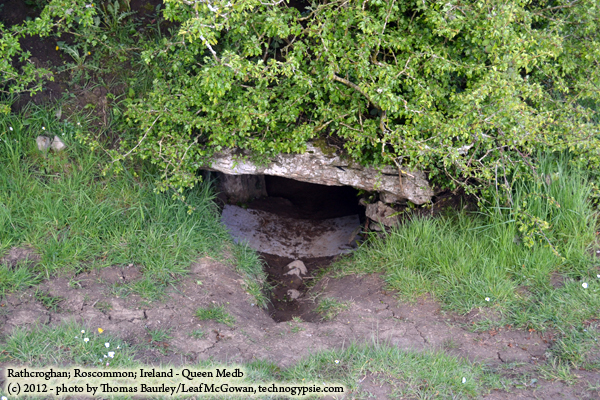
Oweynagat Cave – Cave of the Cats – Gateway to the Underworld and the Morrigan’s Palace.
The Sidhe or the Lands of the Fae
Ireland and the British Isles talk of an underground dimension or lands across the western seas hidden by mists where the original inhabitants of Ireland now live. The Mighty Sidhe, the Tuatha De Danann, and perhaps the Fomorians were all driven to this Underworld by waves of invaders such as the Gaels, who came from Spain and were led by chieftain Mil Espeine. It is believed they had no choice but to take refuge under the sidhe, which denotes ‘hills where the long barrows lay and which is also used to name a special kind of fairies in Ireland and the Scottish Highlands, the daoine sidhe.’ There are believed to be Knocks (Irish cnoc), which are hollow hills inhabited by large communities of faeries often led by a King and/or Queen.
The most common sites are located in Ireland and known as Knockma (ruled by Finvarra of the Connaught fae), Knockany (ruled by Aine of the Munster Fae), and Newgrange in county Meath where the Angus og myth takes place, and archaeological ruins still exist; and in Brittany, the Castro of Altamira led by Xana Mega, the Queen of the Fairies.
Many believe that during certain times of the year, humans can find sidhe as the faeries can often be seen dancing under the moonlight. Others believe faerie gates or portals connect these realms, from archways in trees, holes in stones, and fairie rings of mushrooms. The Sacred Isles of the Western Sea are known as Isles of Paradise, where supernatural beings reside, from Sirens to Mer-folk and the Lands of the Young. The waters surrounding these isles have magical properties.
Sterile women perform rituals at La Lanzada Beach (Galicia), where nine successive waves wash over them to help them become pregnant in these lands. On some of these Islands, the Gods, Goddesses, and Heroes reside. Anglesey (Min), located on the Northern Welsh Coast, is a sacred island of the druids of Britain; the Scilly islands, where archaeological remains of proto-historical temples have been found; and some of the Hebrides Islands, which were, in the Gaelic tradition, home of ghosts and demons: on one of them, Skye, the Irish hero Cuchulainn was educated by the war goddess Scathach. [wikipedia]