The Power of Numbers: The Power of One
ONE: represents the power of the person, the Me/Myself/ and I. Power of the Individual. It is a number, a numeral, and a glyph. It is representative of a single entity. It represents the unit of counting or measurement. It demonstrates Unity. It is the first odd number. The Power of Three
THREE: Represents the Power of the Trinity or The Threefold Path. Three is a Number, A Numeral, and a Glyph. It is the first odd prime number and the second smallest prime. It represents many important spiritual triads such as “The Three Realms: Ancestors, Spirits, and Deities” or “The Three Worlds: World of Land, World of the Sea, World of the Sky.” In time it represnets “The Past, the Present, and the Future”. It was also a very important number in the Indo-European Caste system: “Priests, Warriors, and Commoners”. Scientifically, three is very important as it represents that Genetic Information is encoded in DNA and RNA using a triplet codon system. Hemimetabolous insects undergo gradual metamorphosis through tree stages: The Egg, the Nymph, and the Imago. Atoms consist of three constituents: Protons, Neutrons, and Electrons. Everything comes in threes primary colors, trilogies, strikes, basic rock formations, Freuds division of the psyche, the wide men, the triple Goddess, the Trinity. The Triple Goddess and/or Triple Deities is very common throughout history and mythology The Fates, the Moirae, the Norns. These fit in one of the following general categories: (1) Triadic (forming a group of three) three entities inter-related in some way (life, death, and rebirth; or triplet children of a Deity) and always or usually associated with one another and appearing together in iconography or imagery; (2) Triune : (three in one, one In three) a being with three aspects or manifestations. (3) Tripartite (of triple parts) A being with three body parts where there would be normally one three heads, three arms, etc. There are many others triads and trinities in spirituality, religion, and belief systems. For Pagan and indigenous faiths for Deity, the Maiden, Mother, Crone [ Boy, Father, Wiseman] The Trinity of Life The Father, The Son, The Holy Spirit are very powerful triads. It is also a well known fact that The Third Time is a Charm. The Power of Five
FIVE: Represents the Power of Existence and of the Elements. “Earth, Air, Fire, Water, and Spirit”. According to Aristotle the universe is made up of five classical elements : Water, Earth, Air, Fire, and Ether. This is often represented in symbology with The Pentagram or Five Pointed Star. East Asias five elements: Water, Fire, Earth, Wood, and Metal. Five Cardinal Directions North, South, East, West, and Center. The 5 Books of Moses. The Five Books of the Torah Genesis, Exodus, Leviticus, Numbers, and Deuteronomy. Muslims pray to Allah five times a day. The Five basic Pillars of Islam. Law of Fives (Principia Discordia) All things happen in fives, or are divisible by or are multiples of five or are somehow directly or indirectly appropriate to 5. The Power of Seven
SEVEN: Is a lucky prime number, a factorial prime, a happy number, and a safe number. It represents the Seven Colors of the Rainbow Red, Orange, Yellow, Green, Blue, Indigo, and Violet. It is the Figurative Number of Seas. Seven is the number of Daughters of Atlas in the Pleiades (aka the Seven Sisters). It is the number of stellar objects in the solar system visible to the naked Eye The Sun, the Moon, Mars, Mercury, Jupiter, Venus, and Saturn. The number of main stars in the constellations of the Big Dipper and Orion is seven. The Seven Wise Masters, the Seven Sages of Gree, the Seven Wonders of the Ancient World, Seven against Thebes, the Seven Emperors of Rome, the Seven Hills of Rome, the Seven Hills of Constantinople, the Seven Liberal Arts. The Seven Days of Creation in Genesis; Seven years of plenty and seven years of famine in Pharoahs Dream, Seven days of the week, Seven Spirits of God in the Book of Revelations; Seven Stars; Seven Seals; Seven Last plagues; Seven Vials or Bowls; Seven Thunders in Revelations. The Seven virtues: Chastity, Temperance, Charity, Diligence, Kindness, Patience, and Humility. Seven deadly sins: Lust, Gluttony, Greed, Sloth, Wrath, Envy, and Pride. The Seven Chakras. The Number of Heavens in Islam; The number of levels of Earth in Islam. The Number of Archangels. The Number of Ranks in Mithraism. The Seven Lucky Gods in Japanese Mythology. The Number of Gateways traversed by Inanna during her descent into the Underworld. Every Seven years the Queen of the Faeries pays a title to Hel in the tale of Tam Lin. Thomas the Rymer went to the Faerie Kingdom for 7 years. The 7th Glyph of the Mayan Calendar is the Blue Hand which represents the days in creation and associated with creative perfection this is the glyph of the last day of their calendar that ends on Dec. 21, 2012. The Pleiades were the seven draughts of the Titan Atlas and the sea-nymph Pleione born on Mount Cyllene: Maia, Electra, Taygete, Alcyone, Celaeno, Sterope, and Merope. The number of points and meditations associated with the Faerie Star / Elven Star / Pleiadian Star: (1) The Sun (prosperity, justice, the gate), (2) Tree Spirits (friendship and healing), (3) Water Spirits (creativity, sexuality, awakening), (4) magic (blessings of the Goddess, love), (5) the Gateway (balance, entering Elfland), (6) Wind Spirits (justice, healing), (7) Success (Gaia consciousness). Magic Number Seven. The Power of Nine
NINE: Nine is the largest single digit in the base ten number system and thereby is the magic of the 9s multiplication table. Every item in the nine multiplication table the sum of the digits in which adds up to 9. 9 x 1 = 9; 9 x 2 = 18 [ 1 + 8 = 9]; 9 x 3 = 27 [ 2 + 7 = 9]; 9 x 4 = 36 [ 3 + 6 = 9 ]; and so forth for 45, 54, 63, 72, 81, and 90. If you took 673218 and added the digits up to = 27, add them together and you get 9. 9 is the logarithmic measure of probability of an event. 99% likely to occur. Nine is also the number of human creation (9 months in the womb). Power of creation is 3 x 3 = 9. THE FIVE ELEMENTS:
The Five Elementals are seen or described as five mythological beings found in the alchemical works of Paracelsus. These are The Gnomes (earth), The Undines (Water), The Sylphs (Air Elementals), the Salamanders (Fire Elementals), and the Power or Spirit. The Five fundamental building blocks of nature are Earth, Air, Fire, Water, AEther (Spirit). These elemental building blocks are often associated with the Five Cardinal directions (North, East, South, West, and Center respectedly). The four physical elements of earth, air, fire, and water are earthly and corruptible but the heavenly regions seem unchangeable such as the stars would be Aether (according to Aristotle).
From the dawn of religious thought there has been belief in an Underworld and/or an Otherworld. A place where we are trapped when we die, disturbed or without resolution, that sits upon our world, sometimes referred to as Limbo, Hades, The Waiting Place, and the Inbetween. Many believe in a Hell and a Heaven. Others believe in a Summerland. Others do not. Some believe in Reincarnation. But just about everyone has an opinion about where we go when we die.
The Otherworld is one place that many deduce is where human spirits reside after death. But it’s not just a place for ghosts and poltergeists. Still, it is also often labeled as a place of residence for all of the undead and supernatural, from zombies to vampires, from faeries to trolls, from Gods to Goddesses, and the elemental spirits of nature.
Celtic mythology calls “The Otherworld” (Orbis Alia) the “Realm of the Dead, the Home of the Deities, or the stronghold of other spirits, and the Mighty Sidhe.” Folklore depicts the Otherworld as existing over the western sea or underground, such as in the Sidhe mounds of Ireland and the British Isles, or as a realm layered like a transparency over the world of the living but invisible to our physical sight. I’m more of an advocate of the belief that the Elemental and Faerie Realm, Realm of Deities, and the Land of the Dead are all ‘separate’ realms … layered on top of each other as transparency-like layers of an onion in the worlds within worlds that make up the cosmology of universes in which we live.
The Irish described their Otherworld as underground and sometimes on islands in the Western Sea. I believe they actually saw it as a separate realm from the land of Faeries and the Sidhe, and scholars or folklorists, not being very well versed in the different dimensions, just lumped these worlds into one solitary world separate from the land of the living. There are many different references by the Irish to these realms, including Tir na mBeo (“the Land of the Living”), Mag Mell (“Delightful Plain”), and Tir na nog (“Land of the Young”), among other names.
This is one of the reasons I believe the Irish truly believed them to be different places. Irish mythology talks of these places as a country where the inhabitants never grew old, got sick, or died, where they were eternally at peace and happiness, and one year of occupation in that realm would equate to 100 human years.
The Greeks spoke of a similar place called the “Elysium” (Greek mythology). Of course, the Greeks and the Irish may have a shared origin in ancient Proto-Indo-European religion, so that might make sense. There are many folktales in both cultures where a beautiful young woman often approaches the hero and sings of these happy lands, offering him an apple or the promise of her love in exchange for his assistance in battle. The myths have him following her on a journey over the sea, and they are never seen again.
Mythological and folklore elements involve boats of glass, chariots, horses, food, drink, and lures of love. Sometimes, the mortal man returns to the human realm to find his previous family and friends deceased for ages and, while believed to have been gone for a few years, were actually gone for hundreds of years. (ex: Tale of Oisin, Thomas the Rymer, Rip Van Winkle, Tale of Bran and Branwen, etc.) There are quests in the tales, and a magical mist always seems to descend upon them. They are always changed and affected by their contact with the Otherworld. How many of these individuals cross over from the human realm to the land of spirits or the dead is abundant in Indo-European folklore and stories. These seem to occur in liminal places, gateways, or on special days of the year.
The Gaelic festival of Samhain (November 1st), as well as Beltane (May 1st), are believed to date when the boundaries between the worlds become even more permeable than usual, and visitors from both realms can travel in between the realms, sometimes on purpose other times accidentally. Folklore is obsessed with the concern about preventing the intrusion of spirits into the human world and the loss of humans to the Otherworlds. Many spells, charms, superstitions, and rituals exist throughout history to prevent the crossing over of humans and entities between these dimensions. Some believe that Irish folklore is a heaven of sorts. Interpreters of Irish poetry and storytelling claim the Otherworld is simply a land of paradise, happiness, and summer.
I am of the opposite view that the realms those stories tell about are a completely different world than the land of the Dead. I believe that there is a land of Faeries (Sidhe, Faerieland or Faerieworld), a land of the Dead (Otherworld), a land of Demons (Underworld / Hades / Hell), a land of Deities (Summerland or Heaven).
Land of the Dead is what I refer to when I discuss the Otherworld. Brittany sees this as an island someplace west of Great Britain. When the souls of the dead leave the human body, they go to the homes of fishermen and knock desperately on their doors for the ferry to these islands. The fishermen would leave their homes and ferry the dead to these lands in ghostly ships called “Bag a Noz.” Christian beliefs on the British Isles talk about a Galicia northern coastal village called ‘San Andres de Teixido’ where a little hermitage consecrated to Saint Andrew houses his bones. Tacitus says this is where the ‘heavens, seas, and earth end.’ It is believed by many that if you don’t visit this place when you are living, you must visit after you die in the form of a serpent or lizard to take your journey to the land of the dead, according to words from Jesus through Andres. Many Spanish authors also claim this is the starting place for the souls of the dead on their trip to the Other World.
The Irish God of Gateways and the Sea, Manannon Mac Lir, is often seen as a gatekeeper between these Isles of the Dead and the Lands of the Living. In modern fantasy, such as in the tales of the television series “Buffy the Vampire Slayer,” the gateway to the realms of the dead or the world of demons is called “The Hellmouth.” This serves as a magical portal between the worlds. Supposedly, it is a place of increased supernatural energy and a gate that attracts demons and other supernatural creatures as a hot spot. While completely created by the filmmakers, the concept is based on the gateways to the realm of the dead found in mythologies.
The “Otherworld” as the “Spirit World” or “Land of the Dead” is seen as a habitation realm of spirits. The belief in spirits comes from the theory that the Earth itself and all living things on the Earth have spirit counterparts that existed before the physical creation, and a living soul consists of a spirit body united with a physical body. The spirit’s existence is composed of organized and refined spirit matter that extends to all life, including plants, animals, and humans.
Even the Christian bible refers to plant spirits as being created as spirits before they were created with physical bodies (Moses 3:5, 9). Under these beliefs, there are premortal and postmortal spirit worlds. Premortal spirits exist initially in “heaven,” where monotheistic faiths believe their God lives. There is the belief by many that the spirit, after leaving the body from death, yet before the resurrection, is taken by an angel or a reaper to the home of God who gave them life; they are then often judged and/or assigned to a place of paradise or a place of hell and ‘outer darkness.’ Postmortal spirits inhabit a world where they reside and converse together in the same way as they do in the human world. There is the belief that they conduct similar activities, labor, and life as they did when they were living; it is a place where they learn and prepare for the next life as an extension of mortality. Those at unrest or unfinished with their mortal existence often haunt or are trapped in between the human realm and the Otherworld or the Underworld. Some equate these realms to be located in Middle Earth or akin to Hollow Earth Theory.
Mythological Placenames
The Underworld
is often a realm corresponding to what some call ‘the Otherworld.’ In the studies of religion and mythology, this is a generic term that applies to ‘the afterlife’ or any place where newly dead souls go. It is often seen as a neutral or dystopic realm in the afterlife, instead of Heaven or Hell, so prophesized by the religion of Christianity. Many also believe it is a realm that resides atop our own where the unrested / disturbed / or spirits reside until they can pass on to the land of the dead. To some, it is a waiting place or a limbo. Others label the Underworld as Hell or Hades. The Underworld is referred to as Mctlan by the Aztec, Kurnugia by the Babylonians, Naraka or Niraya by the Buddhists, Annwn or Mag Mell by the Celts, Yum gan (??) by the Chinese, Aaru / Anubis / Duat / or Neter-khertet by the Egyptians, Toonela by the Estonians, Tuonela by the Finnish, Elysium / Asphodel Meadows / Hades / Tartaros by the Greeks, Sheol / Gehenna by the Hebrew, Naraka / Yamaloka by the Hindu, Uku Pacha by the Inca, Adlivun by the Inuit, Jahannam / Narr / Janna / Barzakh / Araf by the Islam, Yomi / Jigoku by the Japanese, “Ji-Ok” ?? ?? by the Koreans, Aizsaule by the Latvians, Hawaiki by the M?ori, Pellumawida / Degin / Wenuleufu / Ngullchenmaiwe by the Mapuche, Metnal / Xibalba by the Maya, Bulu / Burotu / Murimuria / Nabangatai / Tuma by the Melanesians, Gimle / Hel / Niflheim / Valhall / Vingolf by the Norse, Ekera by the Oromo, Kasanaan / Empiyerno by the Philippine, Avaika (and other names) by the Polynesians, Shipap by the Pueblo, Inferno / Avernus / Orcus / Hades / Pluto by the Romans, Podsvetie / Peklo / Nava by the Slavs, Dilmun / Kur / Irkalla by the Sumerians, Guinee by the Vodou, and Hiyoyoa by the Wagawaga.
The Underworld is ruled by demons, spirits, veli, Cerberus, ghosts, and other supernatural guardians, as well as Baiame / Eingana by the Aboriginal, Allu / Anu / Anunnaku / Ereshkigal / Etemmu / Gallu / Humbaba / Mamitu / Nergal / Utnapishtim by the Akkadians, E Bukura e Dheut by the Albanians, Spandaramat by the Armenians, Mictlantecuhtli / Mictecacihuatl/ Chalmecacihuilt/ Chalmecatl by the Aztec, Erra / Nergal / Ninlil / Sursunabu / Ur-shanabi / Utnapishtim by the Babylonians, Batara Kala / Setesuyara by the Balinese, gNyan by the Bon, Yama / Emma-0- / Yanluo by the Buddhist, Mot by the Canaanites, Aed / Arawn / Cwn Annwn / Donn / Gwyn ap Nudd / Mannanon Mac Lire / Pwyll / Sluagh by the Celts, Gui / Yanluo by the Chinese, Demons / Devil / Satan / Lucifer by the Christians, Aken / Aker / Am-heh / Amunet / Ammit / Andjety / Anubis / Apep / Apis / Astennu / Ha / Imiut / Isis / Mehen / Naunet / Nehebkau / Nephthys / Nun / Nut / Osiris / Ptah / Seker / Thoth by the Egyptian, Jabru by the Elamites, Vanapagan by the Estonians, Charun / Culsu / Februus / Mania / Mantus / Nethuns / Tuchulcha / Vanth by the Etruscans, Kalma / Kipu-Tytti / Kivutar / Lovitar / Surma / Tuonen akka / Tuonetar / Tuoni / Vammatar by the Finnish, Cerberus / Charon / Hades / Keres / Persephone / Styx / Thanatos / Tartaros by the Greeks, Sasuleti by the Georgians, Ta’xet / Tia by the Haida, Yamaraja by the Hindu, Kachina by the Hopi, Ala by the Ibo, Supay / Vichama by the Incan, Dwi Shri / Ndara by the Indonesian, Pana / Sedna by the Inuit, Mala’ikah by Islam, Hisa-Me / Hotoke / Ika-Zuchi-no-Kami / Jikininki / Shiko-Me / Shiti Dama / Shi-Ryo / Yama by the Japanese, Dur by the Kassite, Preas Eyssaur by the Khmer, Veli / Velu mate / Zemes mate by the Latvian, Mot by the Levantine, Kalunga by the Lunda, Kewa by the Maori, Xibalba by the Maya, Egei / Ratumaibulu / Samulayo by the Melanesian, Chepi by the Narragansett, Estanatelhi by the Navajo, Mctanteot by the Niguiran, Garmr / Hel / Ran by the Norse, Angra Mainyu / Azhi Dahaka / Peri by the Persians, Bathala / Demonyo Demon / Lucifer / Dyablo Diablo / Satan / Diyos God by the Philippine, Horo by the Phoenicians, Men by the Phrygian, Hikuleo (and many others) by the Polynesians, Picullus by the Prussians, Iyatiku by the Pueblo, Cereberus / Dea Tacita / Dis Pater / Egestes / Fames / Inferi Dii / Larenta / Letum / Libitina / Mors / Orcus / Pluto / Proserpina / Viduus by the Romans, Dyavol / Satanaya by the Russians, Yambe-akka by the Saami, Amotken by the Salish, Chebeldei / Kul by the Siberians, Crnobog / Flins / Marzana / Nyia by the Slavs, Edimmu / Ekimmu, Urshanabi (and many others) by the Sumerians, Cur by the Tamil, Heros by the Thracian, Erlik by the Turkic, Baron Cimetiere / Baron La Croix / Baron Samedi / Ghede / Maman Brigitte / Marassa Jumeaux by the Vodoun, Tumudurere by the Wagawaga, Oya by the Yoruba, Nga by the Yurak, and Uhepono by the Zuni. [Retrieved from “http://en.wikipedia.org/wiki/Underworld”]
Many believe the underworld is hidden within the depths of the Earth; some say the center of the Earth. According to Greek Mythology, it is the Kingdom of the Dead and is ruled over by Hades (residing at the very depths), who is only concerned with increasing the population of the Underworld. It is surrounded by a series of rivers such as the Acheron (river of Woe), Cocytus (river of lamentation), Phlegethon (river of fire), the Styx (river of unbreakable oath), the Lethe (river of forgetfulness). Across the rivers lies the gate to the mortal realm guarded by Cerberus. Many believe the dead area is ferried across the Acheron by Charon to Hermes, who leads them to the gates. Only those who can afford the fare, with coins on their lips or eyelids, receive passage. The rest are trapped between the worlds.
Once in the Underworld, you cannot leave. At the Gates, those are judged by Rhadamanthus, Minos, and Aeacus, who pass sentence – those who are good go to the Elysian Fields, and the rest go through ordeals and often to the depths of the Underworld. Many see the Underworld as an unpleasant realm of misery, death, despair, darkness, and shadow.
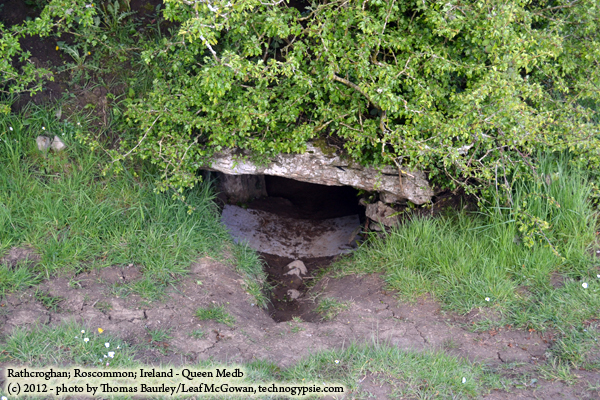
Oweynagat Cave – Cave of the Cats – Gateway to the Underworld and the Morrigan’s Palace.
The Sidhe or the Lands of the Fae
Ireland and the British Isles talk of an underground dimension or lands across the western seas hidden by mists where the original inhabitants of Ireland now live. The Mighty Sidhe, the Tuatha De Danann, and perhaps the Fomorians were all driven to this Underworld by waves of invaders such as the Gaels, who came from Spain and were led by chieftain Mil Espeine. It is believed they had no choice but to take refuge under the sidhe, which denotes ‘hills where the long barrows lay and which is also used to name a special kind of fairies in Ireland and the Scottish Highlands, the daoine sidhe.’ There are believed to be Knocks (Irish cnoc), which are hollow hills inhabited by large communities of faeries often led by a King and/or Queen.
The most common sites are located in Ireland and known as Knockma (ruled by Finvarra of the Connaught fae), Knockany (ruled by Aine of the Munster Fae), and Newgrange in county Meath where the Angus og myth takes place, and archaeological ruins still exist; and in Brittany, the Castro of Altamira led by Xana Mega, the Queen of the Fairies.
Many believe that during certain times of the year, humans can find sidhe as the faeries can often be seen dancing under the moonlight. Others believe faerie gates or portals connect these realms, from archways in trees, holes in stones, and fairie rings of mushrooms. The Sacred Isles of the Western Sea are known as Isles of Paradise, where supernatural beings reside, from Sirens to Mer-folk and the Lands of the Young. The waters surrounding these isles have magical properties.
Sterile women perform rituals at La Lanzada Beach (Galicia), where nine successive waves wash over them to help them become pregnant in these lands. On some of these Islands, the Gods, Goddesses, and Heroes reside. Anglesey (Min), located on the Northern Welsh Coast, is a sacred island of the druids of Britain; the Scilly islands, where archaeological remains of proto-historical temples have been found; and some of the Hebrides Islands, which were, in the Gaelic tradition, home of ghosts and demons: on one of them, Skye, the Irish hero Cuchulainn was educated by the war goddess Scathach. [wikipedia]
Flower Fairies are believed to be the fairy spirit essence of various flowers; they are portrayed as tiny creatures that rarely are larger than 20 cm. tall. Most of these depictions come from Victorian art and is a common ‘model’ for what most people think of what is a fairy. They live in tree tops, marshes, forests, gardens, fields, and waysides. It is believed by many that when a seed sprouts a flower fairy is born. Each flower fairy lives upon its host plant and not found too far from it. They sleep within the flower. As the flower grows so does the fairy. The flower fairy exists to tend and watch over the flower. If the flower dies, so too does the fairy. Disembodied spirits, elves, fairies or daemons; often the term used for the Air elemental known as sylphs, or as the name of the elementals of Spirit. Flower fairies are often also referred to as nature sprites or spirits. Some define sprites as a being who are beginning a course of evolutionary growth and in the elemental states of their growth. In some ways, this is the concept, in the life of a flower, what makes a flower fairy a sprite. Examples: http://www.flowerfaeries.com/flowerfairies.shtml; http://www.flowerfairies.com/US_version/home.html.
“Ragnarok”, “Gotterdammerung”, or a.k.a. “Doom of the Gods” or “Final Destiny of the Gods” is the apocalypse in Norse mythology. Its an important event in the Norse canon. This event will be followed by the Fimbulvetr, or the “Winter of Winters”. These three winters will follow each other with no summer. This will be a time of conflicts and feuds between all people and inhabitants on Earth, and all morality is believed will disappear. The mythos discusses that the “wolf Skoll will devour the sun and his brother Hati will eat the moon, plunging the Earth into Darkness. The stars will vanish from the sky. the Fjalar cock will crow to the giants and the Gullinkambi cock will crow to the Gods. A third cock will awaken the dead. The Earth will shudder with earthquakes and every bond and fetter will burst. The wolf Fenrir will be released. The sea will rear up because Jormungand the Midgard Serpent will write in fury making his way to the lands. With every breath, he’ll stain the soil and skly with poison. The Naglfar ship will be freed from waves caused by the serpent, and the Hymir giant will lead the giants to the battlefield. The Realm of the dead will send a second ship with Loki as the helmsmen, off to the battle. The fire giants led by Surt will leave Muspell in the south to join forces against the Gods and scorch the Earth. Heimdall will sound his horn, calling the sons of Odin and heroes to the battle. From all corners of the world – the Gods, the Giants, the Dwarves, the Demons, and the Elves will ride towards the huge plain of Vigrid to fight the last battle. Odin will engage Fenrir in battle, and Thor will attack Jormungand. Thor will be victorious, but the poison will eventually kill him. Surt will seek out the swordless Freyr, who will succomb to the giant. The one-handed Tyr will fight the Garm and they will kill each other. Loki and Heimdall, will meet a final time, and both will die. The fight between Odin and Fenrir will rage for a long period until Odin gets seized and swallowed. Odin’s son Vidar will leap to kill the wolf. Surt will fling fire in every direction and the nine worlds will burn, killing all friends and foes. The earth will sink into the sea. After the doomsday, a new and idyllic world will arise from the sea and abundant with supplies. Some of the Gods will survive will others will be reborn. Wickedness and misery will be non-existent and Gods with men will live happily together. Two humans, Lif and Lifhrasir will survive by hiding in the wood Hoddmimis holt and will repopulate the Earth. The personified sun, Sol will have a daughter at least as beautiful as she and this daughter will follow the same path as her mother. ” This cosmic event is attested in the 13th century “Poetic Edda” from early traditional sources, and the “Prose Edda” written also in the 13th century by Snorri Sturluson. There are several archaeological objects that depict events from Ragnarok. These are (1) Thorwald’s Cross: a partially surviving rune stone erected on the Isle of Man, depicting a bearded human holding a spear down at a wolf, his right foot in its mouth, while a large bird sits at his shoulder. This dates between 940-1000 C.E. Its believed to depict Odin, with a raven or eagle at his shoulder, being consumed by Fenrir at Ragnarok. There is also a depiction of a large cross and another image parallel to it that some state is Christ triumphing over Satan. (2) Gosforth Cross: mid 11th century, from Cumbria, England that parallel’s Thorwald’s Cross combining Norse Pagan and Christian symbolism in a similar manner apparently combining scenes from Christian Judgement Day and the Pagan Ragnarok. (3) The Ledberg Stone. 11th century C.E. from Sweden and is similar to Thorwald’s Cross featuring a figure with his foot at the mouth of a four-legged beast, perhaps of Odin being devoured by Fenrir at Ragnarok. (4) The Skarpaker Ston. 11th c. C.E. from Sweden – father grieving his dead son used the same verse as in the Poetic Edda in the engraving translating to “Earth shall be riven and the over-heaven”.
Some correlations have been made between Ragnarok and the 9th century Old High German epic poem Muspilli about the Christian Last Judgement that states the world is to be consumed in flames. Other comparisons between Ragnarok and other Indo-European peoples depict a later evolution of a Proto Indo-European belief about a cosmic winter motif between the Norse Fimbulwinter, the Iranian Bundahishn, and Yima. Vidarr’s stride compared to Vishnu’s with a special shoe to tear apart the beastly wolf. Larger patterns drawn between final battle events in Indo-European cultures including the occurrence of a blind or semi-blind figure in the themes. Other theories about the volcanic events after the death of the Gods – the sun turning black, steam rising, flames touching the heavens – may be inspired by the volcanic eruptions on Iceland. Records of eruptions on Iceland bear strong similarities to the sequence of events described in Voluspa, especially the eruption at Laki that occurred in 1783.
Articles can be purchased for use in magazines, print, or for reproduction on web sites. Photos are copyrighted and cannot be reproduced without permission of authors Tom Baurley or Leaf McGowan. Photos can be purchased via Technogypsie.com at Technogypsie Photography Services for nominal use fees. Restaurants, Businesses, Bands, Performances, Venues, and Reviews can request a re-review if they do not like the current review or would like to have a another review done. If you are a business, performer, musician, band, venue, or entity that would like to be reviewed, you can also request one (however, travel costs, cost of service (i.e. meal or event ticket) and lodging may be required if area is out of reviewer’s base location at time of request).
These articles/stories are done by the writer at no payment unless it is a requested review and the costs for travel, service, and lodging was covered – in which case, expenditure reimbursement will not affect review rating or content. If you enjoy this story, tale, article, or review and want to see more, why not buy our reviewer a drink to motivate them to write more? or help cover the costs they went through to do this review?