Rag Trees and Money Trees

Wishing Trees

“Wishing Trees” are very common throughout Ireland, England, and Scotland. They are usually individual trees upon which “folk magic”, “folk spells”, “faerie offerings”, or “prayers” are offered. Sometimes it is particular to a specific species, where the tree lives, or how it looks. Many times they are associated with faeries or a particular Deity. They are very common alongside sacred wells in Ireland and the UK. The practice usually involves petitions or offerings made to the tree, a nature spirit associated with the tree, a Saint, a God/dess, or the ancestors with a request for a wish to be fulfilled.
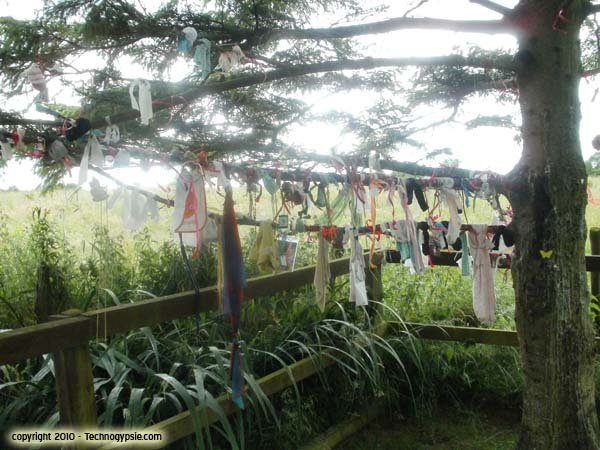
St. Brigid’s Well, Kildare, Ireland

Coin trees involve the offering of coins to a particular tree. These are often hammered into an old trunk, branch, or small tree. Sometimes these are oaks, rowan trees, hawthorns, ash, or thorn trees. Some hawthorns serve for fertility magic such as a common one in Argyll, Scotland by the Ardmaddy House. Sometimes hundreds of coins are hammered into the bark and wood with the belief that a wish will be granted for each of the coins added. A similar one that is well known is the sacred well of Saint Maree in Loch Maree, Gairloch, Scotland which has hundreds of coins hammered into it. Also all over the Yorkshire Dales, such as in the pictures shown here I took during a hike, are found hundreds of coins offered to nature spirits and/or faeries for a granting of a wish.
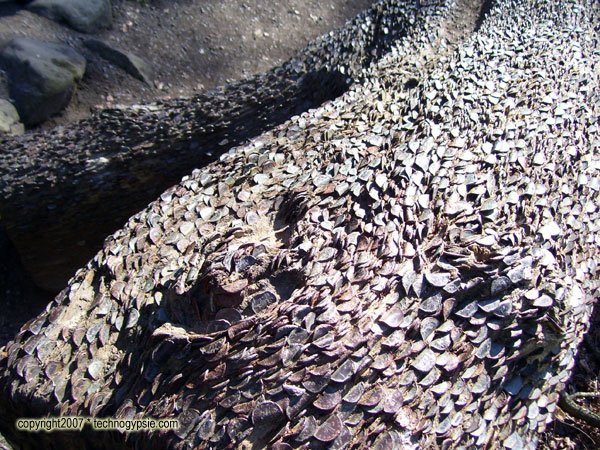
Penny offerings for good luck and as gifts to the Fae "Wishing Tree" Yorkshire Dales, England

Clootie Wish Trees (a.k.a. Cloughtie or Rag Trees) are found next to sacred wells throughout England, Scotland, and Ireland. This involves the practice of tying a piece of cloth, often called “clouties”, “clooties”, or “cloughties” to ask for an answer to a prayer, a wish, and/or a petition. As the rag decays, so will the illness; or so will the petition come true. It is a form of sympathetic magic. One of the most well-known “wishing trees” is the Madron Well in Cornwall. With the Madron well, a sacred well of healing, it is believed that as the cloth rots, the ailment that one is seeking a cure for disappears. Even Charles Darwin recorded the finding of a “wishing tree” in his travels in Argentina called “Walleechu” which was treated by the local inhabitants as a Deity. It was festooned with offerings such as cigars, food, water, and cloth hung from the branches by bright strips of colored thread. Popular wishing tree in Hong Kong is the “Lam Tsuen Wishing Tree” near the “Tin Hau Temple” in Lam Tsu where paper tied to an orange and thrown up in the trees that stick will grant the petitioner a wish. The wishing tree next to Brigid’s Well in Kildare is a common tree for petitioning healing requests.

The Wishing Tree at Tobar Ghobnatan Holy Well
not only consists of rags, but trinkets, rosaries, jewelry, prayer cards, toys, personal effects, and other items given as offerings. You can see these at Tobar Ghobnatan Wishing Trees. The concept is to leave behind something of yourself or someone that you love that is in need of prayers, healing, or petitions. The concept with the rags is that when it decays so will the illness that it represents. This is a kind of sympathetic magical rite. Unfortunately, some pilgrims to the sites don’t realize how the spell or magic works. You can see this when they tie a piece of a plastic bag on the tree. Plastic will take forever to decay, so will the illness it is to represent. If only they knew! In addition to the rags, others leave coins, jewelry, ri

ngs, prayer cards, figurines, toys, personal effects, clothing items such as belts, shoes, garments, and trinkets. The cloutie and Wish trees found at Tobar Ghobnatan are considered to be dedicated to the Matron Saint of Ballyvourney and sacred Bee-Keeping mistress, Saint Ghobnatan holy pilgrimage site and monastic settlement known as “Tobar Ghobnatan”. This is the legendary home of St. Gobnait/Ghobnatan. It is located a kilometer south of the village of Ballyvourney where her church Móin Mór (a.k.a. Bairnech) was built.
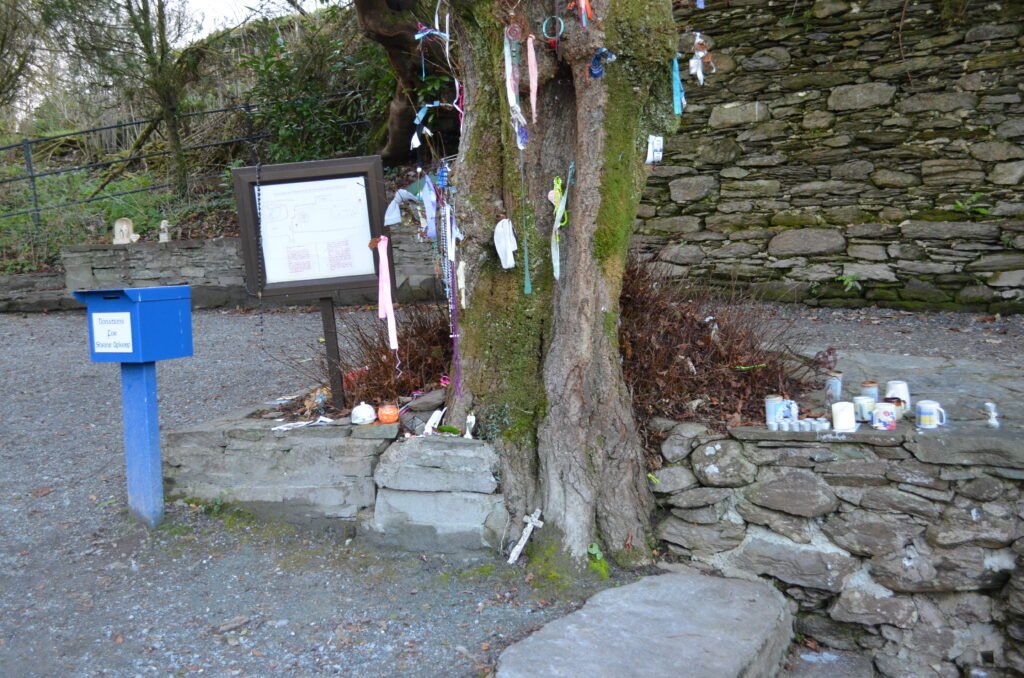
Tobar Ghobnatan Holy Well  - County Cork, Ireland.
Tobar Ghobnatan Holy Well – County Cork, Ireland.
(more…)


Glastonbury Tor

Glastonbury Tor

One of the most infamous landmarks of Glastonbury is the Tor. It is extremely popular in the Arthurian legends. The Tor is a tall hill that ascends over 158 meters from Glastonbury and hosts panoramic views of the English countryside, viewing the three counties of Somerset, Dorset, and Wiltshire. During the legendary Isles of Avalon, this would have been the highest point on the isles. Geologically the Tor rises from Lower lias clays and limestones from the Middle and Upper Lias to a deposit of hard midford sand at the cap of 521 feet and is called the “Tor Burr”. The Tor has a conical shape made up of horizontal bands of limestone, and clay, and capped with sandstone. As erosional forces dug away with limestone and clays, the sandstone lasts resisting erosion and creating steep slopes. Historically, this Tor would have towered as an island above the flooded Somerset Levels, but as the levels were drained over the ages for agriculture and other uses, it is now a hill blended into the landscape. The terraces on the slopes date to Medieval times when the hillside was one of the few dry locations where locals could farm and graze animals. The Tor is believed to have been a sacred site of pilgrimage for over 10,000 years and is still used today. It is believed to be a gateway to the Otherworld. Lithics and other artifacts show the presence of humans here for thousands of years.

It was said that Joseph of Arimathea 63 C.E. founded a settlement here. Archaeologically the earliest found was a 6th-century settlement, the earliest found in Glastonbury and many believed was the first Christian community in the area founded by Joseph. Evidence from the 6th century was found during excavations of 1964-1966 that exposed occupation during this time, and the second phase of occupation from 900-1100 C.E. by the finding of a head of a cross that was probably monks cells cut into the rock on the summit, a tradition of a monastic site on the Tor was confirmed by the 1243 charter granting permission for a fair at the Monastery of St. Michael at this location.

During the 8th century, the Great Abbey was built on the site of the present abbey ruins in the 8th century and then rebuilt becoming the wealthiest abbey in Britain but destroyed in 1539 by the Dissolution of the Monasteries.

In the 13th century, it is said the first Church on the Tor to be built was St. Michael’s Church in the charter of 1243 C.E.

These ruins are what you see today the most notable part of which is St. Michael’s Tower. These ruins are from the 2nd church replacing the original that was destroyed in the 1275 C.E. earthquake. This second church lasted until 1539 until the Dissolution of the Monasteries.

The earliest legend after Joseph of Arimathea is the mid-thirteenth century story of St. Patrick coming from Ireland and becoming the leader of the hermits here. He was said to have discovered an ancient Oratory in ruins atop the Tor after climbing through dense woods.

In the historic era, this is the location where Richard Whiting, the last Abbot of Glastonbury, and some of his monks were hung.

“Glastonbury Tor, one of the most famous and sacred landmarks in the West Country. From the summit at 158 meters, you can get amazing views over three counties – Somerset, Dorset, and Wiltshire. What is the tor? “Tor” is a West Country word of Celtic origin meaning hill. The conical shape of Glastonbury Tor is natural – due to its rocks. It is made up of horizontal bands of clays and limestone with a cap of hard sandstone. The sandstone resists erosion, but the clays and limestone have worn away, resulting in the steep slopes. A historic landscape: Before modern drainage, the tor in winter would have towered as an island above the flooded Somerset Levels. The terraces on the slopes date back to medieval times when the hillside was one of the few dry places where people could grow crops and graze animals. A place of pilgrimage: The tor has been a place of pilgrimage for over 10,000 years. Many thousands of people still visit it each year, some for its links with religion, legends, and beliefs, and others because it is such a renowned landmark. History of the Tower: on the summit is St. Michael’s Tower, part of a 14th-century church. It was built to replace a previous church which had been destroyed by an earthquake in 1275. The second church lasted until the Dissolution of the Monasteries in 1539. At this time, the tor was the scene of the hanging of Richard Whiting, the last Abbot of Glastonbury. The Tor was the site of a 6th-century settlement, the earliest yet found in Glastonbury. Some believe this was the first Christian community in the area, said to have been founded by Joseph of Arimathea in AD 63. 8th Century: The great Abbey: A stone church was built on the site of the present abbey ruins in the 8th century. It was rebuilt and became one of the wealthiest abbeys in Britain, but was destroyed in 1539 during the Dissolution of the Monasteries. 13th century: A church on the tor – The first written record of St. Michael’s Church on the tor is in a charter of 1243. The building was destroyed in an earthquake in 1275. 14th century- St. Michael’s Tower – in the 14th century, a new church was built on the tor, which survived until the Dissolution. St. Michael’s tower is all that remains. Glastonbury Tor rises from the Lower lias clays and limestones through the Middle and Upper Lias to a deposit of hard midford sand on the cap, 521 ft. high known locally as Tor Burr. This is more resistant to erosion than the lower levels making the slopes steep and unstable. These steep sculptured slopes, rising dramatically from the isle of Avalon in the flat Somerset levels, have encouraged much speculation about the origin of the Tor in legend. The earliest reference is a mid-thirteenth century story of St. Patrick’s return from Ireland in which he became a leader of hermits at Glastonbury and discovered an ancient ruined oratory on the summit after climbing through a dense wood, scattered fines of prehistoric, roman, and later objects suggest the Tor was always used by man, but evidence for actual occupation from the 6th AD was uncovered in the excavations of 1964-6, the second phase of occupation between 900-1100 was distinguished by the head of a cross and what were probably Christian monk’s cells cut into the rock on the summit, the tradition of a monastic site on the Tor is confirmed by a charter of 1243 granting permission for a fair at the monastery of St. Michael there. The present tower though later modified is essentially the 15th century and is associated with the second of two major churches which stood on the summit. The second one was probably built after the destructive earthquake of 1275. The monastic church of St. Michael closely associated with the Great Abbey in the town below fell into ruin after the Dissolution of the monasteries in 1539 when Richard Whiting the last abbot of Glastonbury was hanged on the Tor.” ~ information signs on the Tor, Glastonbury, England.


Helltown (Boston, Ohio)

Boston history sign at Cuhuyoga National Park,
image Creative Commons share

So, while on an archaeological survey project in Ohio, I investigated local myths, legends, and urban lore. One of the sites of interest to pop up on my radar was the government take-over eminent domain of a town formerly known as “Boston, Ohio”. It is now fabled in urban legend and called “Helltown.”

I dismissed visiting because, according to Atlas Obscura, all town remnants had been bulldozed and flattened; there’s nothing to see there since 2016. It would have been a 4-5 hour round-trip excursion, so I decided not to go. Plus, rumors of a toxic dump are just not something my asthmatic ass needed during a pandemic. So, it was boxed away in my mind as a lost ghost story.

Then, upon returning to the Pacific Northwest while looking for something to watch … the pseudo-documentary by the Travel channel of Series 1, episode 1: Helltown, popped up on Amazon Prime. It was free since I was subscribed to Discovery Channel, so why not? It was the Blair Witch Project in a different light: the utterly false story, narrative, and made-up mythology based on actual urban lore and legend. No more than one episode was released in 2017. I assume they took a real video of the location before the Park System razed it.

Helltown, Travel Channel’s Documentary?

In 2017, the Travel Channel released a documentary/docudrama to explore the different theories and facts around what had happened to Boston, Ohio, in 1974 and why it was called “Helltown.” It’s true that in 1974, President Ford ordered the evacuation of Boston, Ohio. No one knows why, but the official story was for the preservation of natural beauty to turn into a National Park. There was a chemical spill, but that’s all that is known. Locals claim the Wendigo ran around the site, that there was a satanic cult operating in the town, that there were mutations caused by the spill, that it was a hangout for serial killers, and that it has a crybaby bridge. None of these stories have proof of them. So what did happen?

The docudrama by the Travel Channel claimed “Boston, Ohio,” aka “Helltown,” was inhabited by the “WW” cult that worshipped the wendigo. While the government was clearing the town in the 1960s, there was a Waco-style shootout between the Feds and the cultists, leaving 14 dead. In 2016 a local teenager investigating “Helltown” was attacked on a YouTube live stream and eaten by a Wendigo. According to Snopes, none of this occurred.

The Documentary followed stories of a military cover-up of a mutation causing a chemical spill, forcing the government to evacuate the town for a clean-up and restoration. At the same time, an Irish Catholic turned Pagan turned Satanic Cult started animal sacrifices to a wendigo in the woods, and a shoot-out happened between the military and the locals, leading to death. Not to mention the story of the all too common missing kids. The Docudrama included supposed interviews, re-enactments, fake newspaper articles, fake YouTube videos, and fake professors—all hogwash and “Blair Witch Project” style shock-journalism.

The local legends

All too famous in local lore, Helltown, Zombieland, and many stories run everywhere – especially during Halloween. Every state has satanic ritual stories, as do their intriguing crybaby bridges, missing children, and mutations. There is no evidence of missing kids or Waco-style shootouts between the Feds and cult members. The Army didn’t kill locals. No bear was dead. No teenagers were attacked or eaten by said bear. These parts were created by the “Helltown” docudrama. The locals, however, pre-filming, did have their legends and ghost stories. The 20-second-long YouTube video supposedly uploaded in 2016 depicting a girl screaming amidst flashing lights was faked.

The Satanic Church

There was a local church in Boston, Ohio, that had some upside-down crosses in its architecture, belonging to a typical Gothic style. There were no Satanists operating out of the church or in the town. It was a Presbyterian Church called “The Mother of Sorrows.” It was not formerly an Irish Catholic Church, as the fake documentary dictated.

The Crybaby Bridge

Every town has them. It’s a local bridge where one claims late at night, and you can hear babies crying, either coming from the bridge itself or the nearby woods. Some claim that tiny hand prints would appear on your car windows or hood.

The Murder Bus

Before the town was demolished, there was a graffiti-laden old school bus that locals claimed housed “serial killers.” It was, however, just an abandoned bus that a local family lived in while building their home. There is no evidence of actual serial killers living there.

The End of the World

Many dark roads, especially those with ledges along them, have this nomenclature. The one in Boston, Ohio, was a steep section of Stanford Road, so it could look like someone driving it was dropping off at the “End of the World.”

Mutations

Because the local Krejci Dump was known to have chemical contamination, numerous stories flooded the area with tales of mutated giant frogs, the Wendigo, mutated glowing people that were zombie-like, or glowing head creatures wandering the woods. The dump is genuine. The chemical spill was a problem. The National Park bought the landfill for their waste, but local rangers got sick and suffered chemical burns due to the heavy metals and chemicals in the ground. It was closed and cleaned up by 2015 after it was declared a Superfund site.

The Wendigo of Boston, Ohio

The local Algonquin tribes did have lore about a humanoid creature with deer antlers that would eat humans. The creature lives around the Great Lakes and/or Nova Scotia. However, there has been no scientific documentation of its existence nor real records of sightings in this area outside of what the docudrama claimed.

Real History:

The area’s original inhabitants were the Delaware or Lenape people, an Algonquin tribe known as the Mingo, who had a village next to Clear Creek in Ohio. There was bloodshed between the Euro-American settlers and the local Native Americans, and it was quieted with the Treaty Of Easton. They left in 1755. The settlement was re-founded in the 1770s by the Lenape and was called “Clear Town” after the “Clear Creek” it was established. Some claim that the German word for “Clear” is “hell” and it was nicknamed “Helltown”.

They abandoned the village in 1782 after struggles with Euro-Americans and Colonial American troops. The Gnadenhutten Massacre of 1782 occurred, killing 96 Lenape. After the bloodshed in 1782, the village was abandoned as it supposedly sits along a battle trail that stretched from Sandusky through the Cuyahoga River valley. After struggles vanished, Euro-American homesteaders settled the area and built the town of “Boston, Ohio”. According to archaeologists, in the late 19th century, the village was a high mound composed of sandstone rocks and packed earth. Supposedly, Lenape graves were buried there, but a local farmer plowed over them in 1881. The only artifacts recovered were an iron tomahawk, two iron knives, stone arrowheads, a stone ax, a gunflint, and some brass mountings from a musket.

The town was named after its township and officially settled by Euro-Americans in 1820. In 1821, it was home to a sawmill called Boston Mills. A post office was established in 1825 and remained in operation until 1957.

Congress passed Public Law 93-555 in 1974, permitting the U.S. Government to establish the Cuyahoga Valley National Recreation Area. The government purchased the town of Boston and relocated its residents out of the area. This eminent domain action condemned hundreds of homes and businesses, closing the town of Boston. After clearing the town, the Government fell behind on the development of the National Park. This left the area a ghost town with abandoned buildings and empty streets.

Locals came up with their conspiracy theories, claiming the government felt the site was haunted, a wendigo was killing people, serial killers were hiding in the area, and a toxic spill was causing mutations. The government demolished the last structures in 2016. President Gerald Ford claimed the area needed to be turned into a National Park to preserve the environment, taking large swaths of land surrounding Boston, Ohio. However, while by 2016, they finally demolished all remnants of the town, they didn’t turn it into a park for over half a century after taking it from its residents. The U.S. government took it from the indigenous tribes and then took it from its people.

Visiting Helltown

According to Atlas Obscura, nothing exists in Boston, Ohio. It is, however, in the Cuyahoga Valley National Park and, therefore, easy to visit, though there is nothing to see. It is in the Boston Township just west of Brandywine Falls. Travel to Brandywine Falls, exit 271, and find the “road closed” sign.

Bibliography/Recommended Readings:

  • Atlas Obscura 2019 “Helltown, Ohio”: visited 5/19/21.
  • Case, H.B. “Description of Mounds and Earthworks in Ashland County, Ohio.” In Miscellaneous Papers Relating to Anthropology. Washington, D.C.: Government Printing Office, 1883. p. 74.
  • Didymus, John Thomas 2019 “Is Helltown Real or Fake? Was Ohio Teenage Girl Killed in Wendigo Attack?” Monsters and Critics 23 September 2019.
  • Evon, Dan 2019 “Does Helltown Film Document Weird Happenings in Abandoned Ohio Town?” SNOPES. Website referenced: https://www.snopes.com/fact-check/helltown-document-real-events/ on 5/19/21
  • IMDB 2017 Helltown, Season 1, Episode 1 viewed on Amazon Prime.
  • Urbex Underground n.d. “The Actual Truth About Helltown Ohio”. Website referenced 5/19/21: https://urbexunderground.com/helltown-ohio/


Spirits and Entities, the spirituality of Alcohol

Comments Off on Spirits and Entities, the spirituality of Alcohol | Living Myth, Magic(k), Mythology, Religion Tags:, , , , , ,
Spirits, Dublin, Ireland

Spirits and Entities of Alcohol
by Thomas Baurley, Leaf McGowan, Technogypsie Productions

It always amazes me how the world really doesn’t understand the “root” of all things, nor pay attention to the “history” of various items or substances that they use occasionally or daily in life. I strongly believe it is very important to know the “root” and “makeup” of anything one puts in their bodies. Regardless of whether one is religious, spiritual, or scientific – the role of religion and spirituality in all aspects of life has some intriguing elements that should not be ignored.

The proverb “You are what you eat”; has a lot of elements of truth in that saying because what you put in your body affects it chemically, physically, mentally, emotionally, and yes, spiritually. I won’t debate between science and religion in this article and for those readers that are atheist and don’t believe in spirituality – while reading this – simply ignore the spiritual overtones of this article and focus on the chemical aspect of what is being put in your body and understanding the elements you allow into your temple. For those readers that are avid drinkers – think about the drink you are putting in your body and go for higher quality substances as one really should consider changing to “organic” and “triple distilled” spirits instead, and for the spiritual user – know the entity or “spirit” you are inviting into your being.

This is not a negative article on drugs, substances, or alcohol, but rather a spiritual understanding of why we use them, the benefits, and the dangers associated with them. Alcohol use needs to be practiced responsibly, for abusing it can lead to serious consequences. There really is more to “being under the influence” than you can rationally understand. Historically and spiritually, in all world cultures and religions, in folklore and mythology, every substance, every herb, every mineral, and every plant has a “spirit” or “entity” or “deity” assigned or associated with it. Drugs – Alcohol, barbiturates, hallucinogens, chemicals, or what-not are made of compositions of plants, herbs, minerals, and living matter.

Drugs are medicines as well as poisons, with positive and negative effects on a living host that ingest them. Side effects from these drugs create various moods, effects on the body, mind, spirit, and persona. Many of these effects are utilized for spiritual visions, trances, omens, oracles, prophecies, messages, or communication with the beyond in the realms of religion. When abused, they often consume the body and the soul and will create a degradation of a being. Regardless of the substance: alcohol, marijuana, psilocybin, LSD, MDMA, barbiturates, etc. – Each substance has its own entity or spirit that culture attributes certain persona and effects to. It is pretty important to understand what entities you are dealing with, and how to gain advantage from a temporary relationship with them, and how to avoid them taking advantage of you.

Dr. Mangor’s Absinthe Collection, Los Angeles, California

For this article, I’m focusing on “spirits” or “alcohol”, as it is the most common grouping of entities that the mass population deals with. Why is “Alcohol” given the name “spirits” in the annals of history? The words “alembic” and “alcohol” are metaphors for “aqua vitae” (Life Water) and “Spirit”, often refer to a distilled liquid that came from magical explorations in Middle Eastern alchemy. “Alcohol” comes from the Arabic “al-kuhl” or “al-ku??l”, which means “Body Eating Spirit”, and gives the root origin to the English term for “ghoul”. In Middle Eastern Folklore, a “ghoul” is an “evil demon thought to eat human bodies”, either as stolen corpses or as children.

Since the root of the name “alcohol” is related to the concept of “body eating spirit”, this is also one of the early roots to traditional taboos on imbibing alcohol in the beginnings of Islam and similar prohibition faiths. In Islam, consumption of any alcohol is punishable with 80 lashes. To many “Pagan” or “Heathen” faiths, the imbibing of spirits and the temporary relationship with these entities gives definition to the “aqua vita” beliefs or “life water” or “connection/communication with spirits” that can be quite beneficial. In fact, faiths that had their roots in Paganism, such as Christianity and Islam, have carried over beneficial beliefs about the consumption or imbibition of alcohol.

As Middle Eastern alchemists ingested alcohol they reported that their senses deadened and this is why they saw the elixirs produced as possessing “body taking” qualities. This is where the Europeans are believed to have derived the use of “spirits” for “alcohol”. What is ingested affects a living body spiritually, mentally, emotionally, and physically. Some believe it will affect the soul as well and that it is all about relationships. Some faiths and cultures have credible valid positive reasons to abstain from drugs and alcohol, while others have equal reasons to promote them.

Many cultures see drugs and alcohol as negative, but if one looks into the history of these elementals, there exist many positive elements in their usage, especially when balanced with spirituality and religion. Many cultures and faiths traditionally ingest something in order to commune with the Divine, God/desses, and/or spirits. Whether the wine and bread of Catholic Mass or the trance induction of peyote with South American Shamans, the use of these substances have an honored tradition throughout history.

Shamanic use of trance-inducing drugs are not considered destructive, but rather gifts of the Gods that allow the body and spirit to commune with higher planes of existence. Peyote, ayahuasca, Salvia Divinorum, absinthe, psilocybin, and other substances are assigned to induce spirit communication, clairvoyance, and the ability to heal. Most forms of Christianity consume alcohol as part of everyday life and nearly always use “wine” (fermented grape juice) in their central rite with the Eucharist or “Lord’s Supper”. The beliefs surrounding this practice state that Christian Tradition and/or the Bible teaches that “alcohol” is a “gift from God that makes life more joyous, but that overindulgence leading to drunkenness is a sin”. The key of Christianity is “moderation”.

19th century Protestants attempted to move from this earlier position of thought and pursuing “abstention” or “prohibition” of alcohol believing its use to be a “sin” even to the extreme of a sip (i.e. Mormonism). The Bible repeatedly refers to alcohol in use and poetic expression, and while mainly ambivalent to it, still states them to be both a “blessing from God that brings merriment” and a “potential danger that can be unwisely and sinfully abused”. “Wine” is often portrayed in daily life as a symbol of abundance and physical blessing, and negatively as a “mocker” with beer being a “brawler”, and drinking a cup of strong wine to the dregs and getting drunk can be presented as a symbol of God’s judgment and wrath. As puritans often spoke in their sermons that “Drink is in itself a good creature of God, and to be received with thankfulness, but the abuse of drink is from Satan; the wine is from God, but the drunkard is from the Devil”. Bible warns that alcohol can hinder moral discretion, and that alcohol can be corrupting of the body and a substance that will impair judgment and distract one from God’s will of life.

While the Ancient Egyptians promoted beer and wine, they did warn of taverns and excessive drinking. However, the Greek Dionysus cult promoted intoxication as a means to get closer to their Deity. Macedonians viewed intemperance as a sign of masculinity and were well known for their drunkenness. Alexander the Great was a proponent of the Cult of Dionysus and known for his inebriation. Ancient and Modern Roman celebrations on March 15th of Anna Parenna celebrates the Goddess of the Returning Year by crossing the Tiber River and “go abroad” into Etruria and picnic in flimsy huts made of branches, drink as much alcohol as they could, as it was thought that one would live for as many years as cups of alcohol one could drink on this date. Once finished they would return to their homes in Rome.

Most Pagan religions encourage alcohol use and some pursue intoxication promoted as a means of fostering fertility. To Pagan faiths it is believed to increase sexual desire and to make it easier to approach another person for sex. Norse paganism considered alcohol to be the sap of Yggdrasil and drunkenness as an important fertility rite in this religion. Alcohol was also used for medicinal purposes in biblical times as an oral anesthetic, topical cleanser, soother, and digestive aid. Problems associated with industrialization and rapid urbanization were also attributed and blamed on alcohol including urban crime, poverty, high infant mortalities, though it’s likely that gross overcrowding and unemployment were the actual root cause.

The modern world then started blaming personal, social, religious, and moral problems on alcohol. This led to modern movements of prohibitionism. A typical Buddhist view on Alcohol use is as a shortcut for the pursuit of happiness as it produces a short-term euphoria or happiness and this is the reason millions of people drink it repeatedly every day. Buddha teaches alcohol as well as all drugs, leads to misjudgment, blocks rational thinking, and therefore preached against amongst its disciples even though in some Buddhist disciplines it is used as offerings to Deity and spirits. Islam, Jainism, the Bahai’ Faith, The Church of Jesus Christ of Latter-day Saints, the Seventh-day Adventist Church, the Church of Christ, Scientist, the United Pentecostal Church International, Theravada, most Mahayana schools of Buddhism, some Protestant denominations of Christianity, and some sects of Hinduism – forbid, discourage, or restrict the drinking of alcoholic beverages for various reasons.

Science tells us alcohol releases dopamine into the brain, stimulating the pleasure sensation. There are a lot of “expectations” with alcohol, and many of these will still operate in the absence of actual consumption of alcohol when the individual believes they are consuming alcohol. Research in North America shows that men tend to become more sexually aroused when they think they have been drinking alcohol, even when they have not been drinking it. Women report feeling more sexually aroused when they falsely believe the beverages they have been drinking contained alcohol. Men have shown to become more aggressive in laboratory studies when they are drinking only tonic water but believe it contains alcohol, they also become less aggressive when they believe they are drinking only tonic water, but are actually drinking tonic water that contains alcohol.

In Magical Views, the use of alcohol, especially in ritual and rite, is a very powerful vehicle for altering states of consciousness, communicating with spirits, Deities, Ancestors, and entities. It aids in relaxation for ritual. It frees the mind of responsibility and control, and is a great aid to those very logical individuals that have to be “in control”. However, it can be detrimental to those who have a lot of natural psychic or medium-ship abilities that have been raised in families or cultures that demonized or invalidated these gifts. As alcohol and drugs impair the left brain first (logical) and enhance right brain activity (where spirit communication and psychic abilities reside), thereby increasing psychic or mystical experiences while under the influence.

The effects are dependent on the individual and their type, as it can be dangerous with some people – those susceptible to possession and toying by spirits, excessive drinking is similar to “throwing open the saloon door and calling out to a crowd of alcoholics – ‘Bar is open, drinks are on (in) me’”, which will attract lower astral entities to enter the body and soul to experience the alcohol vicariously through the person. It is easier for spirits to influence one when they are intoxicated, some of which are very “low life” or “demonic” entities. (Many are good and powerful, including Deities like Dionysus, Maeve, etc. but usually, associate with the particular elixir being imbibed) Mixing of “Spirits” can be dangerous and very toxic on the body and spirit, as the doorway to the soul can be an orgy of spirits that the person cannot handle, often leading to alcohol poisoning, sickness, illness, and/or death.

Historical: Ancient China had wine jars in Jiahu dating to 7,000 B.C.E. and considered a spiritual food rather than a material food with high importance in religious life. Neolithic wine making was found to date from 5400-5000 B.C.E. as archaeologists uncovered a yellowish residue at Hajji Firuz Tepe in a jar that analysis determined came from winemaking. Early brewing dates in Egypt showing alcohol was presided over by the God Osiris. Chalcolithic Era Indus Valley civilizations in India date from 3000-2000 B.C.E. with Hindu Ayurvedic texts describing beneficent uses. Babylonians in 2700 B.C.E. worshiped a wine Goddess and other wine deities. Xenophon (431-351 BCE) and Plato (429-347 BCE) praised moderate use of wine as beneficial to health and happiness but were critical of drunkenness. Hippocrates (460-370 BCE) praised it for its medicinal properties (wine).

Some Native American peoples developed an alcoholic beverage called Pulque or Octli as early as 200 C.E. that was used for visions, religion, and prophecy. The first distillations of spirits came from the Medieval Period, with the School of Salerno in the 12th century, and fractional distillation developed by Tadeo Alderotti in the 13th century. Distillation of whiskey first performed in Scotland and Ireland for centuries, and the first written confirmation of whiskey comes from Ireland in 1405, Scotland in 1494.

Alcoholic beverages are drinks that contain “ethanol” (a.k.a. “alcohol”). They are divided into three classes: beers, wines, and spirits. “Spirits” often related to distilled beverages low in sugars and containing a minimum of 35% alcohol by volume. These are often referred to as Gin, Vodka, and Rum. Alcohol is legally consumed in most countries, though regulated by over 100 countries in terms of production, sale, and consumption. In most countries and religions, alcohol plays a major role in social events, rituals, and traditional celebrations. Alcohol is a psychoactive drug with a depressant effect that reduces attention and slows reaction speeds. It can be addictive and those addicted are considered to be under the sickness called “alcoholism”. Science shows that alcohol is beneficial in moderate amounts, especially a glass of wine drunk daily as it aids in digestion. If food is eaten before alcohol consumption, it reduces alcohol absorption, and the rate at which alcohol is eliminated from the blood is increased. The mechanism for faster alcohol elimination appears to be related to types of food especially those with alcohol-metabolizing enzymes and liver blood flow. Consumption of alcoholic drinks during Medieval times was a method used to avoid water-borne diseases such as cholera as alcohol kills bacteria.

Beer:
is the world’s oldest and most widely consumed alcoholic beverage, and the third most popular drink after water and tea. It is produced by brewing and fermenting starches derived from cereal grains – most commonly by means of malted barley, though sometimes with wheat, maize, or rice. There are two main types of beer: Lager and Ale. Ale is classified into varieties such as pale ale, stout, and brown ale. Most beer is flavored with hops adding bitterness and as a natural preservative. Beer is usually 4-6% alcohol by volume but can be less than 1% or more than 20%. It is a stipend of the drinking culture of most nations and has social traditions such as beer festivals, pub culture, pub crawls, and pub games. The Christian Bible refers to beer as a brawler. Medieval monks were allotted about five liters of beer per day – allowed to drink beer but not wine during fasts. Many Saints and Deities were associated with Beer, such as St. Adrian, the patron saint of Beer; St. Amand, patron saint of brewers, barkeepers, and wine merchants; and The Ancient Egyptians believed Osiris gave their people “Beer” as he invented it and it was a necessity of life, brewed in the home on a daily basis. In Ancient Egypt, Cellars and wine presses often had a God who was associated with each of the 17 types of beer they created. These were used for pleasure, nutrition, medicine, ritual, remuneration, and funerary purposes. Babylonians often offered beer and wine to their Deities as offerings.

Wine: Alcoholic beverages distilled after fermentation of non-cereal sources like grapes, fruits, or honey. It involves a longer complete fermentation process and a long aging process (months or years) that create an alcohol content of 9-16% by volume. Sparkling wines are made by adding a small amount of sugar before bottling, creating a secondary fermentation in the bottle. The Bible refers to wine as a symbol of abundance and physical blessing, bringer, and concomitant of joy, especially with nourishment and feasting; as well negatively as a mocker. It is commonly drunk with meals, as the Old Testament prescribed it for use in sacrificial rituals and festal celebrations.

Jesus’ first miracle was making copious amounts of wine at the wedding feast of Cana where he instituted the ritual of the Eucharist at the Last Supper during a Passover celebration that “wine” is a “new covenant in his blood”. Under the rule of Rome, the average adult male who was a citizen drank an estimated liter (1/4 of a gallon) of wine a day. Thomas Aquinas, a Dominican monk and the “Doctor Angelicus” of the Catholic Church said that moderation in wine is sufficient for salvation but that for certain person perfection requires abstinence and this was dependent upon their circumstance. Wine has been associated or assigned to various Saints, Deities, and Spirits such as St. Amand, patron saint of brewers, barkeepers, and wine merchants; St. Martin, the so-called patron saint of wine; St. Vincent, and patron saint of vintners. In Ancient Egypt,

Cellars and wine presses often had a God who was associated with each of the 24 varieties of wine they created. These were used for pleasure, nutrition, medicine, ritual, remuneration, and funerary purposes. Babylonians in 2700 B.C.E. worshiped a wine Goddess and other wine deities. Babylonians often offered beer and wine to their Deities as offerings. In Greece, the art of winemaking reached the Hellenic peninsula by 2,000 B.C.E. – the first of which was Mead, and by 1700 BCE wine making was commonplace and incorporated into religious rituals. Balche’, a Mayan Honey wine, was associated with the Mayan deity Acan.

Spirits: Unsweetened, Distilled alcoholic beverages that have an alcohol content of at least 20% ABCV are called spirits. These are produced by the distillation of a fermented base product, which concentrates the alcohol, and eliminates some of the congeners. These can be added to wine to create fortified wines such as ports and sherries.

These are often Vodka, Rum, Gin, Whiskey, Whisky, Tequila, and other spirits.

Some commonly believed changes in personality with ‘types’ of alcohol:

  • Beer: Boldness, Braveness, Becoming Boisterous, Loud, Obnoxious, Lush behavior, Know-it-all attitudes, and Dumb-ness.
  • Wine: Romantic connotations, sexuality, relaxation, restfulness, tranquility, lushness.
  • Vodka: Bravery, Boldness, Invincibility, Strength, Attitude, Security.
  • Tequila: Boldness, wildness, sexuality, aggression, and lush behavior.
  • Absinthe: Creativity, Inspiration, Desire to do Art, Write, or Music; imaginative thought. Rumored to be psychedelic and produce hallucinations. Inspires oracles, omens, and prophetic thought.
  • Rum: Wildness, craziness, boldness, and lust.
  • Gin: Intellectual thought, healing, lethargy, and numbness.
  • Whiskey: Aggression, testiness, boldness, violence, invincibility.
  • Irish Whiskey: Revitalization, Rebirth, Renewal, Invincibility, and Intellectual discussions.
OLYMPUS DIGITAL CAMERA


Gmok am c

Comments Off on Gmok am c | Mythology Tags:, , ,

Gmok’am’c

Coming soon!


Cairns and stacked rocks

Comments Off on Cairns and stacked rocks | Living Myth, Mythology, Sacred Sites Tags:, , , ,
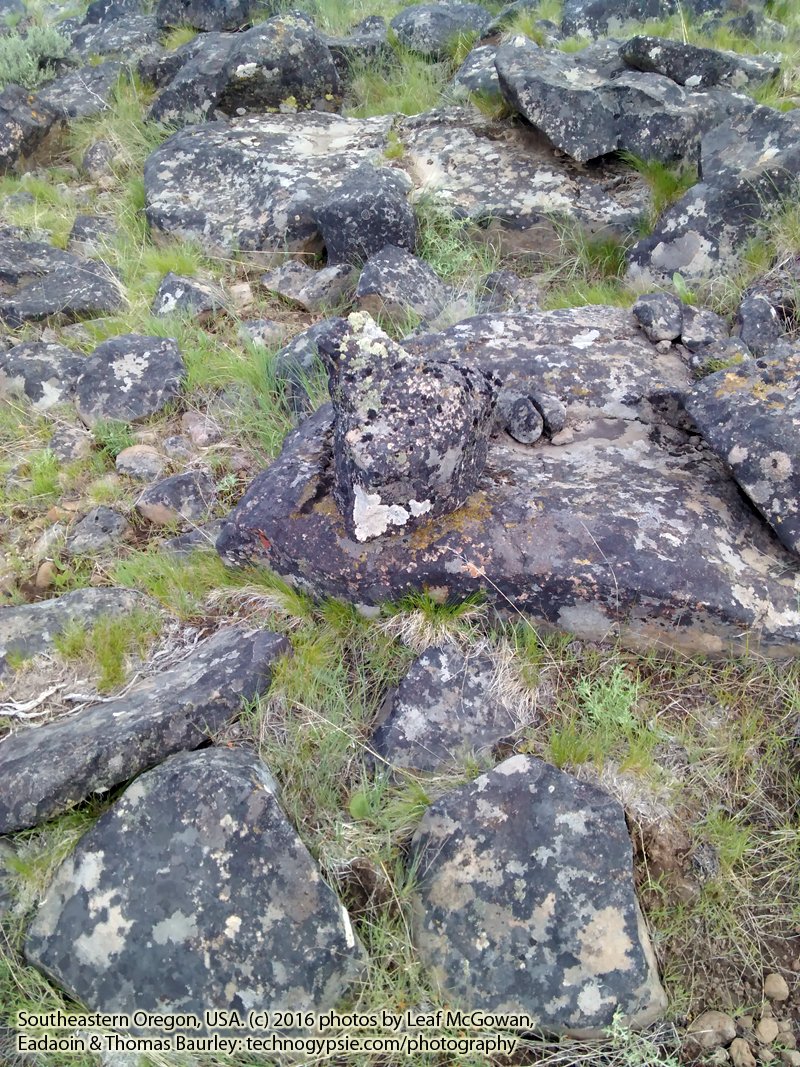
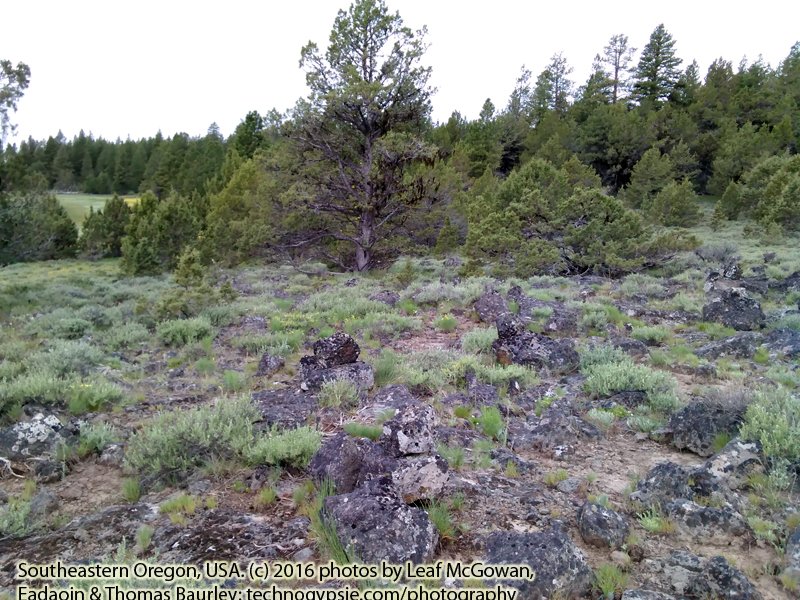
Potential power quest cairns

Potential power quest cairns

Cairns and Stacked Rocks
By Thomas Baurley

The stacking of stones is a widespread cultural practice all around the world. You know it is a remnant of modern, historical, or prehistoric cultural manufacture because they were not placed there by nature. Most likely a “human” moved one stone atop another. They vary in size from one or two rocks or more stacked on top of each other in simplicity to complexity of mounds, cairns, pyramids, tombs, and massive megalithic complexes.

The meaning behind the practice varies between cultures and time periods throughout history. Archaeologists however, are only interested in those that are at least 50 years old (historical archaeology in America), 100 years old (Europe and other parts of the world), or prehistoric (hundreds to thousands of years in age).

They can be field clearing piles, fence piles, burial mounds, markers, signifiers, monuments, spiritual tools, graves, food stores, game drives, rock alignments, power quest markers, altars, shrines, prayer seats, hearths, circles, and/or memorials. Their uses can vary from remnants of field clearing for plowing, stabilizing fences, make walls, clearing or road construction, markers of a road trail or path, survey markers, memorial, burial, vision quest marker, or part of something bigger like a structure, burial, tomb, underground chamber, prayer seat, tipi ring, or offering to Gods, spirits, entities.

These commonly can be found along streams, creeks, lakes, springs, rivers, waterways, sea cliffs, beaches, in the desert, tundra, in uplands, on mountaintops, ridges, peaks, and hilltops. In underpopulated areas they can represent emergency location points.

North American trail markers are often called ducks or duckies because they have a beak that points in the direction of the route. Coastal cairns or sea markers are common in the northern latitudes can indicate navigation marking and sometimes are notated on navigation charts. Sometimes these are painted and are visible from offshore. This is a common practice in Iceland, Greenland, Canada, and Scandinavia.

stacked rocks

Cairns / stacked rocks Public Lands near Malin, Oregon – Bryant Mountain.


ROCK STACKS
Often the practice of stacking rocks is used to mark a trail, path, or road. Many say without these markings, it is often hard to follow a laid out trail, especially in areas that receive deep snowfall. When modern cairn builders place their art or message of ego along a trail they can be causing harm, hiding the true trail markers and if placed in a wrong place can lead a hiker astray or get them lost.

Original use is often a route marker and it’s important to preserve that integrity. Modern application of this practice can not only lead people astray but disrupt cultural studies, archaeology, geology, and the environment. Moving stones can upset plant life, insect habitats, as well as homes of lizards, rats, mice, and other creatures.

Other times these rock stacks have spiritual or religious purpose. These are sometimes offerings to the little people, fairies, faeries, nature spirits, Saints, entities, or God/desses. Sometimes these are arranged for a vision quest, other times as a prayer seat, or part of a stone circle.

Many times if found around rivers, streams, creeks, or springs they are offerings to the nature spirits, water spirits, nymphs, naiads, and/or dryads. Sometimes these are markers for portals, vortexes, gateways between worlds, lei lines, or places of spiritual importance. They honor spirits, Deities, Ancestors, or the Dead.

Sometimes these stacked rocks are considered art, a meditative exercise, or something someone does out of boredom.

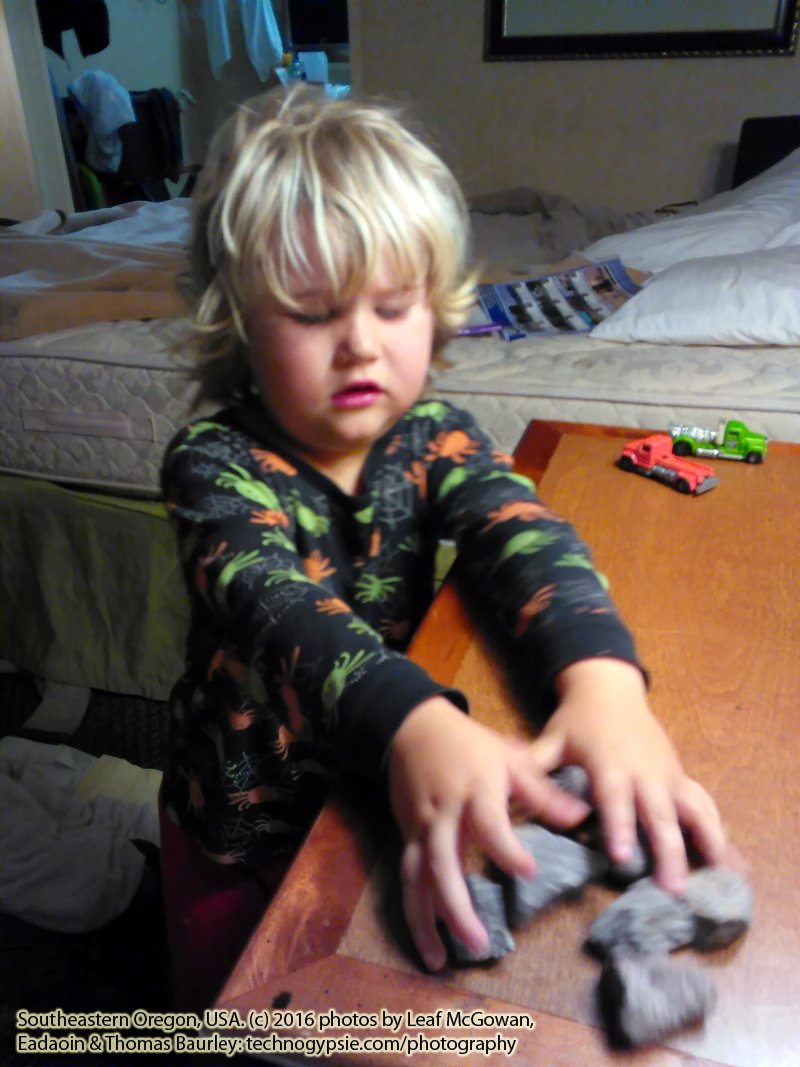
Cian making cairns

Prince Cian making Cairns


In spiritual new age hotspots, modern creations of these cairns or rock stacks are actually quite problematic because they have become invasive upon the landscape, blocking access or movement. In addition, modern creations of them destroy, hide, or change importance of historical or prehistoric ones that existed before.

This is a similar impact between modern graffiti and rock art. This has become a major problem in places like Sedona Arizona; Telluride, Colorado; Arches National Park, Utah.

Prehistoric use
Aborigines, Natives, Tribes, and Original Peoples have utilized cairns and rock stacks all over the world. Mostly the intent was as a marker. In the Americas, various tribes such as the Paiutes as well as early Pioneers left them to mark important trails or historic roads. The Inuksuk practice used by the Inuit, Inupiat, Kalaallit, Yupik, and other Arctic aborigines in North America ranging from Alaska to Greenland to Iceland are markers for wayfinding and to locate caches of food, supplies, and other goods.

Cairns and rock stacks have been used prehistorically for hunting, defense, burials, ceremonial structures, astronomical structures, or markers. (more…)


Manitou, the Great Spirit

Manitou – the Great Spiritu

Article by Thomas Baurley, Leaf McGowan, Technogypsie Research

In the heart of the Ute and many Algonquian Native American groups, the closest equivalent to the Christian concept of “God” would be the “Great Spirit” or “Manitou”, A God of many names. It is the spiritual and fundamental all-knowing life force, omnipresent, all-seeing, all-existing, and the combined spirit of all organisms, their environments, and life events.

“Aasha Monetoo” – The Great Spirit, divided by “Aashaa monetoo – “The Good Spirit” and otshee monetoo – “the bad spirit”. It is S/he of no sex that gave humanity the land, the sky, and the sea to the people. It was a well-known concept amongst many tribes, especially within the Algonquian family groups, even pre-contact and pre-Christianization by Euro-American contact.

European explorer Thomas Harriot recorded in 1585 in his glossary of the Algonquian language Roanoke the term “mantoac” meaning “Gods”. “Gitche Manitou” in Algonquian refers to “Supreme Being” or “Great Spirit”. In Shamanism, “manitous” (aka “manidoog” or “manidoowag”) are connections that are connected to achieve desired effects such as buffalo manitou for a good hunt, plant manitous for healing, and manidoowag as an aspect of the Great Connection.

The derivatives “manituw” are underwater creatures that were appeased with offerings from hunters for safe passage amongst the Iynu. The Canadian province “Manitoba” is named after Lake Manitoba coming from “manitou-wapow” – the Straight of the Manitou, divine passage through the rocks by the Creator. Manitoulin Island, or “spirit island”, is a very sacred place to the Ojibway or Anishinaabe tribes where they have placed sounding rocks and created sacred sites.

Fox Indians believed the manitou lived in the grandfather stones of the sweat lodge. When one heats the rocks, the heat of the fire forces manitou to come out of its place within the stones. It is released from the stones when water is added, following the steam, and entering the human body. Once inside, it moves all over the body driving out everything that inflicts pain. Before it returns to the stone, it imparts some of its nature to the body. This is why “manitou” is seen from volcanic waters, heated waters, or mineral springs as carrying a ride within the waters, entering the human body when it is drunk, and then healing the body in the process. The Colorado village of “Manitou Springs” is named after the local tribes’ belief that Manitou – the Great Spirit blessed itself in the mineral waters that rise up from the karst topography as a healing spirit – once drank into the body, cleansing, purifying, and healing the body as it travels within.

Manitou is also called “Wakan Tanka” amongst the Sioux tribes, Gitche Manitou in Algonquian, and other names around the varying peoples. Even though there is much evidence that many tribes and peoples, mostly Algonquian, believed in this concept, and being before Christianity affected their belief systems, other scientists believe that not all tribes believed in a supreme being until after the 18th century. It was during the 18th century that many saw the “Great Spirit” an anthropomorphic celestial deity who ruled over the world.

(more…)


Samhain / Halloween

Coming Soon!


Cuchulainn / Cúchulainn

Comments Off on Cuchulainn / Cúchulainn | Faeries, God/desses, Mythology, Tuatha de Danann Tags:, ,

Cúchulainn mythos … coming soon!


Ailill

Coming Soon!


Archives

Categories