Skip to content

Faerie Lore and Legends

Exploring the Unknown, Myths, Lores, and Legends

  • Home
  • Techno Tink
  • Page 3

Author: Techno Tink

Tobairin Holy Well, Co Kerry, Eire

Posted on February 17, 2025 By Techno Tink No Comments on Tobairin Holy Well, Co Kerry, Eire
Living Myth, Religion, Sacred Sites

The Tobairin Holy Well in along the Ring of Kerry, with offerings and a holy well roadside.

Uragh Stone Circle and Famine Cottage

Posted on October 25, 2024 By Techno Tink No Comments on Uragh Stone Circle and Famine Cottage
Faerie Hills, Haunted Locations, Sacred Sites

The stone circle is atop a plateau above the valley overlooking Loch Inchiquinn, the other side lough Cloonee Upper and is surrounded by a ring of mountains. The 8′ diameter circle consists of approximately five low small megalith locally sourced sandstone stones (1.2-1.8 meters high) with a significant 3 meter high (approx. 10′) monolithic outlier standing stone.

Black eyed children

Posted on October 23, 2024 By Techno Tink No Comments on Black eyed children
Changeling, Feral Children, Living Myth, Media, News, Tales, Sightings, The Undead, Urban Legends

The legend of Black-Eyed Children, or B.E.K., is a modern urban legend of mysterious, ghastly, ghostly evil children who appear late at night with solid black eyes. It apparently first dates from Texas folklore in the mid-1990s.

Navajo Spring (Manitou Springs, CO)

Posted on October 12, 2024 By Techno Tink No Comments on Navajo Spring (Manitou Springs, CO)
Art and Sculpture, Living Myth, Mythology, Naiads / Undines, Sacred Sites
Navajo Spring, Manitou Springs, Colorado: September 6, 2012

Navajo Spring
Manitou Springs, Colorado, USA

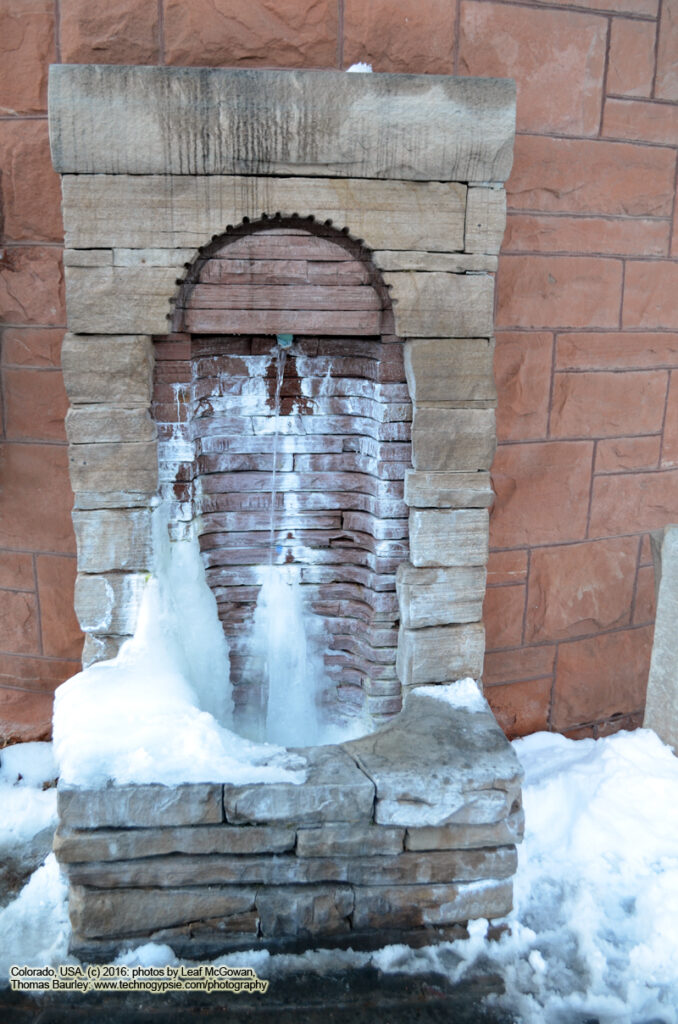
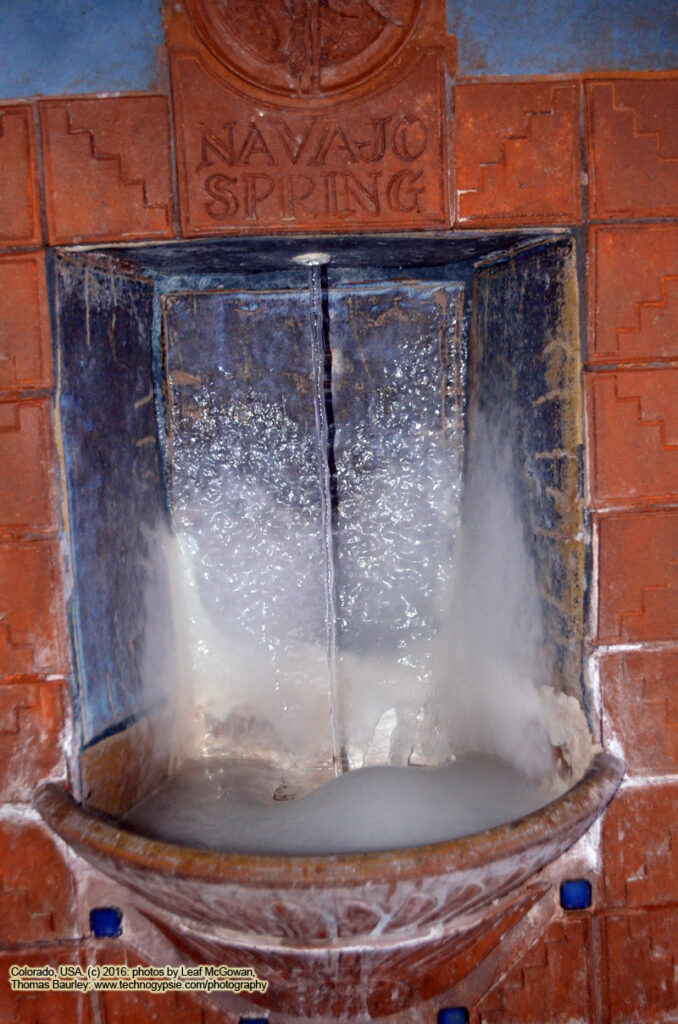
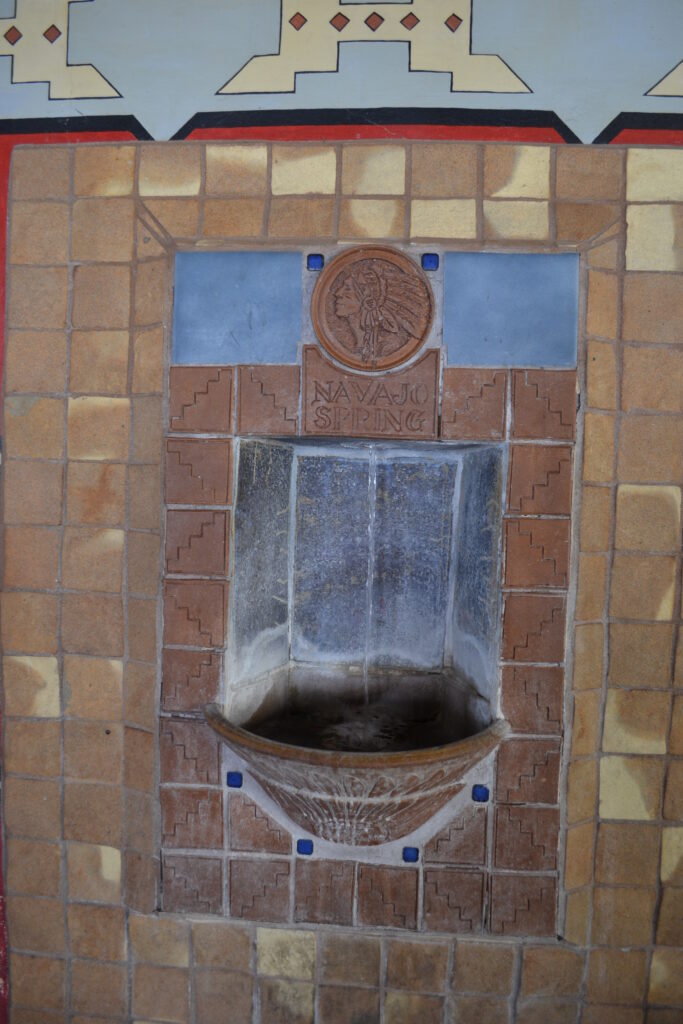
Just off of Main Street in historic Manitou Springs, at the back of the popcorn and candy store in front of the amusement arcade, a natural soda spring comes out of the wall in a decorated font. It is one of eight famous natural springs that put this town on the map. The spring was initially visited by Native American Indians who sought their healing and spiritual powers, which some believed were gifted by the great spirit called Manitou.

They were then frequented by white Euro-American settlers, who pushed the tribes out and commercialized the area. Legend has it that the Utes placed a curse on all whites that the Westerners could never have a successful business in this place because of the commercialization of this particular spring. By the late 1880s, the Westerners built a large bathhouse and spa, as well as a bottling plant, on this former location but did not succeed. The waters, however, were famous throughout America at that time and place.

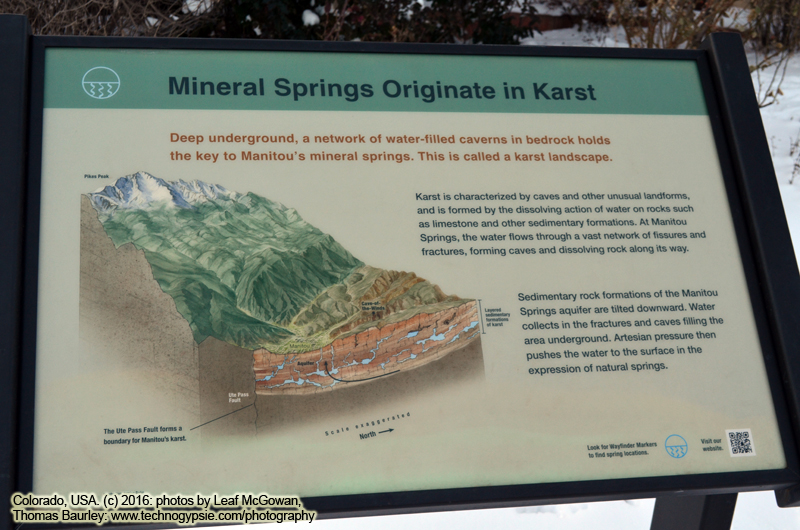
The spring waters are fissured through rock fractures from the rainwater and snowmelt from Pikes Peak. Water reaching the depths becomes heated and mineralized, flowing up through the Ute Pass fault zone into limestone caverns that carbonate them and are tapped into by natural springs or wells. Each spring in the area has its distinct taste and flavor. This particular spring originally had a bowl-like concretion of calcium carbonate large enough to dip or wash oneself in.

From 1871-1972, Chief Joseph Tafoya – Chief Joe “Little Deer” and his family came to this spot to do authentic Indian dances and songs from the Tewa tribe of the Pueblo Reservation of Santa Clara, New Mexico. In 1889, Jerome Wheeler built a 3 story bottling plant east of the arcade. He used these waters to bottle up to 5,000 gallons of water daily, selling it worldwide as table water for the famous non-alcoholic Giner Champagne. After the collapse of the plant, the spring fell into abuse and was restored in 1991 by Manitou’s residents and donors.

Navajo Spring: “Chief Joseph Tafoya – Chief Joe ‘Little Deer’ 1891-1972: Generations of the Tafoya family have presented authentic Indian dances and songs on this site and at the Manitou Cliff Dwellings Museum since 1925. The Tafoya Family Dancers are members of the Tewa tribe from the Pueblo Reservation of Santa Clara, New Mexico, and descendants of the ancient Puye Cliff Dwellers. For 15 years, Chief Joseph Little Deer served both as governor of the Santa Clara Reservation and Chairman for the All Pueblo Indian Council. He introduced a democratic form of government on the reservation, opened his home to orphaned Indian children, and worked tirelessly to improve the living conditions of his people. Chief Little Deer married Petra Suazo, a great niece of Cheif Manitou so named for his active promotion of Manitou Springs at the turn of the century. Chief Manitou danced for 20 summers at the Cliff Dwellings museum. Navajo Spring is one of the seven natural soda-type springs that led to the settlement of Manitou. The early French trappers named the bordering creek “Fountaine qui Bouille”, the Boiling Water. Mineral deposits containing large amounts of carbonate of lime created a natural basin where the Indians bathed their sick and wounded. The white mineral basin now is hidden under the arcade floor. In 1889, Jerome Wheeler built a 3-story bottling plant east of the arcade and used Navajo Spring for bottling up to 5000 gallons of water a day. The water was sold worldwide as table water of the popular non-alcoholic Ginger Champagne. Navajo Spring was restored in 1991 by generous assistance from various donors” ~ sign outside the Spring.
Read More “Navajo Spring (Manitou Springs, CO)” »

Stratton Spring (Manitou Springs, CO)

Posted on October 12, 2024 By Techno Tink No Comments on Stratton Spring (Manitou Springs, CO)
Art and Sculpture, Living Myth, Mythology, Naiads / Undines, Sacred Sites

Stratton Spring
Manitou Springs, Colorado

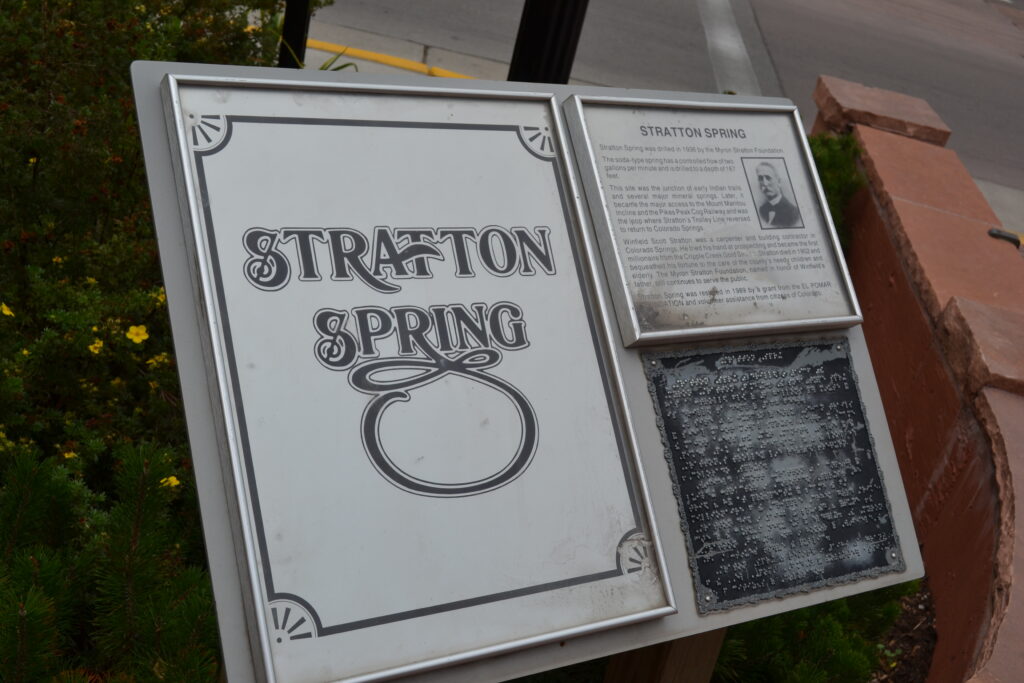
From the deep fissures of the Ute Pass Fault, where the rainwater and snowmelt of Pikes Peak meet and become heated and mineralized in the deep limestone caverns where they take thousands of years to make their way to the surface absorbing numerous minerals and nutrients as well as natural carbonation. Stratton Spring was a drilled source by the Stratton Foundation to serve the town where they felt it was located along earlier Native American trails.


“Stratton Spring was drilled in 1936 by the Myron Stratton Foundation., The soda-type spring has a controlled flow of two gallons per minute and is drilled to a depth of 167 feet. This site was the junction of early Indian trails and several major mineral springs. Later it became the major access to the Mount Manitou Incline and the Pikes Peak Cog Railway and was the loop were Stratton’s Trolley Line reversed to return to Colorado Springs. Winfield Scott Stratton was a carpenter and a building contractor in Colorado Springs. He tried his hand at prospecting and became the first millionaire from the Cripple Creek Gold Strike. Stratton died in 1902 and bequethed his fortune to the care of the county’s needy children and elderly. The Myron Stratton Foundation, named in honor of Winfield’s father, still continues to serve the public. Stratton Spring was restored in 1989 by a grant from the EL POMAR Foundation and volunteer assistance from citizens of Colorado. “

~ sign outside the Spring. September 6, 2012: Manitou Springs, Colorado.

The Mountain Ute would come through this pass alongside many other tribes to pay homage and be treated by the magical waters they believe were blessed by the Great Spirit Manitou. In the late 1880s, developers and Westerners pushed the tribes out of the valley. They began commercializing the healing waters with spas, bathhouses, and other commercial ventures, such as bottled water companies. This spring, one of 10 within Manitou Springs, was believed to have healing properties to treat TB and other illnesses.

This spring flows two gallons a minute of naturally carbonated soda-type spring water. The well was drilled to a depth of 167 feet. This Spring being drilled has little folklore besides its more modern healing attributes. It was drilled by Winfield Scott Stratton, a local carpenter and building contractor who lived in the area after trying his hand at prospecting during the Cripple Creek Gold Strike, which led him to become the first millionaire from that Gold Rush. He died in 1902 and willed his fortune to care for the county’s elderly and needy children through the Myron Stratton Foundation. The Spring was restored in 1989 through an EL POMAR Foundation grant and various volunteers and donors from the region.

Read More “Stratton Spring (Manitou Springs, CO)” »

The Magical Springs of Manitou Springs Colorado

Posted on October 12, 2024 By Techno Tink No Comments on The Magical Springs of Manitou Springs Colorado
Living Myth, Mythology, Naiads / Undines, Sacred Sites
7 Minute Spring – Explorations around Manitou Springs, Colorado.

The Magical Mineral Springs of Manitou
~ 354 Manitou Ave, Manitou Springs, Colorado ~
Article by Thomas Baurley, Leaf McGowan, Techno Tink Research

The little touristy village of Manitou Springs is most famous for its mineral springs, which well up through eight fonts (previously ten fonts, upwards of 50 springs) peppered throughout the town. These springs are free to visit, and each holds its own variation of minerals, magic, folklore, and healing properties that visitors have sought throughout the ages. Each has its unique flavor, natural carbonation, and effervescence.

This valley was originally heavily frequented by various Native American tribes who visited Fountain Creek and its natural springs for their healing magic, offering homage and great respect to the spiritual powers that dwell here. They believed these magical springs were the gift of the Great Spirit Manitou, after which the town and valley were named. They brought their sick here for healing. The aboriginal inhabitants and visitors of the area called the “Great Spirit” as “Manitou”, and felt these mineral springs was its breath, as the source of the bubbles in the spring water. This made the waters and grounds extremely sacred.

The Ute, Arapaho, Cheyenne, and many other tribes came here to partake of the great spirit’s breath. They would heal their sick here, collect the waters, stay for winters, and share in the waters as an area of peace where no conflict was allowed. There were believed to have been ten natural springs in the valley. The Euro-Americans caused conflicts and skirmishes with the Natives, pushing them out so they could utilize the valley for business, resort, tourism, and commerce. It is said that after the Natives left, they cursed the area for the Whites and that no company would ever succeed there. Some believe Manitou Springs has since been an ever-changing valley with businesses coming and going, failing and closing, and new ones coming in and replacing those that left.

Stephen Harriman Long was one of the first white explorers to record the waters in 1820. The expedition’s botanist and geologist, Edwin James, detailed the healing nature of the waters. The explorer George Frederick Ruxton wrote in his travel about these “boiling waters” as well that “… the basin of the spring was filled with beads and wampum, pieces of red cloth and knives, while the surrounding trees were hung with strips of deer skin, cloth, and moccasins”. Throughout the world, it is a common practice to leave similar objects, items, and cultural artifacts around the world at magical and healing springs, wells, and bodies of water.

Iron Spring: Explorations around Manitou Springs, Colorado.

Nearly 50 years later, Dr. William Abraham Bell and General William Jackson Palmer made plans to develop a health resort here during the Civil War with “a vision of dreamy summer villas nestled in the mountains with grand hotels and landscaped parks clustered around the springs” that they called “Fountain Colony” and “La Font.” It became Colorado’s first resort town. By 1871, white settlers had begun developing the area for tourism, health care, and profit.

A resort was soon developed here, taking advantage of the waters and incorporating them into medicinal and healing water therapies. This brought great prosperity to the region. By 1873, a developer named Henry McAllister, who worked for Palmer, spread the news about the medicinal benefits of the Springs and pushed for it to become a spa resort with an “incomparable climate and scenery” as its backdrop.

Shoshone Spring: Explorations around Manitou Springs, Colorado.

Then came various medicinal practitioners, such as Doctor Edwin Solly, who pushed the area as a resort for healing and therapy. They preached that the combined waters to drink, soak in, and breathe pure air mixed with the sunny climate would be the most effective prescription to treat tuberculosis. The commercial businesses began to claim the various springs, enclosing some of them as the village grew.

The first was the Cheyenne Spring House, established as a red sandstone brick, conical-roof structure. Immediately after, over 50 wells and springs were drilled, many enclosed. Once popularity disappeared and “dried up,” many of these springs were capped, paved, and closed. However, as the fad died, medical centers and hospitals around the United States improved.

Manitou became forgotten and suffered abandonment. The Mineral Springs Foundation was formed in 1987 as an all-volunteer 501(c)3 non-profit to protect, improve, maintain, and manage the springs. It targets the restoration of some springs and promotes their popularity once again. The Foundation hosts walking tours called “Springabouts” every Saturday from Memorial Day to Labor Day, beginning downtown. Tours can be arranged by visiting the Tourist center or calling 719-685-5089.

Upon request, the visitor center will provide maps, brochures, detailed content charts, and sampling cups. They can also be found on their website at http://www.manitoumineralsprings.org. The series of springs has been developed as a National Register of Historic Places district and is located in one of the country’s largest districts of its kind. It was initially called the “Saratoga of the West” and established as a resort community within a spectacular setting at the edge of the Rocky Mountains along the base of Pikes Peak. Numerous bottling companies moved into the area, making a profit on the waters, the most famous of which was “Manitou Springs water” and was sold globally.

7 Minute Spring : Explorations around Manitou Springs, Colorado.

Geology: The waters come from two sources in the Rampart Range and Ute Pass: “deep-seated waters” that travel through limestone caverns and drainage systems created by karst aquifers. The water dissolves the limestone and absorbs carbonic acid, carbon dioxide, and other minerals, making it “effervescent” or slightly naturally carbonated. Volcanic and inner core processes heat it. Through time, the waters return to the surface naturally using an artesian process rising to the surface, collecting soda, minerals, and sodium bicarbonate upwards. The other sources of water are Fountain Creek and Williams Canyon, snow melt, rainwater, and surface waters.

The warm water then flows into a limestone cavern, where it becomes carbonated and springs forth to the surface in natural and human-drilled locations. Most of these waters take thousands of years to complete their voyage from the mountain snow-capped peaks down to the inner earth and back up to the surface, freeing their content and solutions from being affected by industry, development, and atmospheric contamination.

Navajo Spring: Explorations around Manitou Springs, Colorado.

The Springs of Manitou:
https://wells.naiads.org/the-magic-and-minerals-of-manitou-springs/

  • Cheyenne Spring – This natural sweet soda spring comes from limestone aquifers and is believed to be over 20,000 years old.
  • Iron Spring – The Iron Spring is named after its harsh, foul, iron-tasting flavor and content. It was a man-made spring drilled in the 1800s and prescribed to patients for iron deficiency.
  • Lithia / Twin Spring – This is a combined location of two man-made drilled springs—Twin Springs and Lithia Springs. It is popular for its Lithium content and sweet taste, calcium, lithium, and potassium content. It’s popular to mix it in lemonade.
  • Navajo Spring is a natural soda spring over which commercial development was built. It is now within and beneath the popcorn and candy store. This was the most popular spring, frequented by Native Americans and early Euro-American settlers, and was the founding spring for the village. It originally fed a large bathhouse and bottling plant, bringing fame to the town.
  • Old Ute Chief Spring – is a defunct spring outside the old Manitou Springs bottling plant.
  • Seven Minute Spring – A man-made spring drilled in 1909 to enhance the neighboring hotel’s tourist attraction. Its unique carbonization caused it to erupt like a geyser every 7 minutes. It became dormant until the 1990s, when it was re-drilled, and the surrounding park was established.
  • Shoshone Spring—This natural spring had sulfur content and was prescribed by various physicians for curative powers before modern medicine became popular and effective.
  • Soda Spring – located in the spa stores next to the arcade.
  • Stratton Spring—The Stratton Foundation created this man-made drilled spring as a service to Manitou Springs village, where tourists could come and partake of its waters. It is dedicated to early Native American Trails.
  • Wheeler Spring—This is another man-made drilled spring donated to the city by settler Jerome Wheeler of the New York Macy’s. Wheeler resided and banked in the town during the mining and railroad period. His former home is located where the current post office is today.

References:

  • Gazette 2015 “List Manitou Springs”. Website referenced 12/21/16 at http://gazette.com/list-the-springs-of-manitou-springs/article/1565225.
  • Harrison, Deborah 2003 “Manitou Springs”. Arcadia Publishing. ISBN 978-0-7385-2856-4.
  • Manitou Springs Chamber of Commerce 2012 “The History of Manitou Springs”.
  • Mineral Springs Foundation 2013 “Mineral Springs”. Website referenced 12/21/16 at http://www.manitoumineralsprings.org
  • Manitou Mineral Springs 2015 “7 Minute Spring”. Website referenced 12/21/16 at http://manitoumineralsprings.org/7-minute-spring.html
  • National Register 2013 “American Dreams – National Register of Historic Places in El Paso County, Colorado.
  • Visit Colorado Springs 2016 “Manitou Mineral Springs”. Website referenced 12/21/16 at http://www.visitcos.com/manitou-mineral-springs.
  • Wikipedia 2016 “Manitou Springs Mineral Springs”. Website referenced 12/21/16 at https://en.wikipedia.org/wiki/Manitou_Mineral_Springs
7 Minute Spring; Explorations around Manitou Springs, Colorado.

Read More “The Magical Springs of Manitou Springs Colorado” »

CHANGELING

Posted on June 15, 2024 By Techno Tink No Comments on CHANGELING
Adbductions, Changeling, Faeries, Mythology, Sightings

One of the most common Fae species known in folklore … “Changelings” are faerie creatures that replace stolen human children.

The Watchers (PG-13: 2024)

Posted on June 15, 2024 By Techno Tink No Comments on The Watchers (PG-13: 2024)
Changeling, Faeries, Movies

Another stunning mysterious tale from the Shyamalan lineage, this time by his daughter … and lives up to the power of the Shyamalan collection. Taking place in the land of legends and fairy lore … western Ireland, a young artist gets stranded in the woods discovering three others …

The Lure (2015: NR)

Posted on June 15, 2024 By Techno Tink No Comments on The Lure (2015: NR)
Faeries, Mermaids, Movies

The story shows the tale of mermaid sisters named “Silver” and “Golden” who become enchanted by the song of “Figs and Dates” band members partying on the beach – they make friends and become adopted by the cabaret club the band operates within. Its a twisted love story beyond the “Little Mermaid” obsession …

Hag of Beara Stone

Posted on June 10, 2024 By Techno Tink No Comments on Hag of Beara Stone
Cyclops, Faeries, Giants, God/desses, Living Myth, Mythology, Sacred Sites, Sidhe, The Fomorians, Tuatha de Danann

Driving the Ring of Beara in West Cork/County Kerry, Ireland I came across the infamous “Hag of Beara” stone – also known as An Chailleach Bhéara or the White nun of Beara, The Cailleach, “Hag”, “Old Crone”, or Old Woman of Dingle. In Irish lore, she is known as the Cally Berry or Cailleach Bheara.  

Posts pagination

Previous 1 2 3 4 … 21 Next

Categories

New Posts

  • Thunder Mountain
  • Area 51
  • The Old Tonopah Cemetery
  • The Clown Motel
  • Thomas the Rhymer / Tam Lin

Pages

  • About Faerie Lore ....
  • Donate
  • Newsletter

Archives

  • Home
  • About Faerie Lore ….
  • Evolution
  • Haunted Locations
  • Herblore
  • Magic & The Occult
  • Media, News, Tales
  • Mythology
  • Folk Songs
  • Giants
  • God/desses
  • Living Myth
  • Monsters
  • Otherkin
  • Prophecies
  • Shadow beings
  • The Undead
  • Urban Legends
  • Religion
  • Traditions
  • Newsletter
  • Donate

Copyright © 2026 Faerie Lore and Legends.

Theme: Oceanly News Dark by ScriptsTown