Skip to content

Faerie Lore and Legends

Exploring the Unknown, Myths, Lores, and Legends

  • Home
  • Techno Tink
  • Page 21

Author: Techno Tink

Newgrange

Posted on September 22, 2010 By Techno Tink No Comments on Newgrange
Faeries, Mythology, Sacred Sites, Sidhe


Newgrange:
Brú na Bóinne, Ireland
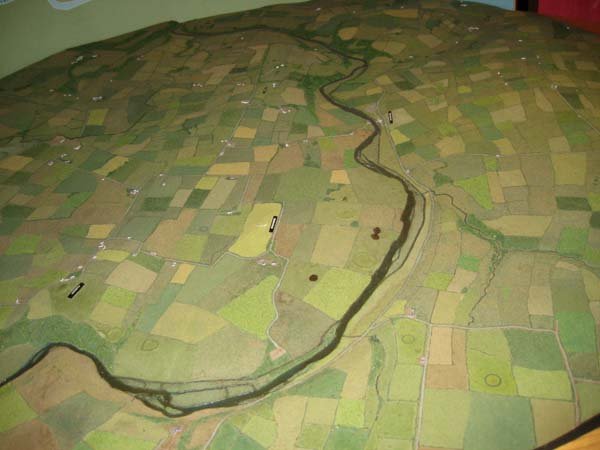
One of Ireland’s most infamous monuments and archaeological sites, Newgrange is amongst the Bru na Boinne World Heritage sites next to Knowth and Dowth. It is popular like Stonehenge with its Solstice astronomical line-ups and viewing of the sun as it appears through its portal. The monument is a large mound complex shaped like a giant kidney covering an area of about an acre of land and is surrounded by 97 kerbstones most of which are decorated by megalithic rock art. Newgrange is one of the best examples in Ireland and Western Europe of a passage grave or tomb. Constructed around 3200 BCE, this site is older than the Egyptian pyramids and a 1,000 years older than Stonehenge. Located along a elongated ridge on the Boyne River, five miles west of Drogheda, and close to the location where the Battle of the Boyne took place in 1690. Built entirely wih stone tools the Faerie Sidhe (folklore) or Passage Grave (Archaeology) is an impressive monument: The purpose of the monument is disputed greatly as there is no evidence that Newgrange was used as a repository for bodies, bones, burial artifacts or ash. Mythology tells us that the Tuatha Dé Danann, legendary first rulers of Ireland, built Newgrange as a burial place for their chief – the Dagda Mór with his three sons. The site is also believed to be where the hero Cúchulainn was conceived by his mother Dechtine. Also listed in mythology as a Faerie Mound, it was believed to have been the home of Oenghus, the God of Love. Other theories are that it was a place of worship for a “cult of he dead” or for astronomically-based faiths. Visitors can only access Newgrange via bus shuttle from the visitor center at Brú na Bóinne and those wishing to see the Winter Solstice sunrise light-up has to be awarded via lottery for the experience with a select few other lottery winners. A 19 meter long inner passage leads to a cruciform chamber with a corbelled roof. At the end of the passage are three small chambers off the larger central chamber. Each of the smaller chambers has a large flat ‘basin stone’ which is where it is believed the bones of the dead were originally deposited. During the Winter Solstice, lights of the rising sun enters the roofbox – lighting up the passage, and shining onto the floor of the inner chamber – illuminating the room for 17 minutes. Megalithic Rock Art surrounds the monument with some world notable pieces such as the triskel carved on the entrance stone, Kerbstone 1 and 52. Other rock art carvings fit into one of ten categories, five of which are curvilinear (circles, spirals, arcs, serpentiniforms, and dot-in-circles), and the other five are rectilinear (chevrons, lozenges, radials, parallel lines and offsets). Intriguing archaeological finds were found throughout the site, including Roman coins, an iron wedge, and a stone phallus. It is believed to have taken 20 years to build with a work force dedicated all of those years full time of 300 individuals. Under the burial tomb theory, it is believed to have been sealed and closed for several millenia after which the local folklore and mythology of the faeries were believed to be assigned to the mound. The site was used for ritual purposes well into the Iron Age. The Passage tomb was re-discovered in 1699 when material for road building was being harvested from the mound. A large excavation of the mound took place in 1962 as well as the rebuilding of the original facade of sparkling white quartz stones found at the site. Newgrange has been compared to the Gavrinis passage tomb in Brittany for which it is very similar to. The Gavrinis cairn is 5,500 years old; 60 meters in diameter, and covers a passage and chamber that is lined with elaborately engraved stone. Newgrange is built of alternating layers of earth and stone with grass growing atop, and the front reconstructed facade is of flattish white quartz stone studded at intervals with large rounded cobbles covering the circumference.


Read More “Newgrange” »

Brú na Bóinne

Posted on September 13, 2010 By Techno Tink No Comments on Brú na Bóinne
Brú na Bóinne
Mythology, Sacred Sites, Sidhe

Brú na Bóinne
* aka “Palace of the Boyne” or “Bend of the Boyne” * Knowth/Newgrange, Donore, Co. Meath, Ireland * UNESCO World Heritage Site *

“Bru na Boinne” is the name of a Boyne River Valley section that is home to the World Heritage sites consisting of the Tumulus Sidhe known as “Knowth”, “Dowth”, and “Newgrange”. These monuments are the largest and one of the most important prehistoric megalithic sites in Europe that consist of a complex of neolithic chamber tombs, standing stones, henges, and other prehistoric enclosures dating as early as 35th century B.C.E. (predating the Egyptian pyramids) The Palace is centrally the name for the visitor center that is home to a museum, cafe, interpretive displays, information center, and central shuttle bus location for visitors to get to Knowth and Newgrange. It is located in County Meath near the village of Donore along the south bank of the Boyne River. The large oval stones in the water feature are 330 million-year-old naturally occurring concretions that make the site a geological attraction as well. The Sidhe/Tumulus of Newgrange and Knowth are to the north of the Boyne.

The site covers over 780-hectare acres with over 40 passage graves, prehistoric sites, henge stones, circles, and features as well as substantial Megalithic rock art. Each of the monuments is on a ridge within the river bend, with Knowth and Newgrange containing stones re-used from earlier monuments at the site. The sites were visited repeatedly and re-used during various ages such as the Bronze Age, Iron Age, and Medieval periods adding assortments of artifacts, features, and enclosures to the site throughout the years.   In addition to the famous tombs/tumulus of Knowth, Dowth, and Newgrange are also the ceremonial complexes known as Cloghalea Henge, Townleyhall passage grave, Monknewtown henge and ritual pond, and the Newgrange cursus. 

Newgrange stands as the central mound of the Boyne Valley passage grave cemetery. Each of these three main tumulus sites has archaeo-astronomical significance and alignments. Newgrange and Dowth have Winter Solstice solar alignments, and Knowth has an Equinox solar alignment. The complex areas are surrounded on the south, west, and east by the Boyne River, and to the north by the Mattock River.

The River Boyne
The Goddess Boann
A grandiose River in Leinster, Ireland that runs a course of over 112 kilometers (70 miles) passing by the Brú na Bóinne complex and World Heritage site, by the ancient city of Trim, Trim Castle, the Hill of Tara, Navan, the Hill of Slane, Mellifont Abbey, and the medieval city of Drogheda. It starts at Trinity Well in Kildare and flows towards the Northeast through County Meath where it empties into the Irish Sea. The river is abundant with Salmon and trout that hosts much Irish mythology on the passage of knowledge down the river. The river is notorious for its historical, archaeological, and mythological connotations. Ptolemy drew out the river in his mapping of Ireland and he called it ????????? (Bououinda). According to Irish mythology, the river was created by the Goddess Boann and the river is named after her as well as representative of her. It is also the river where Fionn mac Cumhail captured Fiontan, the Salmon of Knowledge. It is also home to the infamous “Battle of the Boyne” which took place near Drogheda in 1690. The archaeological remains of a Viking ship were found in 2006 in the river bed near Drogheda.

Read More “Brú na Bóinne” »

The Otherworld, The Underworld, The Sidhe

Posted on August 25, 2010 By Techno Tink No Comments on The Otherworld, The Underworld, The Sidhe
Faeries, God/desses, Living Myth, Mythology, Sacred Sites, The Undead

From the dawn of religious thought there has been belief in an Underworld and/or an Otherworld. A place where we are trapped when we die, disturbed or without resolution, that sits upon our world, sometimes referred to as Limbo, Hades, The Waiting Place, and the Inbetween. Many believe in a Hell and a Heaven. Others believe in a Summerland. Others do not. Some believe in Reincarnation. But just about everyone has an opinion about where we go when we die.

Faeries

Posted on August 25, 2010 By Techno Tink No Comments on Faeries
Faeries

The Tree Leaves’ Oracle icon flower fairy

The Victorian Flower Fairy or Nature Sprite

Flower Fairies are believed to be the fairy spirit essence of various flowers; they are portrayed as tiny creatures that rarely are larger than 20 cm. tall. Most of these depictions come from Victorian art and is a common ‘model’ for what most people think of what is a fairy. They live in tree tops, marshes, forests, gardens, fields, and waysides. It is believed by many that when a seed sprouts a flower fairy is born. Each flower fairy lives upon its host plant and not found too far from it. They sleep within the flower. As the flower grows so does the fairy. The flower fairy exists to tend and watch over the flower. If the flower dies, so too does the fairy. Disembodied spirits, elves, fairies or daemons; often the term used for the Air elemental known as “sylphs,” or as the name of the elementals of Spirit. Flower fairies are often also referred to as nature sprites or spirits. Some define sprites as a being who are beginning a course of evolutionary growth and in the elemental states of their growth. In some ways, this is the concept, in the life of a flower, what makes a flower fairy a sprite. Examples: http://www.flowerfaeries.com/flowerfairies.shtml; http://www.flowerfairies.com/US_version/home.html.

Read More “Faeries” »

The National Leprechaun Museum in Dublin

Posted on August 25, 2010 By Techno Tink No Comments on The National Leprechaun Museum in Dublin
Faeries, Leprechauns, Museums

National Leprechaun Museum, Dublin, Ireland

National Leprechaun Museum – Dublin
Twilfit House, Jervis Street, Dublin 1, Ireland *leprechaunmuseum.ie
My very first time in Ireland and only a few hours in Dublin, I get off the bus, wander off O’Connell and lo’ and behold there is the National Leprechaun Museum. I was of course in awe since I’m a faerie fanatic and consumed with folklore about the little people. I’m aware that this museum has caused quite a stir in Ireland, especially since a good portion of the Irish population doesn’t like being tied with the imagery of this mythological creature. Legend be legend, and history be such of that – Leprechauns have chosen to root themselves in Ireland – and in my opinion, the Irish need to welcome the stingy little bugger with open arms – because as trouble-making as this fae can be, they have a fun history and iconography. Of course this is from the mouth of an American, and it was the Irish immigrants to America that really stirred this creature to life in the folk tales brought over to the American shore. Then you have lots of comical approaches to embrace the bugger in a humorous light especially with being branded on the General Mills cereal “Lucky Charms”. The Museum is not that old, as it was established just this year on March 10, 2010. The National Leprechaun Museum is dedicated to the history and lore about “Leprechauns”. It is located in a large building between Jervis Street and Middle Abbey Street in Dublin, Ireland. It is most likely the very first leprechaun museum in the world and was referred to by the Irish Times as “The Louvre of Leprechauns”. Directed by Tom O’Rahilly, the concept was started in 2003, as a “story telling” oral-tradition tourist attraction designed for the “leprechaun experience” rather than “a commercial venture”. The only real ‘museum’ part of the ‘museum’ is in the foyer, where you are given a brief synopsis of the history of leprechauns, its iconography, definition, and references in popular culture. The rest of the museum is an interactive guided tour involving several different mythological room with voiceovers exploring the myths and legends in the eyes of a leprechaun. After the introduction, you enter in through a secret door and go through a tunnel full of optical illusions shrinking you to the size of a leprechaun, then go through a wooden replica of the Giant’s Causeway in County Antrim, Northern Ireland and into a room where items such as furniture become unusually large to give you the effect you’ve shrunk in size. Onward into a room sheltered with umbrellas from falling rain onward through into a room with a rainbow that leads into a room with a crock of gold and a tree stump. You are enlightened and warned with the tale of one’s man attempt to catch a leprechaun. More rooms exist that talk about the Children of Lir, Fairy Forts, and Newgrange; also one with a well and gigantic tree trunks. Like any museum of its kind, it empties out into a giftshop. Now unfortunately I was called out of the museum in a rush to attend to and was only able to catch the introduction and foyer – which was well done. I’ll finish this review when I go back for the interactive part later this month.

6/23/10: I returned to finish my tour of the Museum. The interactive remaining part of the museum, as you walk through the hidden door from the only part of the place that is a Museum – the rest is meant to be an amusement area centered for kids. However, its severely lacking in entertainment value. You walk down a lighted tunnel to shrink to the size of a Leprechaun, hang out in what is meant to be a living room where you are diminished in size, go through the Giant’s causeway, through an umbrella field which I really didn’t get, on to the Pot of Gold chamber, the wishing well, rainbow chambers, and trails. There is interesting folklore – that was the value to the visit for me and anyone who adores Faerie history and lore – but for the uninterested tourist, the museum would be a waste of your Euros. The staff is however very knowledgable about the lore and Faerie fanatics would benefit from paying the 10 Euro fee just to pick the brains of the staff. The interactive map of the Otherworldly history of Ireland is fabulous and the only real attractive piece I found in the museum.

Read More “The National Leprechaun Museum in Dublin” »

Ragnarok

Posted on August 25, 2010 By Techno Tink No Comments on Ragnarok
Events, God/desses, Living Myth, Mythology, Religion

Ragnarok   Ragnarok “Ragnarok”, “Gotterdammerung”, or a.k.a. “Doom of the Gods” or “Final Destiny of the Gods” is the apocalypse in Norse mythology. Its an important event in the Norse canon. This event will be followed by the Fimbulvetr, or the “Winter of Winters”. These three winters will follow each other with no summer. This … Read More “Ragnarok” »

Posts pagination

Previous 1 … 20 21

Categories

New Posts

  • Thunder Mountain
  • Area 51
  • The Old Tonopah Cemetery
  • The Clown Motel
  • Thomas the Rhymer / Tam Lin

Pages

  • About Faerie Lore ....
  • Donate
  • Newsletter

Archives

  • Home
  • About Faerie Lore ….
  • Evolution
  • Haunted Locations
  • Herblore
  • Magic & The Occult
  • Media, News, Tales
  • Mythology
  • Folk Songs
  • Giants
  • God/desses
  • Living Myth
  • Monsters
  • Otherkin
  • Prophecies
  • Shadow beings
  • The Undead
  • Urban Legends
  • Religion
  • Traditions
  • Newsletter
  • Donate

Copyright © 2026 Faerie Lore and Legends.

Theme: Oceanly News Dark by ScriptsTown