Skip to content

Faerie Lore and Legends

Exploring the Unknown, Myths, Lores, and Legends

  • Home
  • Techno Tink
  • Page 7

Author: Techno Tink

Jackalope

Posted on July 8, 2018 By Techno Tink No Comments on Jackalope
Living Myth, Media, News, Tales, Mythology, Urban Legends

Jackalope

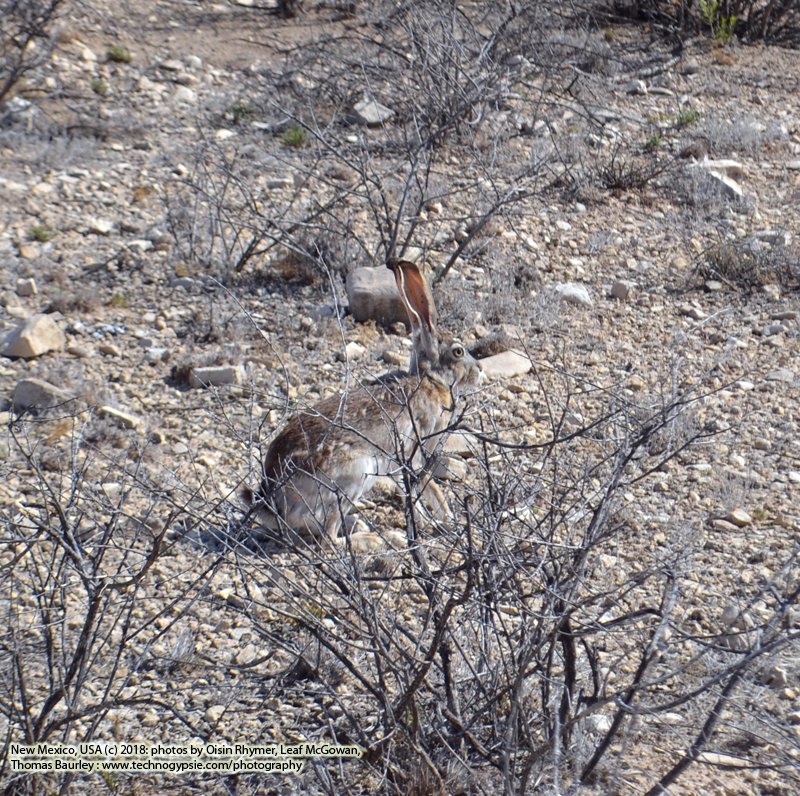
The American Southwest boasts a cryptid and legendary creature known as the “jackalope” – a jack-rabbit hosting antelope horns. The name is simply the combination of a “Jack Rabbit” and “Antelope” as “jackalope”. Many of the taxidermy fake creations sold in stores around the Southwest are actually Jack Rabbits with deer antlers added to them. While a later invention, the “jackalope” is now a solid part of American western folklore.

The creature was invented by Douglas Herrick and his brother who were great hunters who possessed mad taxidermy skills, and they grafted deer antlers onto a jackrabbit carcass selling it to a hotel in Douglas, Wyoming. It was such a hit, they started making and selling them in a retail outlet in South Dakota.

Another taxidermist took over their craft selling the stuffed creatures as popular art pieces today. They have been added to photos, postcards, greeting cards, stuffed animals, and many other gifts if gift shops and became a subject to many stories, poems, shows, movies, video games, and almost made it onto the bills of the Wyoming legislature as the state’s legendary creature.

Historically, folklorists believe that the mythical beast was first discussed in legend as some historical sightings of horned hares were reported, most likely from rabbits infected with the Shope papilloma virus causing a horn or antler-like tumor to grow in various places on a rabbit’s head and body. The fabled creature dates back to the Colonial period of America.

There have been many stories of horned rabbits throughout the world, not restricted to the American Southwest or West. There was a 13th-century Persian work that depicts a rabbit with a single horn represented like a “unicorn”. The two-horned rabbit appears in Medieval and Renaissance folklore in Bavaria as the wolpertinger. Joannes Jonstonus’ 17th-century natural history text “Historiae Naturalis de Quadrupetibus Libre (The History Book of Natural Quadrangles) illustrated such as Animalia Qvadrvpedia et Reptilia (Terra) with Plate XLVII by Joris Hoefnagel (1522-1600) in the 16th century included the horned hare. They described the hybrids as real creatures but were rejected later by 18th-century scientists. Richard E. Shope, M.D. referenced horned rabbits afflicted with the Shope papillomavirus in a scientific journal dated to 1933 as “horned” or “warty” rabbits.

Legends of them also can be found in Asia and Africa as well as other parts of Europe. The Huichol legends of Central America also have references to horned rabbits as the deer getting horns from the rabbit as the deer and rabbit were to be paired as day signs in the calendar of the Mesoamerican period of the Aztecs – twins, as brothers, even the sun and moon.

The Chamber of Commerce in Douglas Wyoming issues Jackalope Hunting Licenses to tourists, good for the official jackalope season for one day – June 31st from midnight to 2 am. The hunter must have an IQ greater than 50 but not over 72. They have issued thousands of these gag licenses. Douglas also has an 8′ statue of a jackalope and the town hosts the annual Jackalope Days Celebration each June. Jackalopes are seen as dangerous creatures, hunters are advised to wear stovepipes on their legs to prevent being gored to death. They are said to mimic the human voice and are known to mimic the voices of cowboys gathered around campfires at night or singing along with their songs. They are supposedly only able to breed during lightning flashes and their antlers make the act difficult despite the fact that hares are known to be extremely fertile.
Jack Rabbit
Texas Jack Rabbit

Read More “Jackalope” »

Wandjinas

Posted on July 5, 2018 By Techno Tink No Comments on Wandjinas
Aliens, God/desses, Living Myth, Media, News, Tales, Mythology

Wandjinas

Wandjini or Wandjina

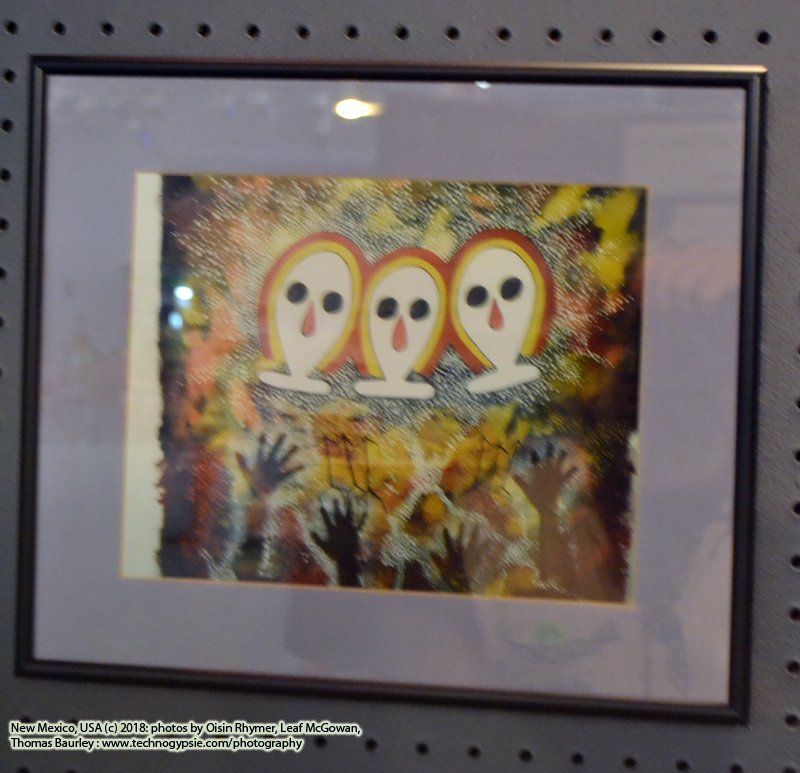
For the People of the Land Down Under in Kimberley, the Wandjina are their representation of the “Supreme Creator”. They are also known as “The Sky Beings” or “cloud spirits”. They are the symbol to use for “fertility” and “rain”. Images of the Wandjina are painted in rock art throughout Western Kimberley and are not found anywhere else in Australia.

The Wandjina’s area is about 200,000 square kilometers of lands, water, sea, and islands in the Kimberley region of north-western Australia, dating back at least 60,000 years B.P. or older. The three Wandjina tribal groups are the Worora, Ngarinyin, and Wunumbul people. They are also called “Gwion Gwion” or “Gyorn Gyorn”.

They are amongst the most sacred of figures and extremely spiritual images to the Mowanjum peoples who comprise up the three language groups – the Worrorra, Ngarinyin, and Wunumbal. They are sometimes depicted in threes. The Wandjinias have large eyes on a face with no mouth. Legend states they have no mouths because that would make them too powerful. They have been said to have control over nature. One has been claimed to be the origin of the Milky Way. They have been known for their role in creating the world and universe. 

They sometimes are depicted with elaborate headdresses and each of these can symbolize a different kind of storm. Their eyes also represent weather storms. Their elegant elongated bodies featured in the Gyorn Gyorn images represent their long-ago ancestors before the Wandjinas who brought the laws of the land and can date upwards of 20,000 years B.C.E. These images can be found with Wandjinas over-painted on them with other imagery. When this occurs, they are sometimes called “Bradshaws”.

According to Aboriginal law, only Aboriginal people who went through the law are allowed to use Wandjinas and their representation. Only after years of initiation, ceremonies, and the tribal council can an Aboriginal artist win the right to depict Wandjinas in their art. Throughout Australia, modern art depicting the Wandjina can be found that is considered inappropriate art work.

It is especially inappropriate for a non-Indigenous person to depict Wandjinas without permission. Doing so is seen as mockery and denigration of the spiritual beliefs of the Worrorra people. Another inappropriate depiction of Wandjina was done in Perth around 2007 varying from stencil-work to spray painting of Wandjina driving a pink car. There were even Flickr blogs of people engaged in “Wandjina watching” documenting such graffiti found. The Wandering Wandjina really angered traditional indigenous people and a film called “Who Paintin’ Dis Wandjina” covers the Aboriginal reaction.

They are often seen as cloud and rain spirits as well. They were known to have created the landscape and its inhabitants of the Dreamtime, continually influencing both. When the spirits found the place for their death bed, they painted their images on cave walls and entered a nearby waterhole. These paintings were then to be refreshed by Aborigines as a method to regenerate one’s life force. Those who break the law of the land could see punishment from the Wandjina in the forms of floods, lightning, and cyclones.

The artistic style of Wandjina rock art appears from 3800-4000 B.C.E. It is said to have occurred after a millennium-long drought that gave way to a much damper and wet climate demonstrating more frequent monsoons. The depictions are often in black, red, or yellow and usually almost always on a white background. The Wandjina spirits are often depicted either alone or in a group, commonly of three, vertically or horizontally depending on the dimension of the rock being painted on, and sometimes found with figures or objects like yams or Rainbow Serpents.

Most of the time it shows large upper bodies and heads showing eyes and noses, without mouths. This is explained that they are so powerful they do not require speech and if they had mouths, the rains would never cease. The heads are often made of lines or blocks of colors with lighting depicted as coming out of transparent helmets. Each year, the paintings are repainted in December or January to insure the arrival of monsoon rains and some paintings at various sites can be seen as being over 40 layers deep. Newer images appear stockier and some even are painted with eyelashes.

Some modern theories and mythology claim that the Wandjina were ancient astronauts or aliens from outer space. They believe that extraterrestrial beings visited the Earth tens of thousands of years ago, had contact with the peoples living then, and some even believe they had a direct role in the creation of humans and the Earth. Some of these theories place Wandjina’s roles in the Dreamtime stories as proof.

The artistic depictions of aliens today and the Wandjina certainly have great similarities. The questions of why the Wandjinas were depicted with white skin instead of the Aboriginal black skin, why the eyes were dis-apportioned to the rest of the face with no mouth, and them being “sky beings” was another confusion that led to alien theories.

The “sky beings” or “spirits from the clouds” who came down from the Milky Way during Dreamtime and created the Earth and all of its inhabitants is certainly suspicious. The Wandjinas supposedly looked upon the inhabitants of Earth and realized the enormity of the task at hand so had to return home to bring more Wandjinas, with the aid of the Dreamtime snake, they descended and spent their Dreamtime creating, teaching, and being Gods to the Aboriginals whom they created.

They then disappeared, descended into the Earth, and have lived at the bottom of the water source associated with each of the paintings producing new “child-seeds” which are regarded as the source of all human life. Some returned to the skies and can be seen at night as lights moving high above the earth.

As a side note/observation, I once had a vision during a ritual of a group of white-robed white beings who only had eyes and noses (no mouths) (but they were normal human eyes and noses) who came and spoke to me about things … I could hear them like as if talking face-to-face to another human, but I heard them in my mind as they had no mouths. Curious if this could have been the wandjina?


References and Bibliography:

  • Ancient Origins n.d. “Mysterious Aboriginal Rock Art Wandjinas – Extraterrestrial or not?” Web site referenced 7/5/18 at https://www.ancient-origins.net/human-origins-folklore/mysterious-aboriginal-rock-art-wandjinas-extraterrestrial-or-not-00701
  • Creative Spirits n.d. “What Are Wandjinas”. Web site referenced 7/5/18 at http://www.creativespirits.info/aboriginalculture/arts/what-are-wandjinas
  • Poleshift n.d. “Wandjina Rock Art in Kimberley Australia”. Web site referenced 7/5/18 at http://poleshift.ning.com/profiles/blogs/wandjina-rock-art-kimberley-au
  • Walia, Arjun 2019 “A 5000-year-old Aboriginal Cave Painting of the Wandjina Known as Sky Beings”. Web site referenced 3/18/2021: https://www.collective-evolution.com/2019/12/30/a-5000-year-old-aboriginal-cave-painting-of-the-wandjina-the-sky-beings/
  • Wikipedia n.d. “Wandjina”. Web site referenced 7/5/18 at https://en.wikipedia.org/wiki/Wandjina
  • Youtube n.d. “Wandjinas”. Web site referenced 7/5/18 at http://www.youtube.com/watch?v=HBUd_WIjN9g


Read More “Wandjinas” »

The Alien Craze in Roswell

Posted on June 30, 2018 By Techno Tink No Comments on The Alien Craze in Roswell
Aliens, Events, Media, News, Tales, Movies, Museums, Mythology, Sightings
Alien craze in Roswell
Roswell’s Alien Craze

That Crazy Alien City – Roswell
~ Roswell, New Mexico ~

My family moved to Roswell, New Mexico in 1973-1974 from New Rochelle, New York. I began school at El Capitan Elementary School then progressed to Sierra Middle School, and on to Goddard High School before moving off in 1986 to Florida to attend college at Florida State University. That whole period of 1973-1986, there was no hype about the rumored UFO crash, alien autopsies, or space visitors. The city was a progressive agriculture town, with a former military Cold War base and silos towards exits outside of each direction of the city. It was known as an “All American City”. There were legends and tales about the UFO crash but that was about it.

One of my dad’s friends, Mr. Bentley spoke about his abduction and proudly showed scars the aliens left on his stomach. He was a crazed inventor that my dad invested with. As a kid, I was obsessed with the belief in Faeries, UFO’s, Ancient Egypt, and magic. I had a blue scrapbook I made of UFO sightings, crashes, and strange phenomena. There was very little in that book about Roswell. “The Incident” wasn’t talked about much. I remember even trying alternative science experiments for the science fair at El Capitan was severely frowned upon. So I moved on and advanced with real science.

It is all based on an event on June 14, 1947, where an un-identified object crash landed outside of Roswell. The rancher who owned the land W.W. “Mac” Brazel and his son Vernon called it “a large area of bright wreckage made up of rubber strips, tinfoil, and rather tough paper, and sticks.” They brought the wreckage into town to the local sheriff George Wilcox. Insiders claimed it was a UFO with alien bodies.

This theory was quickly leaked to the Press and published. Others, including the military, later claimed it was a high altitude weather balloon that fell from the sky. Ex-military representatives however cried otherwise, leading to many conspiracy theories. The Sheriff contacted Colonel “Butch” Blanchard, commander of the Roswell Army Airfield’s 509th Composite Group. The Colonel was stymied and contacted his superior General Roger W. Ramey, commander of the 8th Air Force in Fort Worth, Texas. Intelligence officer Major Jesse Marcel was sent to investigate and collected all of the wreckage, trying to figure out what the materials were, and Marcel made a public statement claiming that it was a Flying Saucer.

The local newspaper sensationalized it letting the public know that “The intelligence office of the 509th Bombardment Group at Roswell Army Air Field announced at noon today, that the field has come into the possession of a Flying Saucer.” It was after-all at the close of World War II and sensationalist about anything was popular news. The U.S. at this time had sent V2 rockets with payloads of corn seeds and fruit flies into outer space, the Bulletin of Atomic Scientists had the “Doomsday Clock” ticking, and UFO’s were the rage in popular culture.

The military said it was a Mogul Experimental weather balloon that crashed. The 1948 government report “The Roswell Incident” was published and utilized by the Variety reporter Frank Scully who wrote “Behind the Flying Saucers” – a book that detailed alien encounters from the Pacific Northwest, Aztec – Farmington – and Roswell, New Mexico, and how aliens were now said to be landing their aircraft in people’s backyards. World enthusiasm about the phenomena was global and widespread. Some claimed the Air Force propagated the lies to distract people from monitoring its nuclear weapons development, while others claimed the government was covering up the fact they had spacecraft and aliens in their possession.

Project Mogul was a secretive project, out of Washington DC being operated at Los Alamos National Laboratory in New Mexico launching high-altitude balloons in the area – these balloons would reach high altitudes and were 657 feet long from tip to tail, 102 feet taller than the Washington Monument and twice as tall as the Statue of Liberty – they would enter the upper jet stream toward Russia with a long tail equipped with different types of sensing and listening devices trailing behind it. This is the government’s explanation of the wreckage.

There was the radio broadcast “War of the Worlds” that shook America. Hollywood produced many movies and television shows taking advantage of the enthusiasm, such as Close Encounters of the Third Kind, E.T., and Star Wars. Everyone wanted to “believe” we were not alone. Rumors exploded across the countryside, every U.S. military base that had a cloak of secrecy over it (and even some that didn’t) was suspected of housing crashed space ships and aliens. Enter in “Area 51” – a secret airstrip in Nevada that rumors were created stating the aliens recovered in Roswell were kept there with their ship. The U.S. Government didn’t help dismiss the rumors, as they just placed large “No Trespassing” and “Use of Deadly Force Authorized” outside the areas.

By the 1990s there was a notable industry built up around the belief in aliens, UFOs, and extra-terrestrial existence. With this came books, movies, films, broadcasts, memorabilia, gadgets, toys, posters, and stuffed alien dolls. It was around this time that the International UFO Museum and Research Center decided to make its home in Roswell. I left in 1986 upon graduation, it was soon after they arrived.

Years later the craze infected the city and the old downtown city theater we used to go see Rocky Horror Picture Show was sold and altered into a UFO museum. It was strange to see such a historical landmark as that theater disappear into space. Then I hear UFO festivals brought millions in tourism to the town, every other fading downtown storefront turned into a UFO and alien gift shop, maze, or themed eatery. The city’s lamp posts were topped with alien heads.

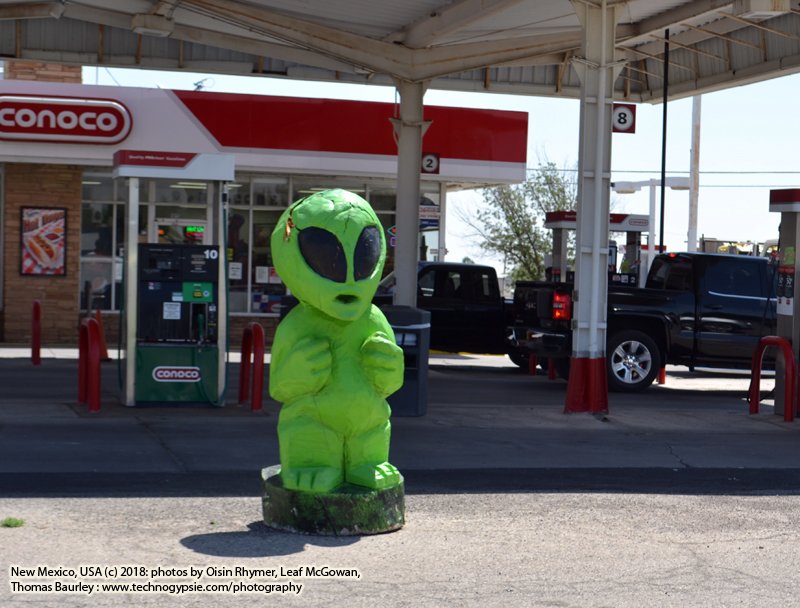
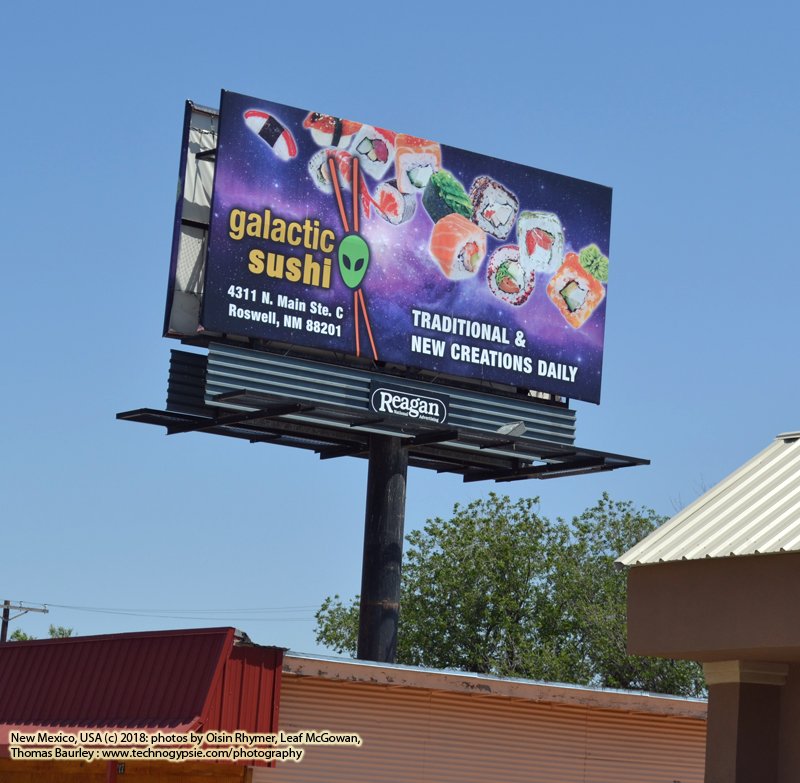
Every store eventually had their own alien statue sitting out in front of it or had alien heads somewhere on their signs, glass windows, or billboards. The local McDonalds built their play area to be shaped like a giant spaceship. Even the local Walmart added aliens to their frontage. It was nuts. North of the city off Highway 285, the crash site was identified, and a large sign erected to identify its location.

New Mexico State University conducted an excavation there to investigate what happened and if any evidence still remained. The crash site now is unmarked with the sign removed, some say “no trespassing” signs exist on site, although my June 2018 visit to the site just had an un-marked skeletal frame that once listed the incident location. Oddly the Roswell UFO Crash Site is just 1/4 mile south of one of the Roswell Missile Silos.

The hype definitely brings tourism to Roswell. Residents love and hate this. For a brief moment of time, there was an anti-alien organization camped out in a storefront across the street from the Roswell UFO Museum. They promoted their mission with stickers of alien heads with the “no” symbol crossed over it. They were responsible for much of the vandalism of the crash site sign, as they left the stickers with their damage on location. They no longer exist at least on Main street. If they are still in operation today I have no idea.

The landing of the UFO enthusiasts certainly changed the city. For the good or the bad, no one really knows – but certainly has placed Roswell as a popular tourist destination and hot spot. Of course, the hype is not constrained to “Roswell” alone … According to the Public Policy Polling Survey around 12 million people in the United States believe that interstellar lizards in people suits rule our country. Around 66 million Americans believe that aliens landed at Roswell, New Mexico; and around 22 million people believe that the government faked the moon landing.

~ Article by Leaf McGowan/Thomas Baurley, Technogypsie Productions ~

If you would like to contact the author about this review, need a revision or update, would like to advertise on this page, or have information to add, please contact us at technogypsie@gmail.com.


Read More “The Alien Craze in Roswell” »

Oweynagat Cave of the Cats

Posted on October 11, 2017 By Techno Tink No Comments on Oweynagat Cave of the Cats
Faerie Hills, Faeries, God/desses, Living Myth, Mythology, Sacred Sites, Sidhe, Tuatha de Danann


Oweynagat Cave - Cave of the Cats
Oweynagat Cave – Cave of the Cats

Oweynagat Cave – Cave of the Cats

– Gateway to the Underworld and the Morrigan’s Palace.
Rathcrohan / Roscommon, Ireland

GPS: 53.79677, -8.31038

Article/Research by Thomas Baurley/Leaf McGowan
Techno Tink Media and Research, 10 October 2017

One of my most favorite sites in Ireland is the “Cave of the Cats” underneath the realm of “Rathcrohan“. It is officially called “Oweynagat” and pronounced “Owen-ne-gatt”.

The Cave is also labeled “Uaimh na gCat”, Irish translating to “Cave of the Cats”. When I first visited this site we had a tremendously hard time finding it. We found where it was supposed to be, but it lay behind fencing on a farmer’s field. We knocked on the farmer’s door, and there was no answer. A neighbor saw us, asked what we were doing and who we were, and he showed us the entrance, giving us permission to enter.

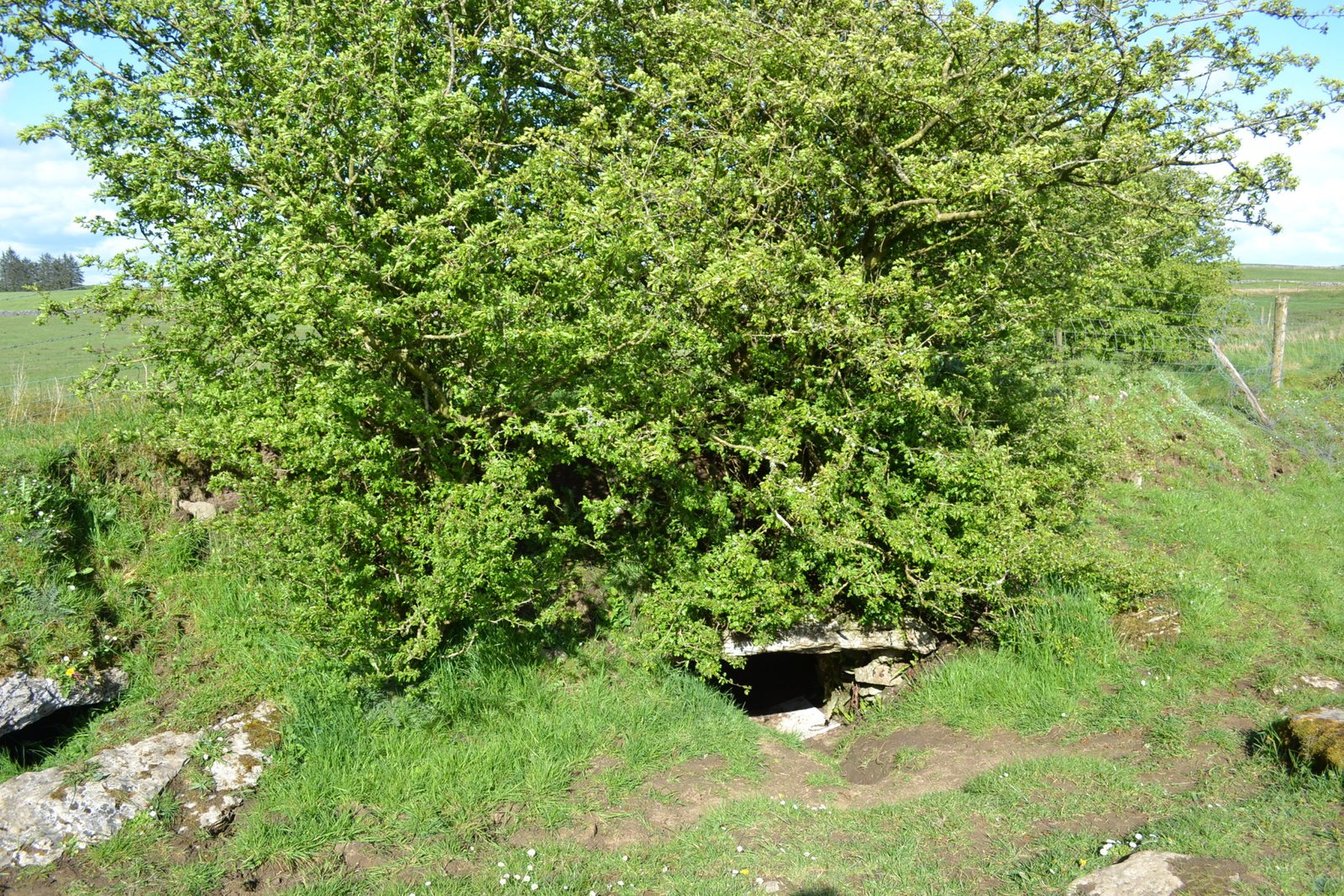
It was a small hole under some Fairy thorn trees. The Site is actually a natural narrow limestone cave that hosts a man-made souterrain at its entrance. This is seen by all as the official entrance to the Otherworld and home to the Morrigan or Medh. In the Medieval Period of Ireland, it was labeled “Ireland’s Gate to Hell”. It is a particular sacred site for the Pagan holiday and festival of “Samhain” or Halloween.

It is said that during the Feast of Samhain, the dead, their God/desses, and Spirits, would rise from their graves and walk the Earth. This cave is one of the main places where Spirits and the dead associated with the Fae and/or the Morrigan, would re-surface including creatures, monsters, and the un-dead. There exists an Irish legend based on the “Adventures of Nera” where a warrior is challenged to tie a twig around the ankle of a condemned man on Samhain eve, after agreeing to get him some water would discover strange houses and wouldn’t find water until the third house. Upon returning him back to captivity would witness Rathcroghan’s royal buildings destroyed by the spirits. After this, he must follow the fairy host to the Sidhe where he meets a woman who tells him the vision he saw will happen a year from now unless his mortal comrades are warned. He leaves the Sidhe and informs Ailill of his vision who destroys the Sidhe in response.

Some believe the “síd” or the Sidhe of this tale is either the Mound of Rathcroghan or Oweynagat, the Cave of the Cats. It makes the most sense that the Cave of the Cats is where the destructive creatures and fae emerged. There was a triple-headed monster called the Ellen Trechen that went on a rampage across the country before being killed by Amergin, father of Conal Cernach. There have been tales of small red birds emerging from the cave withering every plant they breathed on before being hunted to their death by the Red Branch. There are also legends of herds of pigs with similar powers of decay emerging from the cave until hunted and killed by Ailill and Medb.

The name itself, “Oweynagat” is believed to refer to the Magical wild cats featured in the tale of “Bricriu’s Feast” that emerge from this cave to attack the three Ulster warriors before being tamed by Cúchulainn. Some also claim that the cave was named after Irusan, the King of the Cats, who is featured in Irish fairy tales and hailed from a cave near Clonmacnoise (her home). Another tale from the 18th century CE tells of a woman trying to catch a runaway cow that fell into this cave (nevermind the entrance being too small) and followed it into this cave. It is said the cow and woman emerged miles away in County Sligo, near Keshcorran. There is also a legend of a woman that was told to have killed a monster cat in this cave, turning the woman into a great warrior, and this is why it’s called “Oweynagat”, Cave of the Cats.

The Birthplace of Medb

It is also believed that this cave is the actual physical birthplace of Queen Medb. The legend states that the Fairy Queen/Goddess Étain who was fleeing her human husband with her fairy lover Midir came here. Midir wanted to visit a relative named Sinech (the large breasted one) who lived in the cave. Within the cave was said to be a great otherworldly palace where a maidservant named Crochan Crogderg (“Blood Red Cup”) lived, and she had granted Midir and Etain entrance. It was here that Crochan was believed to have given birth to a daughter named “Medb“.

The Entrance

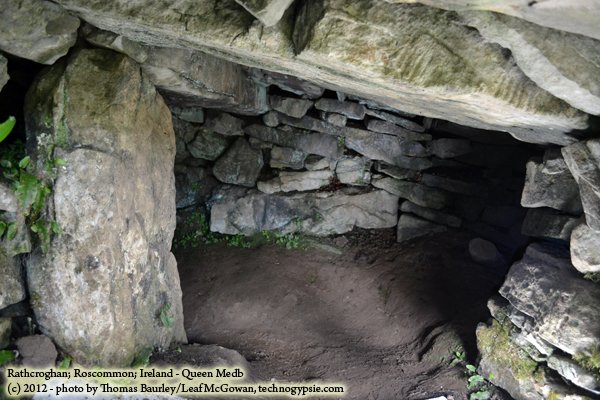
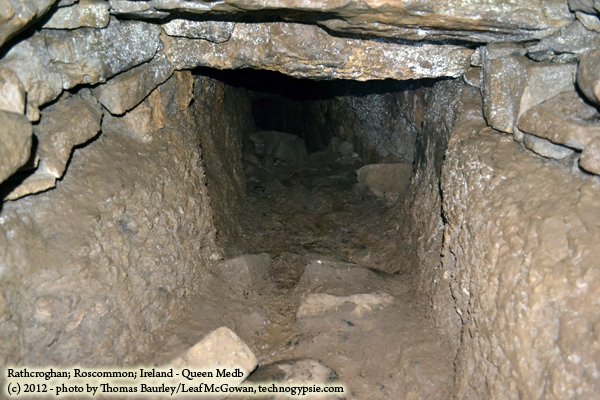
Nestled under a fairy tree in a farmer’s field (private property) is a small opening that really only looks large enough for a house cat to fit through. But if a human gets down on their hands and knees, can shimmy into this small hole, they will be presented with a small chamber that connects to a passageway that continually increases to a massive tunnel wider and higher than one could fathom. At the inner lintel of this entrance is an Ogham inscription that bears the words “VRAICCI…MAQI MEDVVI” translating to “FRAECH” and “SON OF MEDB”. Some also translate this to mean “The Pillar of Fraech son of Madb”. This is also seen as the birthplace of Medb. A second ogham inscription, barely visible, reads “QR G SMU” but has not been translated.

This beginning chamber is actually a man-made souterrain at the entrance to a natural narrow limestone cave. The souterrain was originally contained within an earthen mound that was later damaged by a road construction project in the 1930s. The souterrain is made of dry stone walling, orthostats, lintels, and stones that measure approximately 10.5 meters from the entrance to the natural cave’s opening.

Cave of the Cats antichamber


The Tunnel

After crawling on one’s hands and feet, the passage increases in width and height, eventually one can stand up, and eventually, the tunnel becomes wide and tall enough that a small Giant could move through it. This is the passage of the Fae and leads to the Morrigan’s Lair. As one continues down, they’ll find a caved in shamble that is behind a muddy pool of water. If one successfully climbs up and over it, the passage continues to another area that is caved in. Apparently, workers on the surface planted a utility pole that collapsed this section of the tunnel. Beyond this is believed to be the Entrance to the Otherworld, and the Morrigan’s Lair. This is actually a natural limestone cave that has been mapped approximately 37 meters deep.

The Morrigan

The Queen of the Dark Fae, the Goddess of the Underworld, of Darkness, and Battle, rules the world of the Fae from this place. It is believed that every Samhain, is pulled on a chariot out of the Cave of the Cats by a one-legged chestnut horse alongside various creatures such as those mentioned above. Some also say on occasion she leaves the cave with a cow, guided by a giant with a forked staff, to give to the Bull of Cúailgne. She is also known to take the bull of a woman named Odras who follows her into the cave before falling under an enchanted sleep upon awakening to see the Morrigan who repeatedly whispers a spell over her, turning her into a river, the same river that feeds the muddy pool at the shamble.

Apparently, the cave is seen as a portal through which the Morrigan would pass in order to work with Medb as Goddess of Battle. She drove her otherworldly cattle into the cave every sunset. The Morrigan was blamed to have stolen a herd of cattle who belonged to a woman named Odras, and upon following to Morrigan to retrieve them, was turned into a lake by the Goddess. As is the story of Nera, a servant of Medb who met a Fairy woman here in this cave. He married her, and she warned him of Medb’s palace being burnt to the ground next to Samhain by the creatures of the otherworld. Upon hearing this, Medb stationed her forces in the cave each Samhain to protect Cruachan from destruction.

Rathcrohan is the legendary burial grounds of the Kings of Connaught. The region covers approximately 518 hectares hosting more than 20 ring forts, burial mounds, megalithic tombs such as the Relig na Ri (burial ground of the Kings), Rath na dTarbh (For the Bulls), and the Rathbeg. The archaeological site is massive, with earthworks spread over the region with the Grave of King Dathi (Last Pagan King of Ireland) as a 2 meter high standing stone being one of the few physical landmarks left that can be seen.

This is also the site of the mythical battle of the “Tain Bo Cuailgne” that remains in the hearts, minds, and folklore of the people of Tulsk and Rathcroghan recorded in the Ancient Irish Epic of the Tain Bo Cuiailgne, the “Cattle Raid of Cooley”. The Tain Bo tells the story of Queen Maeve of Connaught and her armies that pursued the Grat Brown Bull of Cooley, the mighty warrior Cuchulain who does battle with the armies here, and his foster brother Erdia as he defends the Brown Bull and the province of Ulster. There are a “Tain Trail Cycling and Touring Route” that re-traces the journey that Queen Maeve and her armies traveled from her Royal Palace at Rathcroghan across Ireland to the Cooley Peninsula in County Louth, the home of the Brown Bull. Rathcrohan hosts over 60 National Monuments here.

Bibliography/References:

  • Druid School: Oweynagat Cave of the Cats. Website referenced January 2012.
  • Fenwick, J. et al 1977 “Oweynagat”. Irish Speleology 16, 11-14.
  • Hannon, Ed 2012 “Visions of the Past: Oweynagat Cave”. Website referenced 10/10/17 at https://visionsofthepastblog.com/2012/10/01/oweynagat-cave-souterrain-co-roscommon/.
  • Mulranney, R. n.d “Caves of Ireland: Oweynagat Cave of the Cats”. Website referenced 10/10/17 at https://cavesofireland.wordpress.com/home/caves/oweynagat-cave-of-the-cats-co-roscommon/.
  • Waddell, J. 1983 “Rathcroghan – A Royal Site”. Journal of Irish Archaeology 1.
  • Wikipedia n.d. “Rathcroghan”. Website referenced 10/10/17 at https://en.wikipedia.org/wiki/Rathcroghan.


Initial tunnel of the Cave of the Cats


Read More “Oweynagat Cave of the Cats” »

Hotel California – Urban Legend?

Posted on September 29, 2017 By Techno Tink No Comments on Hotel California – Urban Legend?
Living Myth, Media, News, Tales, Mythology, Urban Legends
Hotel California
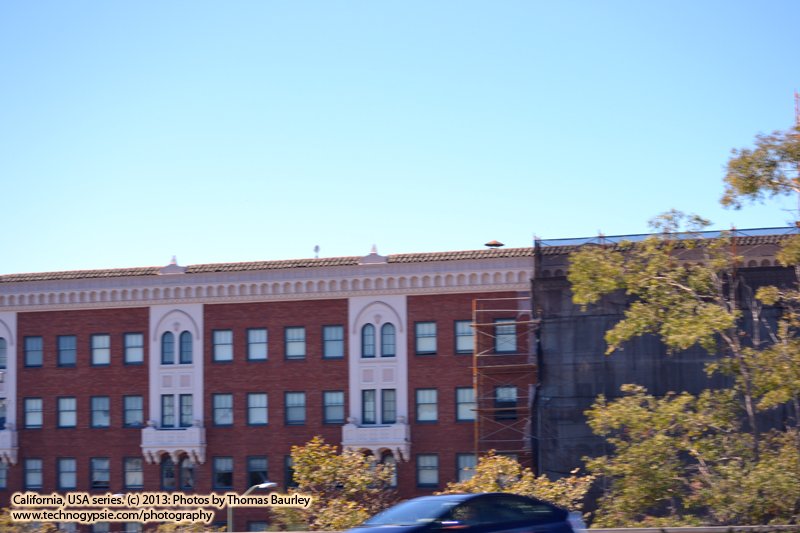
Hotel California, Around San Francisco, California.
The Hotel California, Fact myth or legend?

Review by Leaf McGowan/Thomas Baurley, Technogypsie Productions ~

“The Hotel California” ~
A fictional place, but full of urban myths and legends.

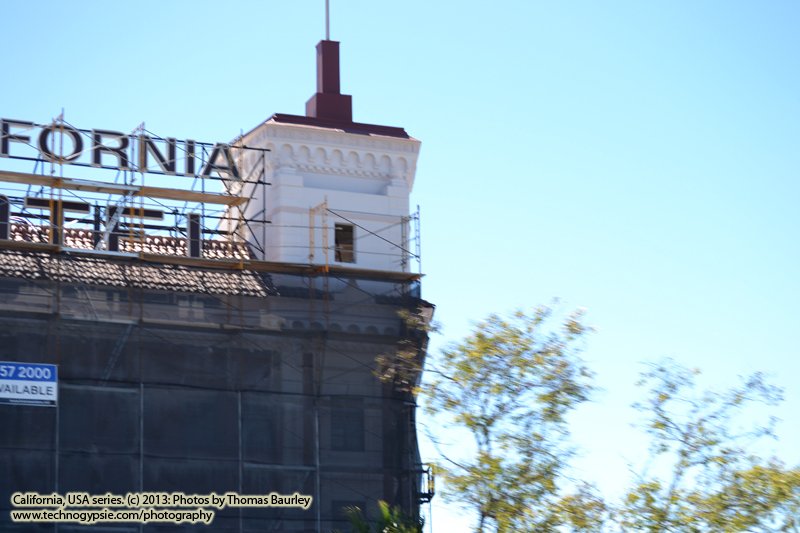
The “California Hotel” photo above, is NOT of course the place of the legend from the Song, nor was it the headquarters for Anton LaVey’s Church of Satan. I’m actually not sure of the history of the actual hotel in this photo, but it called to mind my memories about this urban legend. (The photo above MIGHT be the California Hotel of historic landmarks, https://en.wikipedia.org/wiki/California_Hotel as it was in Oakland.

The California Hotel historic is an important cultural center for the African-American community of San Francisco’s East ay during the ’40s-’60s, it experienced severe economic difficulties and turned into subsidized housing in the 80s.

I first came across the urban legend in 1990 at the Starwood festival when I was hanging out with a Satanist from the Church of Satan who first told me the tale … “one of the members of the Eagles was at this bar and got drunk with Anton LaVey’s daughter, she brought him home that night to her hotel room (at the Hotel California where supposedly the headquarters of the Church of Satan resided), they became lovers.

Apparently, he was so tied up in the affair with her that he disregarded showing up to band practice or responsibilities, and in a sense “never could leave” the hotel. When He snapped out of it, he apparently wrote the song about the experience hanging with the Church of Satan.

A similar tale was told to me by my mentor Isaac Bonewits, founder of ADF (Ar nDraoicht Fein – A Druid Fellowship) who briefly joined the Church in his youth, but was so rambunctious and a trouble maker, the Church of Satan actually kicked him out of their group. (I do know that to be true as I’ve seen historic film reels of him in their ranks. Apparently, he was recruited after creating a parodic devil’s throne upon which he proselytized at UoC Berkeley to harass the local bible thumper on campus. They ran across him, were impressed, and asked him to join. )

I digress, back to the original legend. Some claim that Larry Salter, the Eagle’s manager admitted in the Waco Tribune-Herald (Feb. 28, 1982) that the Eagles were involved with the Church of Satan. Oddly the Church of Satan was first legally registered as “Hotel California” (legal entity name). But the Eagles claim far and wide, they were not associated with the Church and it was a leap that people jumped to. (https://en.wikipedia.org/wiki/Hotel_California)

The Eagles claim that the “Hotel California” is an allegory about hedonism and greed in Southern California in the 1970s. As they first experienced California at that time, they were impressioned that California was about money, drugs, women, and fame – true hedonism, and they were disquieted by it all pushing that un-ease into their lyrics to warn others about the dark underside of such adulation – “a loss of innocence”, corruption of the artist in California imprisoned in a gilded prison that the artist freely enters that he cannot leave. It is not actually a place, but a metaphor of the west’s music industry and its effect on musicians ensnared by it. (http://www.snopes.com/music/songs/hotel.asp)

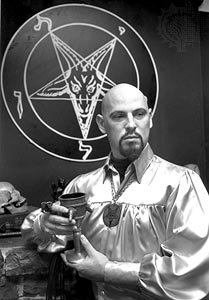
To make matters worse, many conspiracy theorists have marked that “Anton LaVey” (leader of the Church of Satan, San Francisco) can be seen in the balcony window as depicted on the album cover for the record “Hotel California”.


    • Mirrors on the ceiling,
    • The pink champagne on ice
    • And she said ‘We are all just prisoners here, of our own device’
    • And in the master’s chambers,
    • They gathered for the feast
    • They stab it with their steely knives,
    • But they just can’t kill the beast
    • Last thing I remember, I was
    • Running for the door
    • I had to find the passage back
    • To the place, I was before
    • ‘Relax,’ said the night man,
    • ‘We are programmed to receive.
    • You can check-out any time you like,
    But you can never leave!’

The urban myth has odd facts and twisted thoughts behind it, and whether or not those with the inside knowledge are telling the truth and the Eagles are covering it up to save their reputation, or it is quite a bit of hog-wash and conjecture, we’ll never know. Frey and Henley claim that as much as people want to know what the song was about, they really don’t know themselves. It was an attempt at a “twilight zone” influence and many beliefs are abound. (http://www.bbc.com/news/entertainment-arts-35347075)

Of course, the fundamentalist Christian organizations still claim it is a Satanic song, the band was gifted their success by dealing with the Devil (dueling banjos) at the crossroads giving their lives for their success. They won’t let go of this urban legend regardless. (https://ministryofrock.wordpress.com/2015/10/10/is-hotel-california-satanic/, http://www.jesus-is-savior.com/False%20Religions/Wicca%20&%20Witchcraft/anton_lavey2.htm, https://www.quora.com/What-is-the-song-meaning-of-Hotel-California, https://stewartstaffordblog.wordpress.com/2016/01/19/does-satan-reside-at-the-hotel-california/)

And Cracked hosts a good explanation of it all here: http://www.cracked.com/article_19454_5-famous-hidden-song-meanings-that-are-total-b.s..html

If you would like to contact the author about this review, need a re-review, would like to advertise on this page, or have information to add, please contact us at technogypsie@gmail.com.

Hotel California, Around San Francisco, California.  

Read More “Hotel California – Urban Legend?” »

Ouija Boards

Posted on September 7, 2017 By Techno Tink No Comments on Ouija Boards
Magic & The Occult, Magic(k), Mythology, Witchcraft

Public domain, 1892 first board Ouija Boards ~ By Thomas Baurley / Leaf McGowan, Technogypsie Research 9/7/2017. By far one of my most favorite occult tools would be the Ouija Board, made famous throughout history by none other than the game manufacturer “Parker Brothers”. But how old is the Ouija Board? is it just a … Read More “Ouija Boards” »

Wooden Masks

Posted on August 12, 2017 By Techno Tink No Comments on Wooden Masks
Living Myth, Mythology, Religion
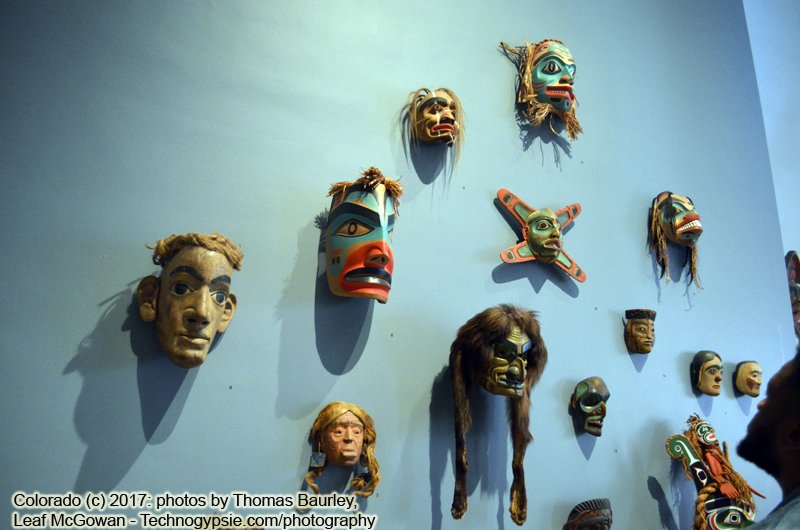
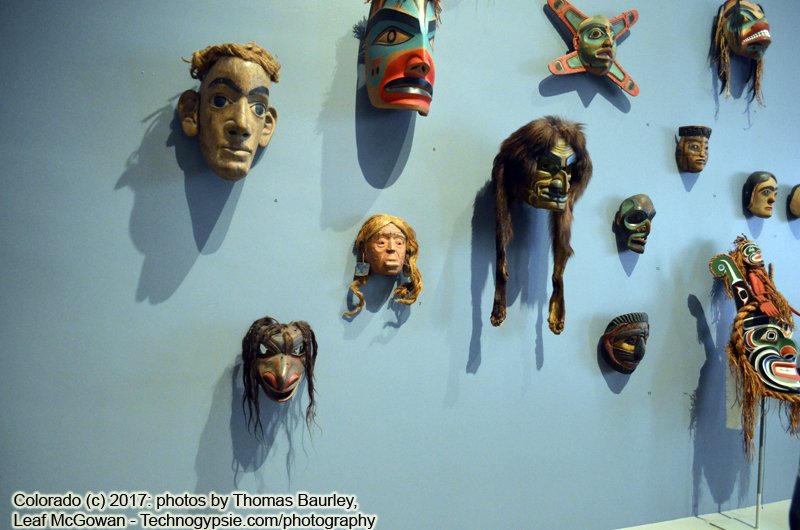
Pacific Northwest Ceremonial Masks
 

Wooden Masks

Article and research by Thomas Baurley
Technogypsie Research, August 7, 2017

Throughout history, masks have been made for various reasons, and wood was a common medium for making them in. Every culture had examples of them. Masks are atypically worn on the face usually either for ritual, ceremony, magical rites, disguise, performance, theater, entertainment, or protection. They were believed to have first been used for religion and magic. The first written reference of mask comes from the Middle French “masque” meaning “covering to hide or guard the face” in the 1530s.

“Masque” was derived from the Latin word “masca” meaning “mask, specter, nightmare”. It could have also originated from the Arabic maskharah مَسْخَرَۃٌ “buffoon”. Masks are also worn for protection during battle as armor, during hunting or sports for protection, and as entertainment/ornamentation during feasts/performances. Some masks are ornamental or religious and not meant to be worn, but as sacred objects or artifacts. Today they are commonly used in psychotherapy and drama therapy.

Anthropological theory suggests the first use by aborigine peoples was to represent some unimpeachable authority of being a supernatural entity like a God/dess or magical spirit/creature. This was also potentially used to promote a certain social role. Earliest found masks date over 9,000 years BP (Before Present). Earliest anthropomorphic artwork dates to approximately 30,000-40,000 BP depicting face paint, war paint, leather, vegetative material, or wooden masks.

Even at the Neanderthal Roche-Cotard site in France there is a likeness of a face over 35,000 BP depicted in cave drawings, but unknown if it was really a mask. Anatolia around 6,000 BCE (Before Common Era) shows a young naked ithyphallic God wearing a horned mask, attributed to the cult of Shiva. The Dionysus cult of Greece also shows mask use allowing participants to participate hidden in debauchery. Iroquois tribes were known to use masks for healing. One of the magical societies was the False Face Society.

The Yup’ik were known for their 3-inch finger masks as well as ten-kilo masks hung from the ceilings. Masks were used to create mediators for supernatural forces in the Himalayas. Historic masks were used for disguise, protection, as well as for plastic surgery applications for those suffering mutilation or birth defects. Masks permitted the imagination to go beyond limitations, from the sacred to the playful, giving imaginative experiences of transformations into other identities. This comes into play with performance and entertainment as well, letting actors/resses become and manifest into their roles.

In ceremony and ritual, the mask allowed transformation, role-playing, possession, sacrifice, and presentation of supernatural entities. They also represented a protective role with the mediation of spirits. They can also represent a specific culture’s idea of feminine beauty such as with the Punu of Gabon.

Africa

Most, if not all, of the original peopling of Africa, involved Masks. In the West, they were utilized in ceremonies set up to communicate with the ancestors and spirits. These wooden masks are carved by special mask makers who were known as “master carvers”, often passed on through heritage and family lineage. There were fang masks used by the ngil to hunt out sorcerers. Most of the African masks involve animals or the representation of them – believing that the tribe can communicate with the animals’ spirits by wearing them. Today most African masks are made for the tourism industry.

Australia

Fascinating masks come out of Australia, including full-body covering masks that envelope the body.

North America:

Northeastern:

Northeastern tribes like the Iroquis had special wooden “false face” masks used in ceremonies of healing. They were made from living trees, carved in ritual, with a variety of shapes based on function.

Pacific Northwest:

Pacific Coastal original inhabitants were known for their woodcraft – many of their masks were prizes of art with moveable jaws, masks within masks, and other moving parts. Some of them were combined with totems, poles, houses, canoes, and shields.

The North American Northwest and Columbia Plateau Tribes have a distinct form of ceremonial and utilitarian masks within their culture and archaeological record. The Artwork of the Native American Pacific Northwest Cultures is phenomenal, embedded with myths, legends, and spirituality that empowers their people. Masks are also utilized as representative totems. Inuit peoples have varying languages and mythology, with masks varying just as much. Many of their masks are made either of driftwood, bones, skins, and feathers. Inuit women use finger masks to tell stories and conduct dances in storytelling.

Transformation is a common purpose for Northwestern use of masks, especially those on the Northwest Coast and area known as Alaska within ritual dances. Many times these are depicted with an outer animal visage hosting moveable parts revealing the inner human face carved in wood. The Northwestern tribes held ceremonies known as potlaches which illustrated the myths in shamanic rituals depicted by the masks. These peoples involved the tribes of Tlingit, Haida, Heiltsuk, Nuxalk, Tsimshian, Kwakwaka’wakw, Nuu-chah-nulth, and other First Nations. Common depictions such as the Ancestral Sky Spirit of the Thunderbird that when it ruffles its feathers causes thunder, and blinks its eyes for lightning.

Northwestern coast mask art is well known for its use of form lines, ovoids, U and S forms. Pre-European contact, these masks were made out of wood (particularly Western Red Cedar), stone, and copper. After European contact, most of the masks were made with canvas, glass, paper, and precious metals. Most of the masks and art were done with red, white, black, and sometimes yellow. Patterns are notoriously that of ravens, bears, thunderbirds, sisiutls, eagles, orcas, and humans. Many were implemented in totem poles. After European contact and their attack on the cultural ways of the peoples, much of the art and style was lost. In recent years (decades) a revival has been born bringing back these art styles, masks, and the formerly banned potlach ceremony. Masks were known to be passed on from father to son to grandson.

Southeastern United States:

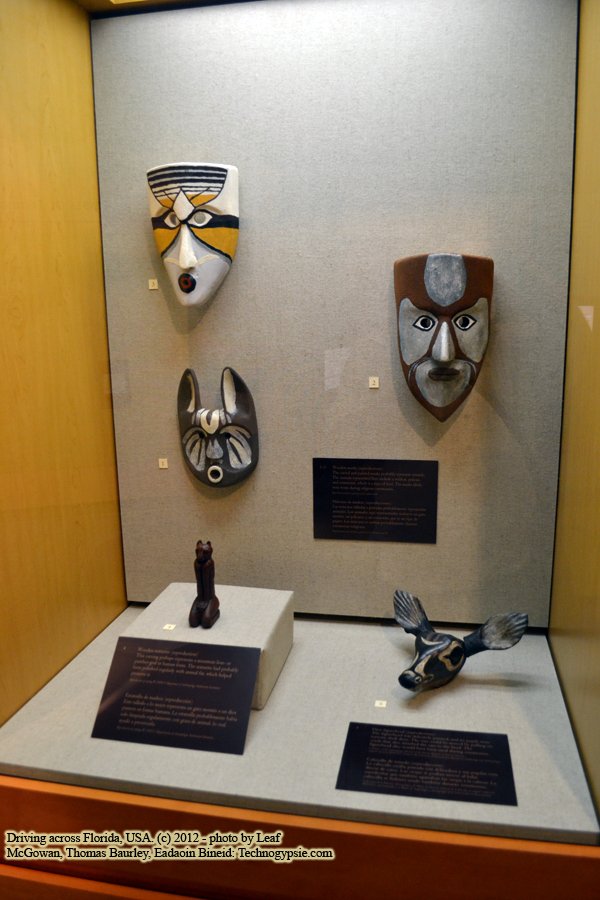
” Wooden Masks: The carved and painted masks probably represent animals. The animals represented here include a wildcat, pelican, and cormorant, which is a type of bird. The masks likely were worn during religious ceremonies. ” ~ Diorama/display in the Florida Museum of Natural History, Tallahassee, Florida. (Photo 091712-037.jpg) Wooden Masks: http://www.technogypsie.net/science/?p=1367 (Expected publication January 2013).


Wooden Masks


Southwestern United States:
Southwestern tribes like the Pueblo, Navajo, Hopi, and Zuni took on the forms of supernatural spirits in very distinctive and elaborate masks utilized in religious rituals as kachinas or Gods/spirits forms. These were made of wood, decorated with fur, feathers, leather, and/or leaves.

Research is being conducted, please come back for more information and photos.

Pacific Northwest Ceremonial Masks


Read More “Wooden Masks” »

Totems

Posted on August 11, 2017 By Techno Tink No Comments on Totems
Mythology

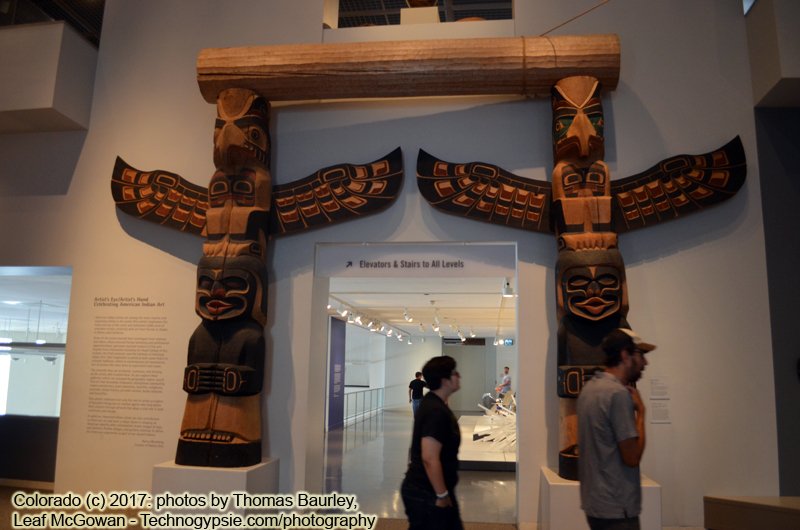
Totems - Exhibit - Denver Museum of Art/ Art Museum

Totems – Exhibit – Denver Museum of Art/ Art Museum

Totems

Article and research by Thomas Baurley,
Technogypsie Research, August 7, 2017

One of the phenomenal ominous presences in the Pacific Northwest, as well as superNATURAL British Columbia, is the plethora of artistic totems created by the past and present Pacific Northwest tribes. It is truly a part of my heart’s connection with Cascadia.

Totems, in the Pacific Northwest, are usually depicted by the stacking of tribal masks or heads carved into a tall towering pole. “Totems” are spirit beings, symbols, or sacred objects that represent families, clans, lineages, or tribes. Totem as a definition was first classified from the art forms and beliefs made by the Ojibwe tribe in the Pacific Northwest. They see the concept as believing in tutelary Deities or spirits. This concept however is worldwide, and defining term “totem” is utilized by Anthropologists to explain this concept as it is used in other cultures such as Australia, Europe, Asia, Africa, the Arctic, and the Middle East. Most cultures outside of the Americas call their guardian spirits and symbols by other words rather than “totems”. Neo-Paganism and the New Age have adopted the term “totem” to identify a particular personal or tutelary spirit guide.

Pacific Northwest – North America

The Pacific Northwest, nicknamed “Cascadia,” is home to most of the “Totem culture” found in North America. Many of these are represented in Totem Poles. The belief in totems follows alongside “animism“, the belief that everything has a spirit or soul. Many totems are animals or creatures that represent a tribe, family, or clan.

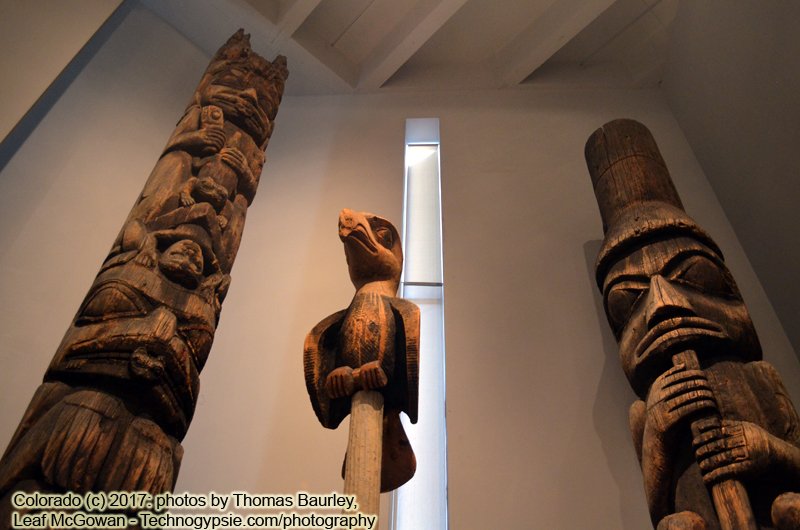
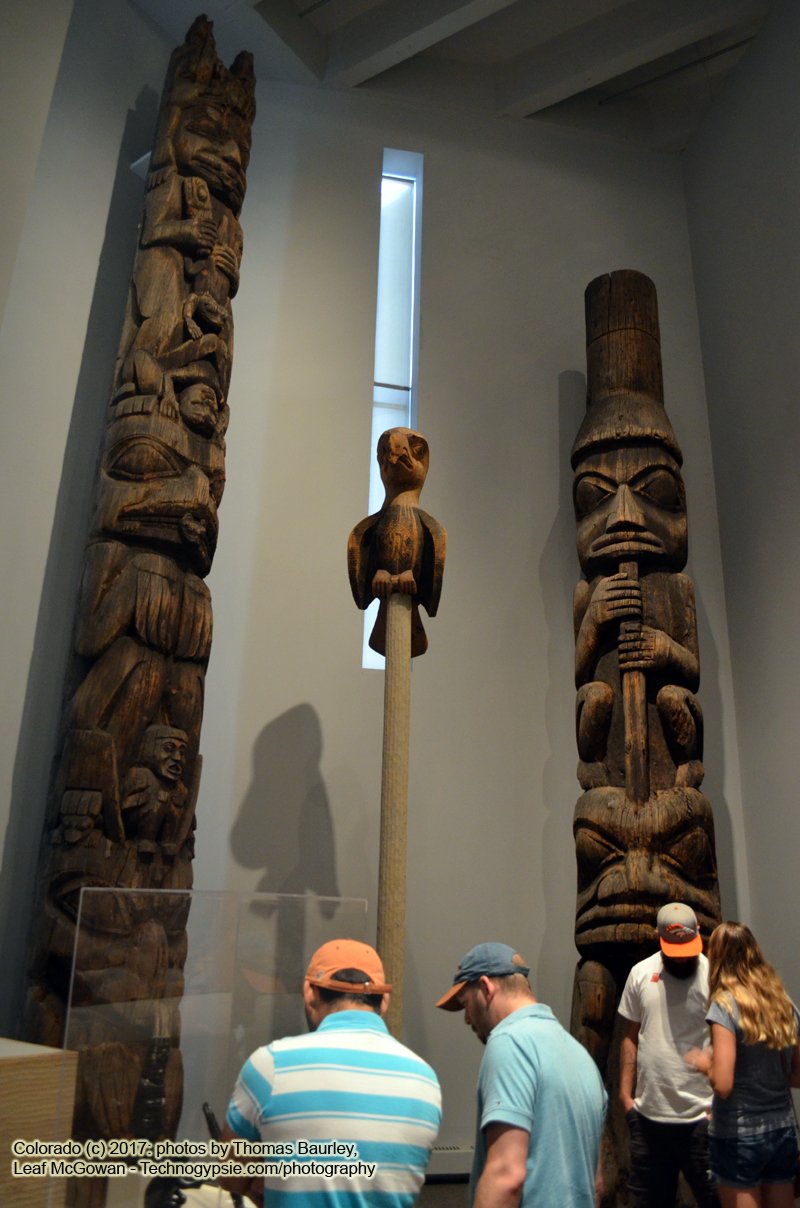
Totems: Pacific Northwest Tribal Art

Totem Poles
Totem poles feature tribal masks, heads, animals (especially bears, frogs, birds), and supernatural creatures or beings from myths. These often function as representatives, chiefs, or crests of a family or royal lineage. Each is embedded with its own stories, myths, tales, and traditions. On a totem pole, they are read from the bottom to the top.

The North American Northwest and Columbia Plateau Tribes have a distinct style, culture, and belief system. The Artwork of the Native American Pacific Northwest Cultures is phenomenal, embedded with myths, legends, and spirituality that empower their people.

Totems; Pacific Northwest Tribal Art; Pacific Northwest Tribes Exhibit – Denver Museum of Art/ Art Museum

Read More “Totems” »

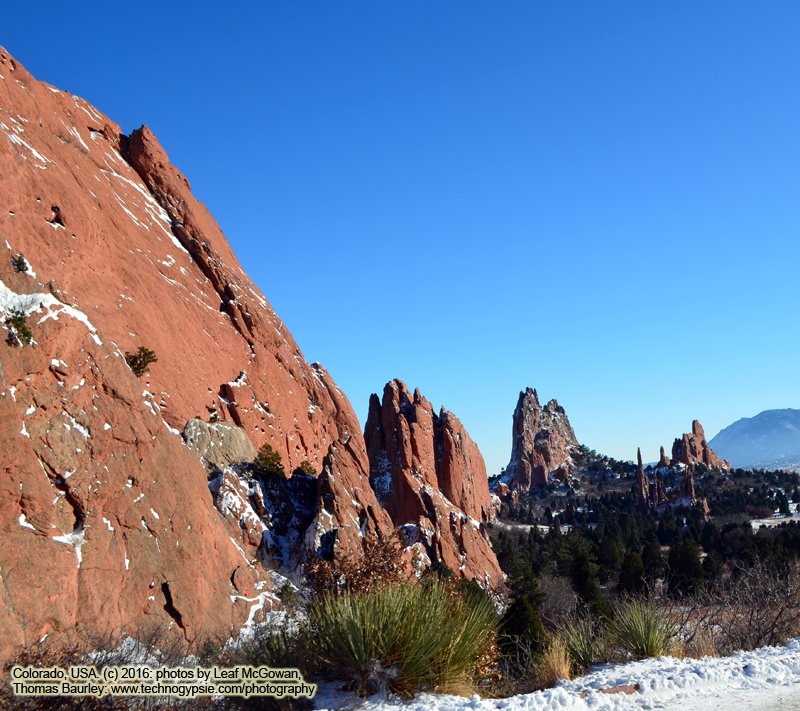
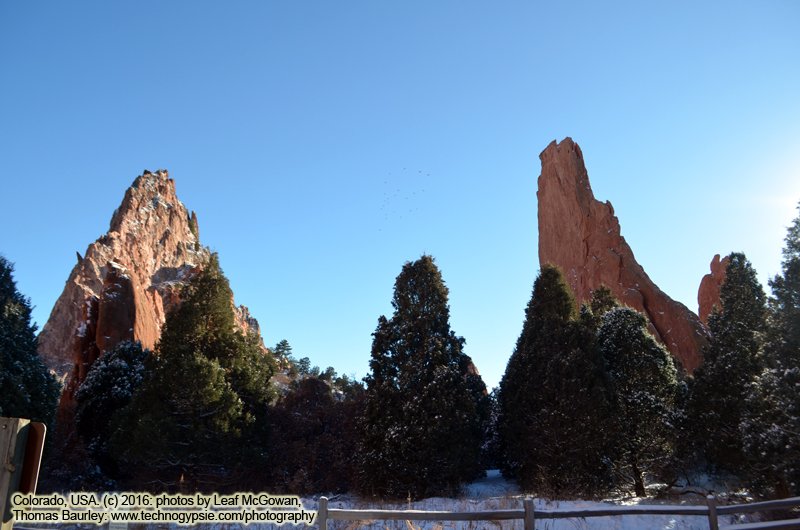
Garden of the Gods (CO, USA)

Posted on June 15, 2017 By Techno Tink No Comments on Garden of the Gods (CO, USA)
Faerie Hills, Haunted Locations, Living Myth, Sacred Sites

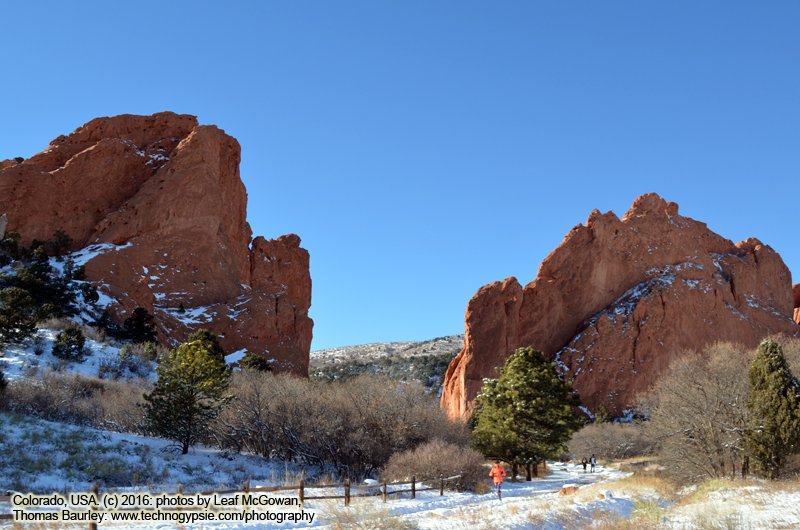
Garden of the Gods


Garden of the Gods

1805 N 30th Street (at Gateway Rd)
* Manitou / Colorado Springs, Colorado * 719.634.6666 * http://www.gardenofgods.com/ * http://www.technogypsie.com/reviews/?p=545 * 
Originally first published May 9, 2009, by Thomas Baurley

Garden of the Gods is a unique natural geological park that is located in Colorado Springs and Manitou Springs … and is a Registered National Natural Landmark. It’s open from 5 a.m. to 11 p.m. in the summer and 5 a.m. to 9 p.m. in the winter. The park boasts over a million visitors a year or more.

History and Mythology

Where the Great Plains grasslands meet the low-lying pinon-juniper woodlands of the American Southwest at the base of the eastern slopes of the Rocky Mountains a geological upheaval occurred along the Trans-Rocky Mountain Fault system creating these spectacular features over a million years ago. Horizontal ancient beds of sandstone, limestone, and conglomerates were pushed and tilted vertically when the tectonic plates pushed together. Glaciations, wind, and water erosion shaped the features over hundreds of thousands of years.

This geologic feature was seen as sacred grounds by the original inhabitants of the area, potentially visited and used for spirituality possibly over 3,000 years ago to the present. As early as 1330 B.C.E. evidence of human occupation has been found from petroglyphs, fire rings, pottery, and stone tools have been left behind. The Ute Indians claim that their people always had lived where Garden of the Gods Park now stands and their people were created there and around Manitou.

The Kiowa, Apache, Shoshone, Pawnee, Cheyenne, and Arapaho also claim their peoples visited or lived here. It was known as a pivotal crossroads and meeting place for many indigenous peoples and nomadic tribes gathered together for peace. Rivaling tribes were said to even have laid down their weapons before entering the shadows of the sandstone features.

Garden of the Gods


Two sets of petroglyphs were found here – the first hidden in a crevice on the east side of South Gateway Rock depicting a circular shield-like figure divided into four parts with a rain cloud terrace image, a Thunderbird image, zigzag lines, and an image of wheat or corn and a faint flower-like image with a dozen dots forming a semi-circle over its top which some experts said was done recently in the last 100 years copying Indian designs from a book. The other petroglyph is pecking in the rock discovered in the 1980s and estimated to date to 1500 C.E. most likely a Ute Indian design potentially depicting a deer, a third of a buffalo head, and maybe a stone tool seemingly telling a story.

Alleged Native American legends of the site have been told, their authenticity is unknown. Marion E. Gridley wrote in “Indian Legends of American Scenes” telling a tale about a great flood that covered all the mountains nearby Pikes Peak. As the waters receded, the Great Spirit petrified the carcasses of all animals killed by the flood into sandstone rolling them down into this valley as evidence of the Great Flood.

The second was written by Ford C. Frick saying “… in the nestling ales and on the grassy plains which lie at the foot of the Great White Mountain that points the way to heaven lived the Chosen People. Here they dwelt in happiness together. And above them on the summit of the Mighty Peak where stand the Western Gates of Heaven, dwelt the Manitou. And that the Chosen might know of his love the Manitou did stamp upon the Peak the image of his face that all might see and worship him … but one day as the storm clouds played about the Peak, the image of the Manitou was hid .. and down from the North swept a barbaric tribe of giants, taller than the spruce which grew upon the mountainside and so great that in their stamping strides they shook the earth.

And with the invading host came gruesome beasts – unknown and awful in their mightiness – monstrous beasts that would devour the earth and tread it down … and as the invading hosts came on the Chosen Ones fell to the earth at the first gentle slope of the mountain and prayed to Manitou to aid it. Then came to pass a wondrous miracle, the clouds broke away and sunshine smote the Peak and from the very summit, looking down, appeared the face of Manitou himself. And stern he looked upon the advancing host, and as he looked the giants and beasts turned to stone within their very steps … “

If this site was in Australia or Europe, it would be named castles and fortresses associated with Gods, Deities, Spirits, or Faeries.

Garden of the Gods


Westerners first discovered the features in 1859 by two surveyors who were here to build Old Colorado City. M.S. Beach, one of the surveyors thought it would be a great location for a beer garden. The other surveyor replied to him stating “A Beer Garden? Why this is a fit place for the Gods to assemble. We will call it Garden of the Gods”. General William Jackson Palmer who was known for his contributions to building Colorado Springs convinced his colleague Charles Elliot Perkins to buy the 240 acres embracing the features. In 1909 his children donated the land to the city of Colorado Springs.

The original family that donated the land to the public required that it would always remain free, and that is what it remains today. Garden of the Gods stands as a great park for hiking, walking, bicycling, rock climbing, picnicking, special events, and weddings … The park has it all … protected as 1,387 scenic acres … and presents itself as a unique tourist/information center, with a theater and gift shop near the entrance. Within are 15 miles of trails ranging in various levels of difficulty from beginner to advance for hiking and exercise.

A historical video greets you at the welcome center and tells the tale that began in the 1870s when the railroads carved westward when General William Jackson Palmer founded the city of Colorado Springs and upon discovering this natural beauty, urged his friend Charles Elliott Perkins, the head of Burlington Railroad, to make his home where the park now stands. He lived there until he finished his railway from Chicago to Colorado Springs. His railroad project wasn’t a success and never made its destination in the springs.

His homestead eventually became his summer home in 1879. He purchased 480 acres and never actualized building on it, leaving the land in its natural state and for the public. When he died in 1907, he made arrangements for the land to be a public park, and this was enacted by his children in 1909 forever as the Garden of the Gods “where it shall remain free to the public, where no intoxicating liquors shall be manufactured, sold, or dispensed, where no building or structure shall be erected except those necessary to properly care for, protect, and maintain the area as a public park.” That is exactly what they’ve done …. and it’s a beautiful place to be.

Read More “Garden of the Gods (CO, USA)” »

Manito, the Great Spirit

Posted on June 14, 2016 By Techno Tink No Comments on Manito, the Great Spirit
Giants, God/desses, Mythology

Photos and Tales to come – coming soon …. Story of the Bridge of the Gods: Geologically this is one of the shortest crossing areas between Oregon and Washington over the Columbia River. It is believed that a thousand years ago there was a massive landslide from the north shore of the Columbia River that … Read More “Manito, the Great Spirit” »

Posts pagination

Previous 1 … 6 7 8 … 21 Next

Categories

New Posts

  • Thunder Mountain
  • Area 51
  • The Old Tonopah Cemetery
  • The Clown Motel
  • Thomas the Rhymer / Tam Lin

Pages

  • About Faerie Lore ....
  • Donate
  • Newsletter

Archives

  • Home
  • About Faerie Lore ….
  • Evolution
  • Haunted Locations
  • Herblore
  • Magic & The Occult
  • Media, News, Tales
  • Mythology
  • Folk Songs
  • Giants
  • God/desses
  • Living Myth
  • Monsters
  • Otherkin
  • Prophecies
  • Shadow beings
  • The Undead
  • Urban Legends
  • Religion
  • Traditions
  • Newsletter
  • Donate

Copyright © 2026 Faerie Lore and Legends.

Theme: Oceanly News Dark by ScriptsTown