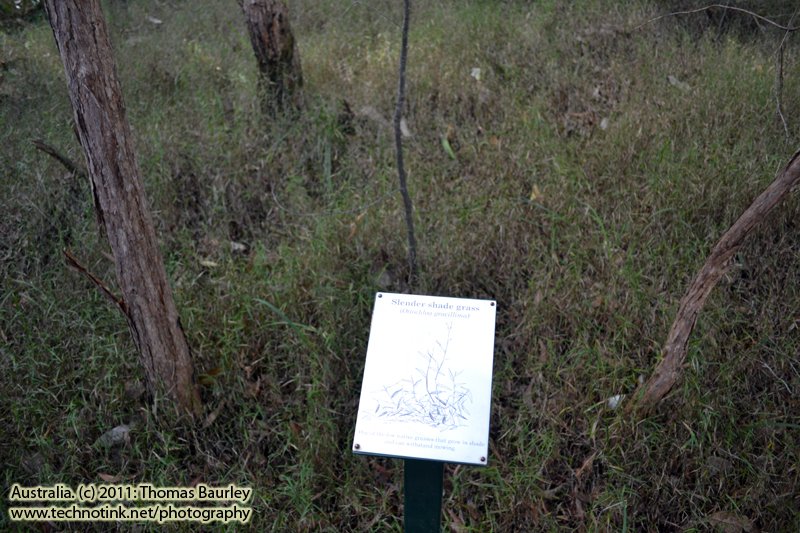
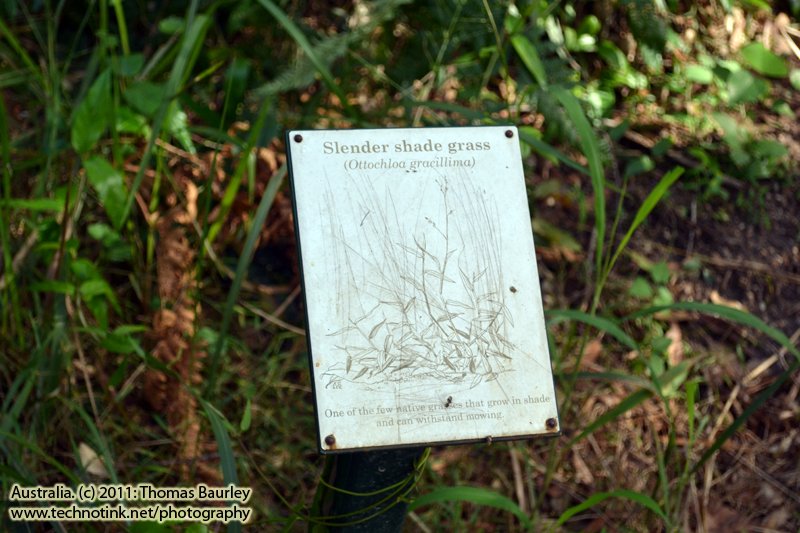
One of the few grasses that grow in the shade and can withstand mowing. Common African, Asian, and Australian grass. The species vary from Ottochloa gracillima, grandiflora, and nodosa. It is a slender spreading perennial that grows upwards of 30 cm in height, often forming mats, with sheath glabrous or sparsely hispid leaves with tubercle-based hairs approx. .25 mm long, with cilia upwards of 1 mm in length, blades are usually linear-lanceolate 1.5-6 mm in width. More information: https://plantnet.rbgsyd.nsw.gov.au/cgi-bin/NSWfl.pl?page=nswfl&lvl=sp&name=Ottochloa~gracillima
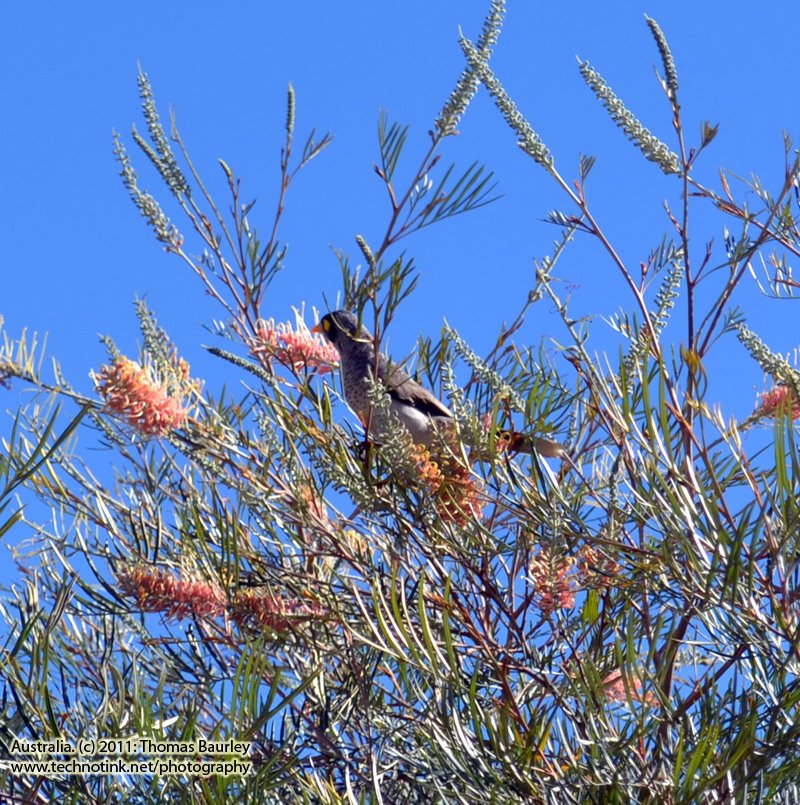
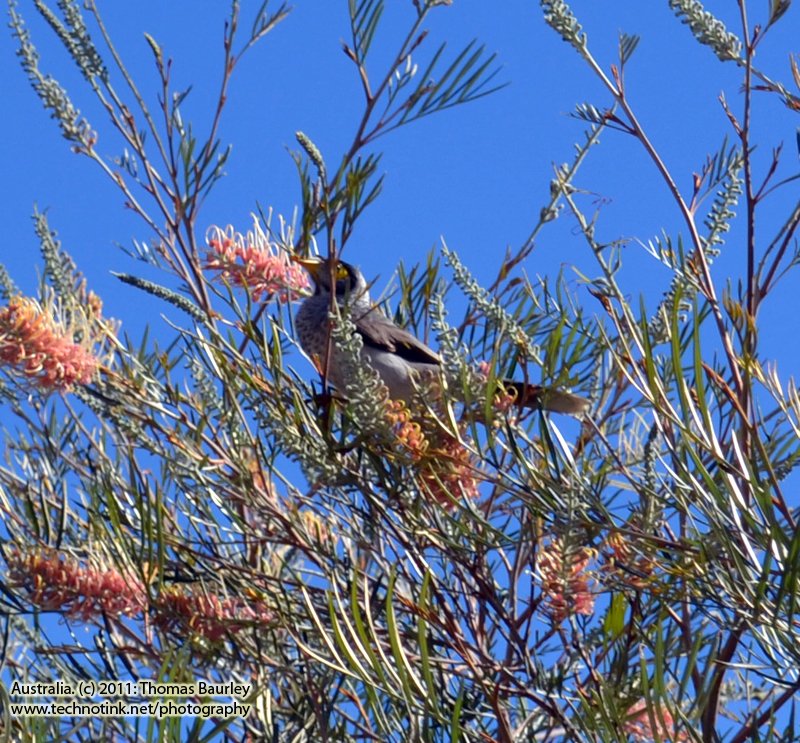
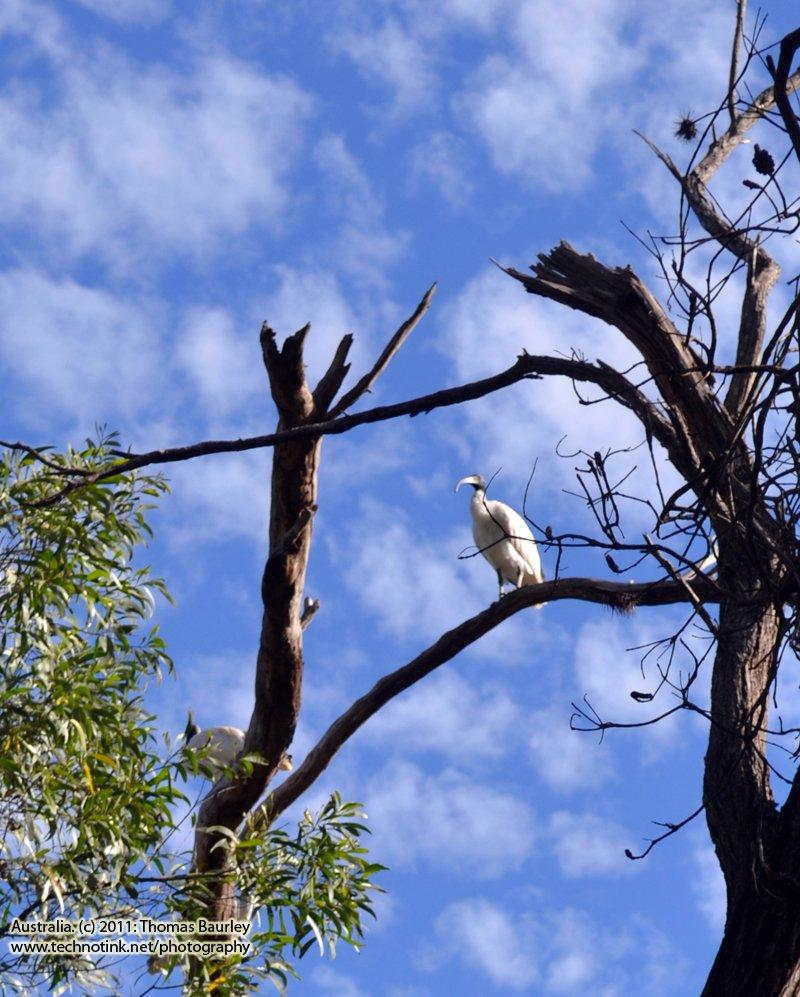
Random Birds from my travels around Australia. If anyone knows the names of some of these birds that aren’t labelled, would be grateful for your input.
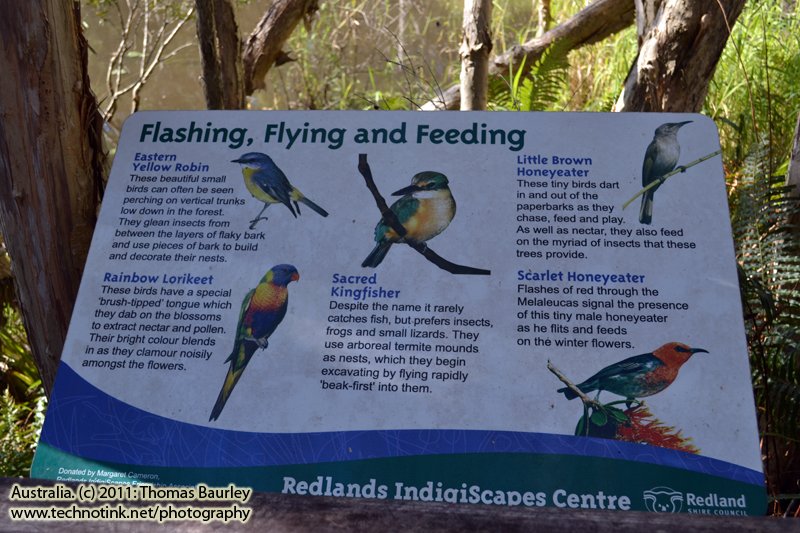
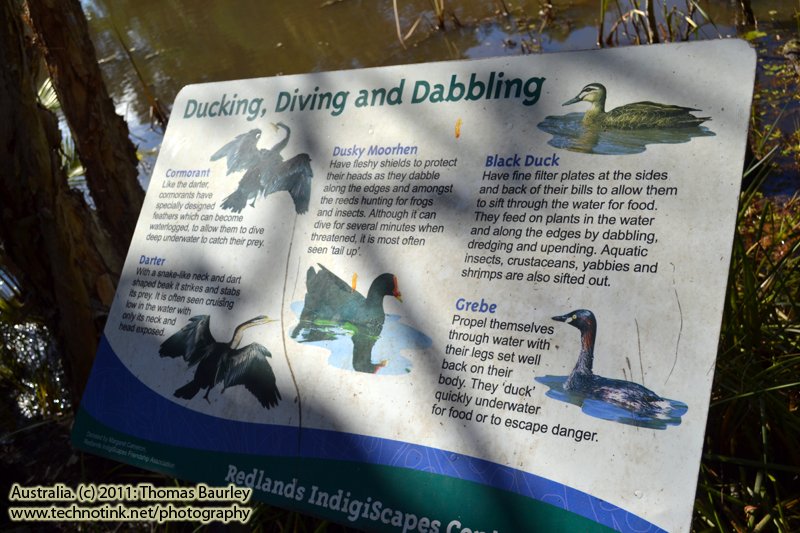
From Indigiscapes, Brisbane, Australia:
From nature sign: Flashing, Flying, and Feeding: Eastern Yellow Robin: These beautiful small birds can be seen perching on vertical trunks low down in the forest. They glean insects from between the layers of flaky bark and use pieces of bark to build and decorate their nests.
Rainbow Lorikeet: These birds have a special “brush-tipped” tongue which they dab onto blossoms to extract nectar and pollen. Their bright color blends in as they clamor noisily amongst the flowers.
Sacred Kingfisher: Despite the name, it rarely catches fishes, but prefers insects, lizards, and frogs. They use arboreal termite mounds as nests, which they begin excavating by flying rapidly “beak first” into them.
Little Brown Honeyeater: These tiny birds dart in and out of the paperbarks as they chase, feed, and play. As well as nectar, they also feed on the myriad of insects that these trees provide.
Scarlet Honeyeater: Flashes of red through the Melaleucas signal the presence of this tiny male honeyeater as he flits and feeds on the winter flowers.
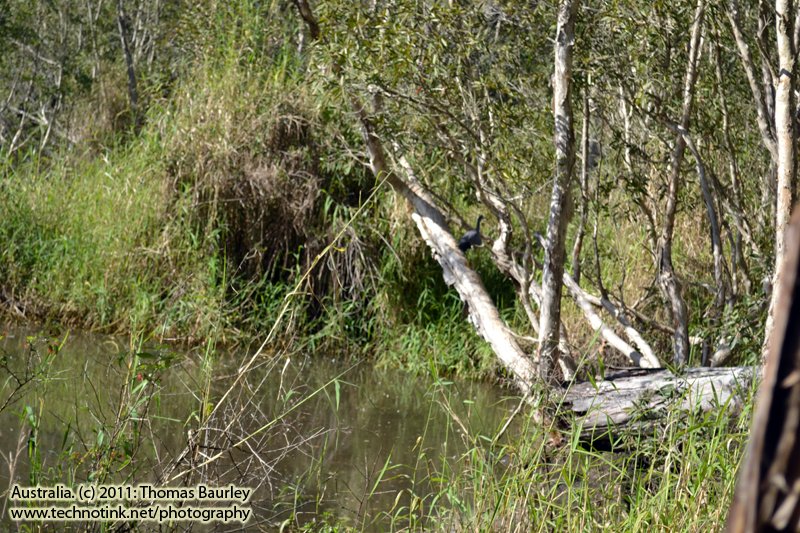
Can you identify me? (Bird 050211-023)
From nature sign: Ducking, Diving, and Dabbling: Cormorant: Like the darter, cormorants have specially designed feathers that can become waterlogged, allowing them to dive deep underwater to catch their prey.
Darter: With a snake-like neck and dart-shaped beak it strikes and stabs its prey. It is often seen cruising low in the water with only its neck and head exposed.
Dusky Moorhen: Have fleshy shields to protect their heads as they dabble along the edges and amongst the reeds hunting for frogs and insects. Although it can dive for several minutes when threatened, it is most often seen as “tail up”.
Black Duck: Have fine filter plates at the sides and backs of their bills to allow them to shift through the water for food. They feed on plants in the water and along the edges by dabbling, dredging, and upending. Aquatic insects, crustaceans, yabbies, and shrimps are also shifted out.
Grebe: Propel themselves through the water with their legs set well back on their body. They duck quickly underwater for food and to escape danger.
Can you identify me? (Bird 050211-021)
Can you identify me? (Bird 050211-020)
Can you identify this bird? (Bird 050211-001 and 002)
Can you identify this bird? (bird 050211-061 & 062)
The folk name given to numerous species of Eucalyptus that attract and host the scribbly gum moths that leave scribbly patterns on the bark. Most common species hosting these insects are the Eucalyptus haemastoma, Eucalyptus sclerophylla, Eucalyptus racemosa, Eucalyptus signata, and the Eucalyptus rossi. They can be found on other Eucalyptus, but do not receive the same namesake such as Eucalyptus pillularis, saligna, stenostomaora, and fraxinoides.
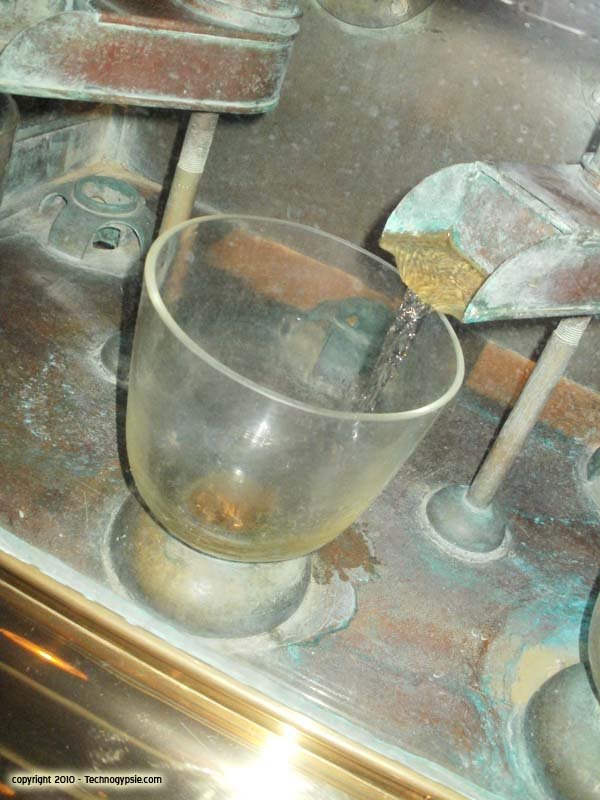
Spirits and Entities of Alcohol by Thomas Baurley, Leaf McGowan, Technogypsie Productions
It always amazes me how the world really doesn’t understand the “root” of all things, nor pay attention to the “history” of various items or substances that they use occasionally or daily in life. I strongly believe it is very important to know the “root” and “makeup” of anything one puts in their bodies. Regardless of whether one is religious, spiritual, or scientific – the role of religion and spirituality in all aspects of life has some intriguing elements that should not be ignored.
The proverb “You are what you eat”; has a lot of elements of truth in that saying because what you put in your body affects it chemically, physically, mentally, emotionally, and yes, spiritually. I won’t debate between science and religion in this article and for those readers that are atheist and don’t believe in spirituality – while reading this – simply ignore the spiritual overtones of this article and focus on the chemical aspect of what is being put in your body and understanding the elements you allow into your temple. For those readers that are avid drinkers – think about the drink you are putting in your body and go for higher quality substances as one really should consider changing to “organic” and “triple distilled” spirits instead, and for the spiritual user – know the entity or “spirit” you are inviting into your being.
This is not a negative article on drugs, substances, or alcohol, but rather a spiritual understanding of why we use them, the benefits, and the dangers associated with them. Alcohol use needs to be practiced responsibly, for abusing it can lead to serious consequences. There really is more to “being under the influence” than you can rationally understand. Historically and spiritually, in all world cultures and religions, in folklore and mythology, every substance, every herb, every mineral, and every plant has a “spirit” or “entity” or “deity” assigned or associated with it. Drugs – Alcohol, barbiturates, hallucinogens, chemicals, or what-not are made of compositions of plants, herbs, minerals, and living matter.
Drugs are medicines as well as poisons, with positive and negative effects on a living host that ingest them. Side effects from these drugs create various moods, effects on the body, mind, spirit, and persona. Many of these effects are utilized for spiritual visions, trances, omens, oracles, prophecies, messages, or communication with the beyond in the realms of religion. When abused, they often consume the body and the soul and will create a degradation of a being. Regardless of the substance: alcohol, marijuana, psilocybin, LSD, MDMA, barbiturates, etc. – Each substance has its own entity or spirit that culture attributes certain persona and effects to. It is pretty important to understand what entities you are dealing with, and how to gain advantage from a temporary relationship with them, and how to avoid them taking advantage of you.
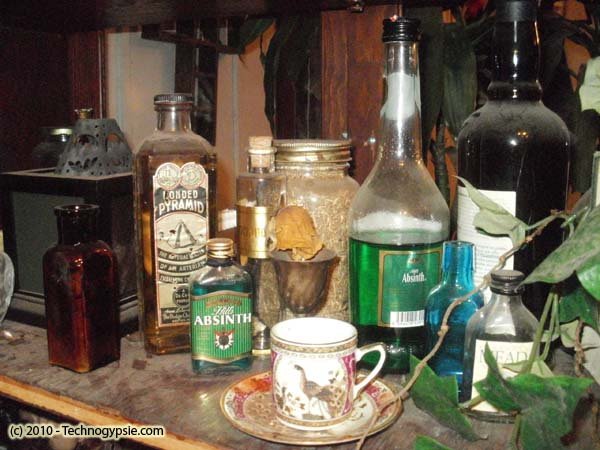
Dr. Mangor’s Absinthe Collection, Los Angeles, California
For this article, I’m focusing on “spirits” or “alcohol”, as it is the most common grouping of entities that the mass population deals with. Why is “Alcohol” given the name “spirits” in the annals of history? The words “alembic” and “alcohol” are metaphors for “aqua vitae” (Life Water) and “Spirit”, often refer to a distilled liquid that came from magical explorations in Middle Eastern alchemy. “Alcohol” comes from the Arabic “al-kuhl” or “al-ku??l”, which means “Body Eating Spirit”, and gives the root origin to the English term for “ghoul”. In Middle Eastern Folklore, a “ghoul” is an “evil demon thought to eat human bodies”, either as stolen corpses or as children.
Since the root of the name “alcohol” is related to the concept of “body eating spirit”, this is also one of the early roots to traditional taboos on imbibing alcohol in the beginnings of Islam and similar prohibition faiths. In Islam, consumption of any alcohol is punishable with 80 lashes. To many “Pagan” or “Heathen” faiths, the imbibing of spirits and the temporary relationship with these entities gives definition to the “aqua vita” beliefs or “life water” or “connection/communication with spirits” that can be quite beneficial. In fact, faiths that had their roots in Paganism, such as Christianity and Islam, have carried over beneficial beliefs about the consumption or imbibition of alcohol.
As Middle Eastern alchemists ingested alcohol they reported that their senses deadened and this is why they saw the elixirs produced as possessing “body taking” qualities. This is where the Europeans are believed to have derived the use of “spirits” for “alcohol”. What is ingested affects a living body spiritually, mentally, emotionally, and physically. Some believe it will affect the soul as well and that it is all about relationships. Some faiths and cultures have credible valid positive reasons to abstain from drugs and alcohol, while others have equal reasons to promote them.
Many cultures see drugs and alcohol as negative, but if one looks into the history of these elementals, there exist many positive elements in their usage, especially when balanced with spirituality and religion. Many cultures and faiths traditionally ingest something in order to commune with the Divine, God/desses, and/or spirits. Whether the wine and bread of Catholic Mass or the trance induction of peyote with South American Shamans, the use of these substances have an honored tradition throughout history.
Shamanic use of trance-inducing drugs are not considered destructive, but rather gifts of the Gods that allow the body and spirit to commune with higher planes of existence. Peyote, ayahuasca, Salvia Divinorum, absinthe, psilocybin, and other substances are assigned to induce spirit communication, clairvoyance, and the ability to heal. Most forms of Christianity consume alcohol as part of everyday life and nearly always use “wine” (fermented grape juice) in their central rite with the Eucharist or “Lord’s Supper”. The beliefs surrounding this practice state that Christian Tradition and/or the Bible teaches that “alcohol” is a “gift from God that makes life more joyous, but that overindulgence leading to drunkenness is a sin”. The key of Christianity is “moderation”.
19th century Protestants attempted to move from this earlier position of thought and pursuing “abstention” or “prohibition” of alcohol believing its use to be a “sin” even to the extreme of a sip (i.e. Mormonism). The Bible repeatedly refers to alcohol in use and poetic expression, and while mainly ambivalent to it, still states them to be both a “blessing from God that brings merriment” and a “potential danger that can be unwisely and sinfully abused”. “Wine” is often portrayed in daily life as a symbol of abundance and physical blessing, and negatively as a “mocker” with beer being a “brawler”, and drinking a cup of strong wine to the dregs and getting drunk can be presented as a symbol of God’s judgment and wrath. As puritans often spoke in their sermons that “Drink is in itself a good creature of God, and to be received with thankfulness, but the abuse of drink is from Satan; the wine is from God, but the drunkard is from the Devil”. Bible warns that alcohol can hinder moral discretion, and that alcohol can be corrupting of the body and a substance that will impair judgment and distract one from God’s will of life.
While the Ancient Egyptians promoted beer and wine, they did warn of taverns and excessive drinking. However, the Greek Dionysus cult promoted intoxication as a means to get closer to their Deity. Macedonians viewed intemperance as a sign of masculinity and were well known for their drunkenness. Alexander the Great was a proponent of the Cult of Dionysus and known for his inebriation. Ancient and Modern Roman celebrations on March 15th of Anna Parenna celebrates the Goddess of the Returning Year by crossing the Tiber River and “go abroad” into Etruria and picnic in flimsy huts made of branches, drink as much alcohol as they could, as it was thought that one would live for as many years as cups of alcohol one could drink on this date. Once finished they would return to their homes in Rome.
Most Pagan religions encourage alcohol use and some pursue intoxication promoted as a means of fostering fertility. To Pagan faiths it is believed to increase sexual desire and to make it easier to approach another person for sex. Norse paganism considered alcohol to be the sap of Yggdrasil and drunkenness as an important fertility rite in this religion. Alcohol was also used for medicinal purposes in biblical times as an oral anesthetic, topical cleanser, soother, and digestive aid. Problems associated with industrialization and rapid urbanization were also attributed and blamed on alcohol including urban crime, poverty, high infant mortalities, though it’s likely that gross overcrowding and unemployment were the actual root cause.
The modern world then started blaming personal, social, religious, and moral problems on alcohol. This led to modern movements of prohibitionism. A typical Buddhist view on Alcohol use is as a shortcut for the pursuit of happiness as it produces a short-term euphoria or happiness and this is the reason millions of people drink it repeatedly every day. Buddha teaches alcohol as well as all drugs, leads to misjudgment, blocks rational thinking, and therefore preached against amongst its disciples even though in some Buddhist disciplines it is used as offerings to Deity and spirits. Islam, Jainism, the Bahai’ Faith, The Church of Jesus Christ of Latter-day Saints, the Seventh-day Adventist Church, the Church of Christ, Scientist, the United Pentecostal Church International, Theravada, most Mahayana schools of Buddhism, some Protestant denominations of Christianity, and some sects of Hinduism – forbid, discourage, or restrict the drinking of alcoholic beverages for various reasons.
Science tells us alcohol releases dopamine into the brain, stimulating the pleasure sensation. There are a lot of “expectations” with alcohol, and many of these will still operate in the absence of actual consumption of alcohol when the individual believes they are consuming alcohol. Research in North America shows that men tend to become more sexually aroused when they think they have been drinking alcohol, even when they have not been drinking it. Women report feeling more sexually aroused when they falsely believe the beverages they have been drinking contained alcohol. Men have shown to become more aggressive in laboratory studies when they are drinking only tonic water but believe it contains alcohol, they also become less aggressive when they believe they are drinking only tonic water, but are actually drinking tonic water that contains alcohol.
In Magical Views, the use of alcohol, especially in ritual and rite, is a very powerful vehicle for altering states of consciousness, communicating with spirits, Deities, Ancestors, and entities. It aids in relaxation for ritual. It frees the mind of responsibility and control, and is a great aid to those very logical individuals that have to be “in control”. However, it can be detrimental to those who have a lot of natural psychic or medium-ship abilities that have been raised in families or cultures that demonized or invalidated these gifts. As alcohol and drugs impair the left brain first (logical) and enhance right brain activity (where spirit communication and psychic abilities reside), thereby increasing psychic or mystical experiences while under the influence.
The effects are dependent on the individual and their type, as it can be dangerous with some people – those susceptible to possession and toying by spirits, excessive drinking is similar to “throwing open the saloon door and calling out to a crowd of alcoholics – ‘Bar is open, drinks are on (in) me’”, which will attract lower astral entities to enter the body and soul to experience the alcohol vicariously through the person. It is easier for spirits to influence one when they are intoxicated, some of which are very “low life” or “demonic” entities. (Many are good and powerful, including Deities like Dionysus, Maeve, etc. but usually, associate with the particular elixir being imbibed) Mixing of “Spirits” can be dangerous and very toxic on the body and spirit, as the doorway to the soul can be an orgy of spirits that the person cannot handle, often leading to alcohol poisoning, sickness, illness, and/or death.
Historical: Ancient China had wine jars in Jiahu dating to 7,000 B.C.E. and considered a spiritual food rather than a material food with high importance in religious life. Neolithic wine making was found to date from 5400-5000 B.C.E. as archaeologists uncovered a yellowish residue at Hajji Firuz Tepe in a jar that analysis determined came from winemaking. Early brewing dates in Egypt showing alcohol was presided over by the God Osiris. Chalcolithic Era Indus Valley civilizations in India date from 3000-2000 B.C.E. with Hindu Ayurvedic texts describing beneficent uses. Babylonians in 2700 B.C.E. worshiped a wine Goddess and other wine deities. Xenophon (431-351 BCE) and Plato (429-347 BCE) praised moderate use of wine as beneficial to health and happiness but were critical of drunkenness. Hippocrates (460-370 BCE) praised it for its medicinal properties (wine).
Some Native American peoples developed an alcoholic beverage called Pulque or Octli as early as 200 C.E. that was used for visions, religion, and prophecy. The first distillations of spirits came from the Medieval Period, with the School of Salerno in the 12th century, and fractional distillation developed by Tadeo Alderotti in the 13th century. Distillation of whiskey first performed in Scotland and Ireland for centuries, and the first written confirmation of whiskey comes from Ireland in 1405, Scotland in 1494.
Alcoholic beverages are drinks that contain “ethanol” (a.k.a. “alcohol”). They are divided into three classes: beers, wines, and spirits. “Spirits” often related to distilled beverages low in sugars and containing a minimum of 35% alcohol by volume. These are often referred to as Gin, Vodka, and Rum. Alcohol is legally consumed in most countries, though regulated by over 100 countries in terms of production, sale, and consumption. In most countries and religions, alcohol plays a major role in social events, rituals, and traditional celebrations. Alcohol is a psychoactive drug with a depressant effect that reduces attention and slows reaction speeds. It can be addictive and those addicted are considered to be under the sickness called “alcoholism”. Science shows that alcohol is beneficial in moderate amounts, especially a glass of wine drunk daily as it aids in digestion. If food is eaten before alcohol consumption, it reduces alcohol absorption, and the rate at which alcohol is eliminated from the blood is increased. The mechanism for faster alcohol elimination appears to be related to types of food especially those with alcohol-metabolizing enzymes and liver blood flow. Consumption of alcoholic drinks during Medieval times was a method used to avoid water-borne diseases such as cholera as alcohol kills bacteria.
Beer: is the world’s oldest and most widely consumed alcoholic beverage, and the third most popular drink after water and tea. It is produced by brewing and fermenting starches derived from cereal grains – most commonly by means of malted barley, though sometimes with wheat, maize, or rice. There are two main types of beer: Lager and Ale. Ale is classified into varieties such as pale ale, stout, and brown ale. Most beer is flavored with hops adding bitterness and as a natural preservative. Beer is usually 4-6% alcohol by volume but can be less than 1% or more than 20%. It is a stipend of the drinking culture of most nations and has social traditions such as beer festivals, pub culture, pub crawls, and pub games. The Christian Bible refers to beer as a brawler. Medieval monks were allotted about five liters of beer per day – allowed to drink beer but not wine during fasts. Many Saints and Deities were associated with Beer, such as St. Adrian, the patron saint of Beer; St. Amand, patron saint of brewers, barkeepers, and wine merchants; and The Ancient Egyptians believed Osiris gave their people “Beer” as he invented it and it was a necessity of life, brewed in the home on a daily basis. In Ancient Egypt, Cellars and wine presses often had a God who was associated with each of the 17 types of beer they created. These were used for pleasure, nutrition, medicine, ritual, remuneration, and funerary purposes. Babylonians often offered beer and wine to their Deities as offerings.
Wine: Alcoholic beverages distilled after fermentation of non-cereal sources like grapes, fruits, or honey. It involves a longer complete fermentation process and a long aging process (months or years) that create an alcohol content of 9-16% by volume. Sparkling wines are made by adding a small amount of sugar before bottling, creating a secondary fermentation in the bottle. The Bible refers to wine as a symbol of abundance and physical blessing, bringer, and concomitant of joy, especially with nourishment and feasting; as well negatively as a mocker. It is commonly drunk with meals, as the Old Testament prescribed it for use in sacrificial rituals and festal celebrations.
Jesus’ first miracle was making copious amounts of wine at the wedding feast of Cana where he instituted the ritual of the Eucharist at the Last Supper during a Passover celebration that “wine” is a “new covenant in his blood”. Under the rule of Rome, the average adult male who was a citizen drank an estimated liter (1/4 of a gallon) of wine a day. Thomas Aquinas, a Dominican monk and the “Doctor Angelicus” of the Catholic Church said that moderation in wine is sufficient for salvation but that for certain person perfection requires abstinence and this was dependent upon their circumstance. Wine has been associated or assigned to various Saints, Deities, and Spirits such as St. Amand, patron saint of brewers, barkeepers, and wine merchants; St. Martin, the so-called patron saint of wine; St. Vincent, and patron saint of vintners. In Ancient Egypt,
Cellars and wine presses often had a God who was associated with each of the 24 varieties of wine they created. These were used for pleasure, nutrition, medicine, ritual, remuneration, and funerary purposes. Babylonians in 2700 B.C.E. worshiped a wine Goddess and other wine deities. Babylonians often offered beer and wine to their Deities as offerings. In Greece, the art of winemaking reached the Hellenic peninsula by 2,000 B.C.E. – the first of which was Mead, and by 1700 BCE wine making was commonplace and incorporated into religious rituals. Balche’, a Mayan Honey wine, was associated with the Mayan deity Acan.
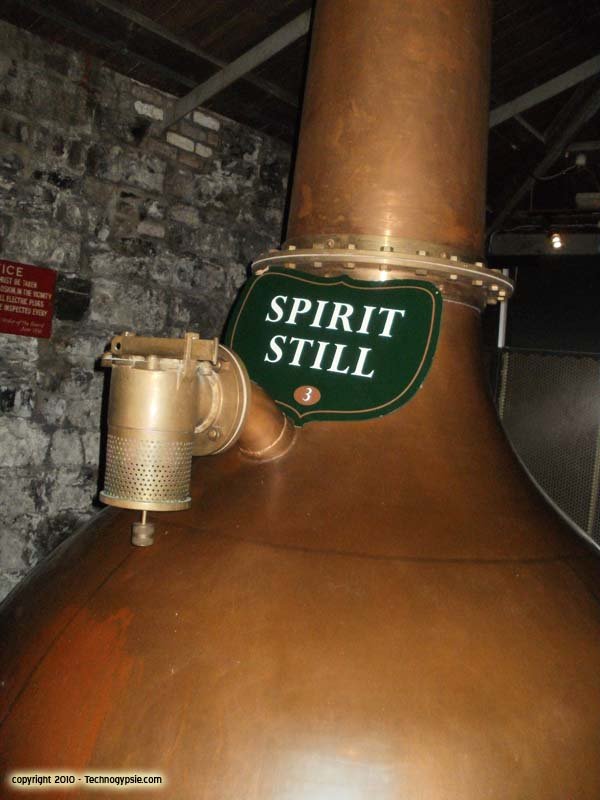
Spirits: Unsweetened, Distilled alcoholic beverages that have an alcohol content of at least 20% ABCV are called spirits. These are produced by the distillation of a fermented base product, which concentrates the alcohol, and eliminates some of the congeners. These can be added to wine to create fortified wines such as ports and sherries.
These are often Vodka, Rum, Gin, Whiskey, Whisky, Tequila, and other spirits.
Some commonly believed changes in personality with ‘types’ of alcohol:
Tequila: Boldness, wildness, sexuality, aggression, and lush behavior.
Absinthe: Creativity, Inspiration, Desire to do Art, Write, or Music; imaginative thought. Rumored to be psychedelic and produce hallucinations. Inspires oracles, omens, and prophetic thought.
Rum: Wildness, craziness, boldness, and lust.
Gin: Intellectual thought, healing, lethargy, and numbness.
Gray Whales are known around the world as either the gray back whale, Pacific gray whale, or California gray whale. They grow upwards of 49 feet in length with over 49 tons of weight, living to approximately 55-70 years in age. They are described as gray with gray patches and white mottling on dark gray skin. They are baleen whales that migrate annually, feeding and breeding in certain regions. Known as devilfish for the manner of how they fight when hunted. They are descendants of filter-feeding whales dated to the Oligocene (30 million years ago). Females show highly synchronized reproduction with oestrus occurring in late November/early December involving multiple mates that coincide with annual migration. Gestation is approximately 12 and a half months. Calves are born in a 6-week window during mid-January. Calves are born tail first approximately 13 feet in length, single birth, mammalian birth. Mother lactates for 7 months after birth, then calves are weaned and maternal care decreases. Gray whales tend to locate themselves in lagoons during lactation to protect the newborns from sharks and orcas. They have complex breeding patterns involving 3 or more animals – male and female whales hit puberty around 8 years. Gray Whales feed mainly on benthic crustaceans by turning on their side and scooping up sediments from the ocean floor, using their baleen or whalebone as a sieve capturing small sea animals.
Habitat/Locale: Eastern North Pacific of the Americas; endangered in the western North Pacific (Asia) areas. North Atlantic.
Diet: Primarily benthic crustaceans and plankton
Uses: whale oil, meat, fat, bones for tools. Humans have challenged the gray whale to extinction-level threats from whaling.
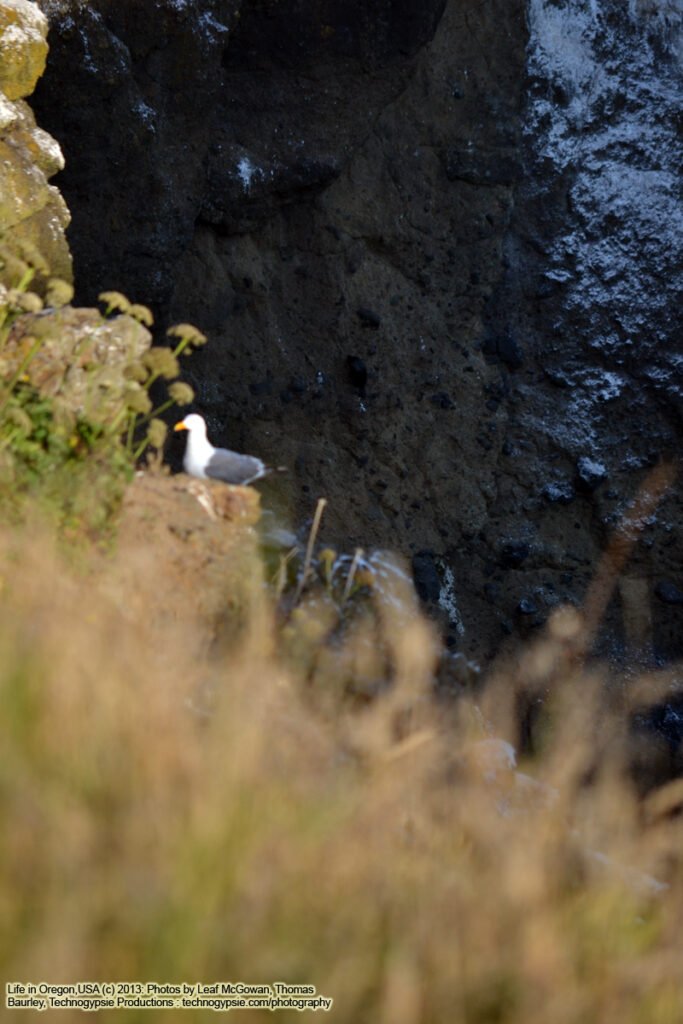
Description: Sea Gulls are probably the most famous of sea birds. They are part of the family “Laridae” and closely related to Sternidae or “terns”, distantly related to auks, skimmers, and waders. Sea Gulls can be found ranging in size from medium to large and are often either grey or white in color with black markings on their heads and/or wings.
They have stout long bills and webbed feet. They make a harsh wailing or squawking call. They are ground-nesting carnivores and are known scavengers. Their jaws are unhinging so they can consume large prey. They are long-living recorded upwards of 49 years of human year age. They nest in large densely packed noisy colonies.
They lay 2-3 speckled eggs in vegetation composed of nests. They are resourceful, intelligent, inquisitive, social, and complex. They socially network and fight with one another, often creating a mob and attacking or harassing predators. They have been recorded to actually have tool-use behaviors, such as the herring gull using pieces of bread as bait to catch goldfish. They have also attacked parasitically live whales landing on their backs and pecking out pieces of flesh.
Habitat/Locale:
Diet: Carnivorous focusing on scavenging, crabs, and small fish.
Uses:
History:
Folklore/Mythology: Originally named “mews” after the German Möwe, Danish måge, Dutch meeuw, and French mouette.
Spirituality:
This page is currently being written. Please check back soon.
References/Recommended Reading:
Website referenced 2/27/18 at
Website referenced 2/27/18 at
Website referenced 2/27/18 at
Website referenced 2/27/18 at
Website referenced 2/27/18 at
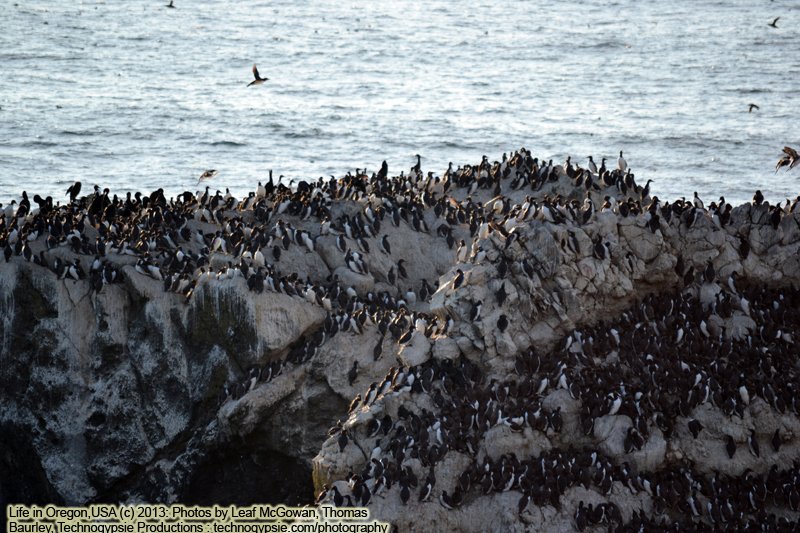
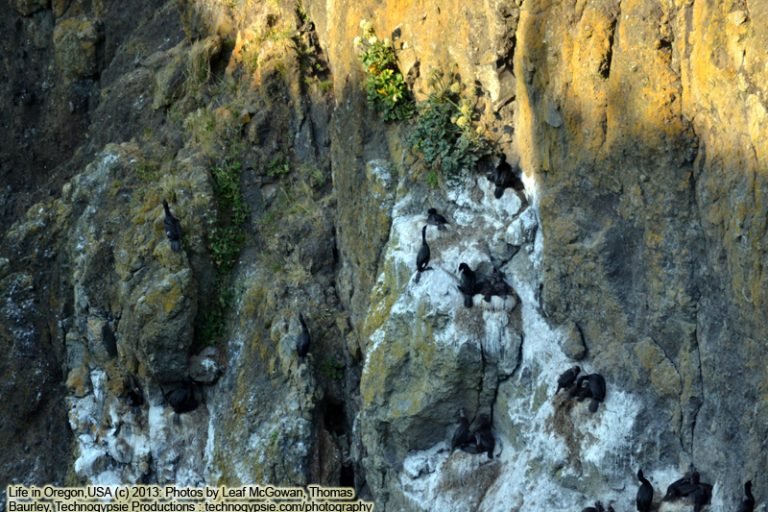
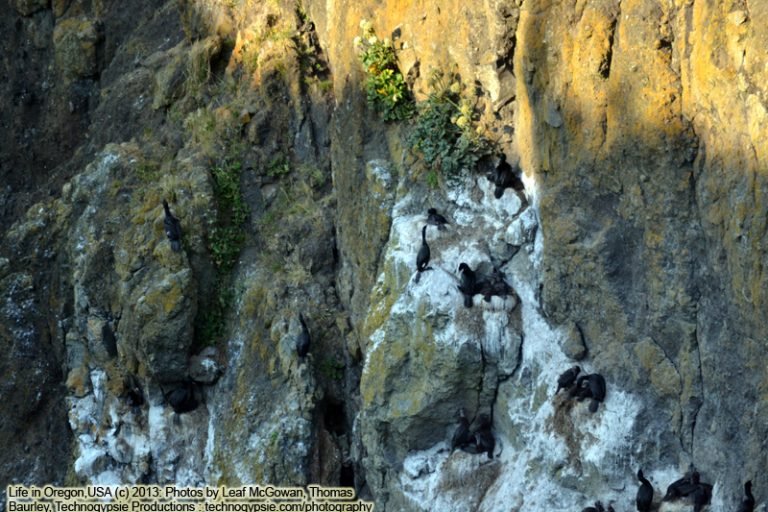
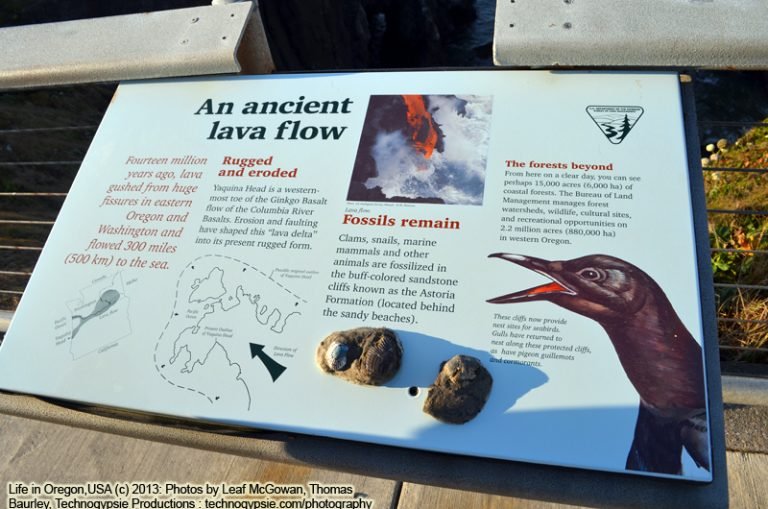
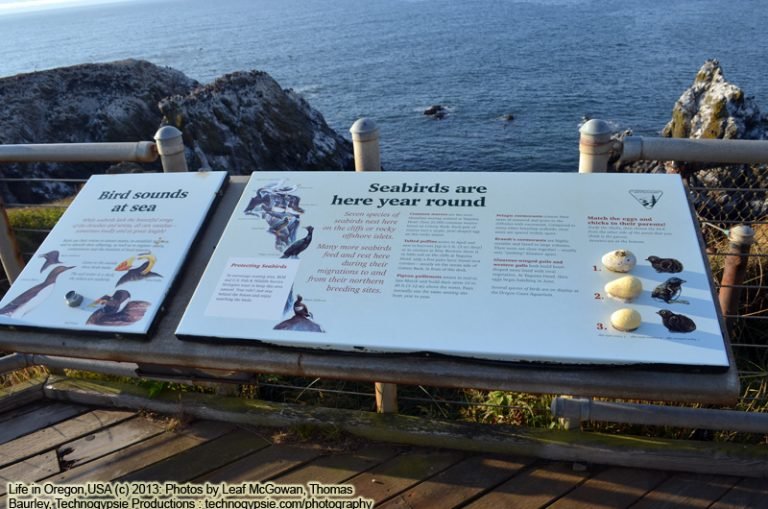
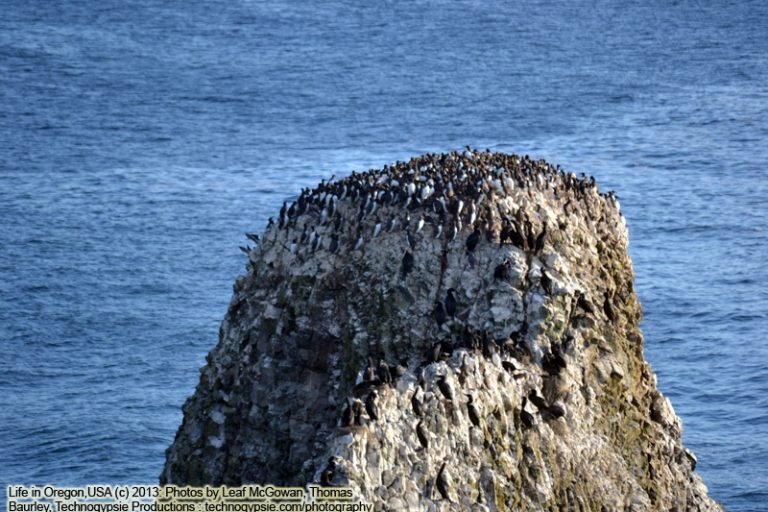
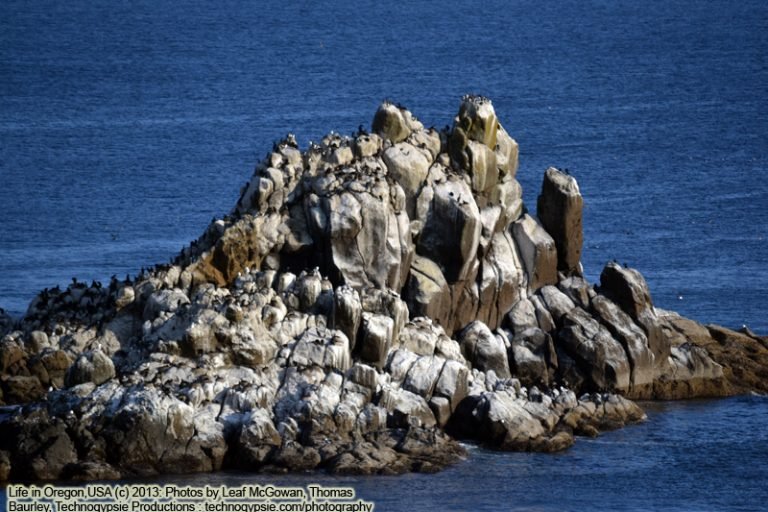
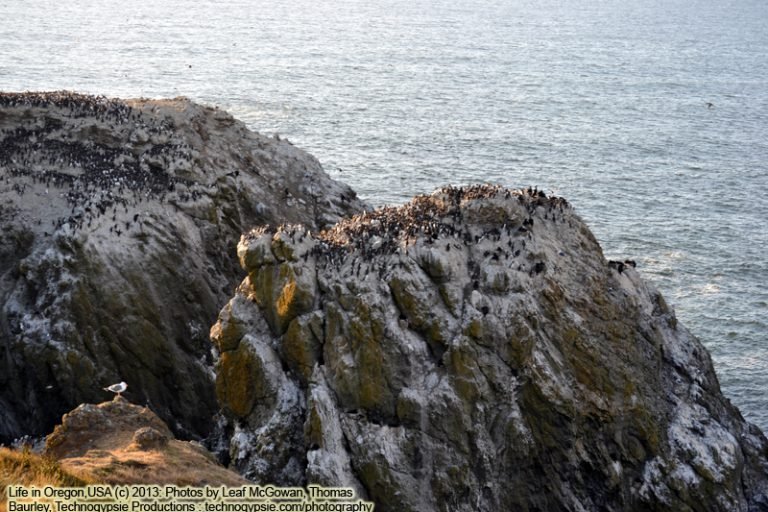
Yaquina Head Outstanding Natural Area NPS, Newport, Oregon. Continue reading →
Locality: Worldwide – Coastal regions. Pacific Northwest in the Americas. P. carbo and P. aristotelis only two in the British Isles. They have not been found in the Pacific Islands.
Description: These birds are large birds weighing upwards of 11 lbs with an 18-39 inch wingspan, mostly dark feathered, with long, thin, hooked bills. There are over 40 species of the Cormorants or Phalacrocoracidae. Feet webbing is between the four toes.
They eat fish by diving from the surface propelling themselves underwater with their feet and wings, recorded diving as deep as 45 meters. They nest in colonies around rock islands, rocky cliffs, islets, along the shore, and in trees. Originally they are deduced to have originated from freshwater environments.
Uses:
Folklore/Spirituality: The name comes from the Greek phalakros meaning “bald” and κόραξ meaning “raven”. The name “Cormoran” comes from the Legends in Cornwall about the sea giant named “Cormoran” in the tale of Jack the Giant Killer.
This is a work in production. It is not complete.
More information:
If you would like to contact the author about this article, would like to advertise on this page, or have information to add, please contact us at technogypsie@gmail.com.
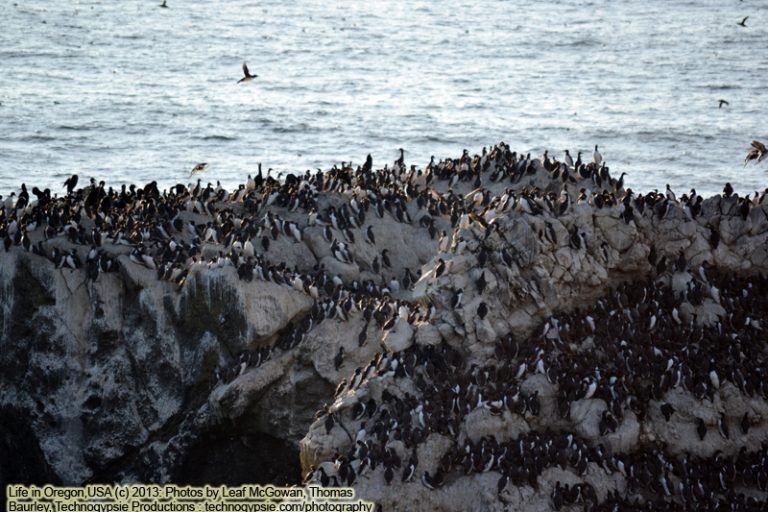
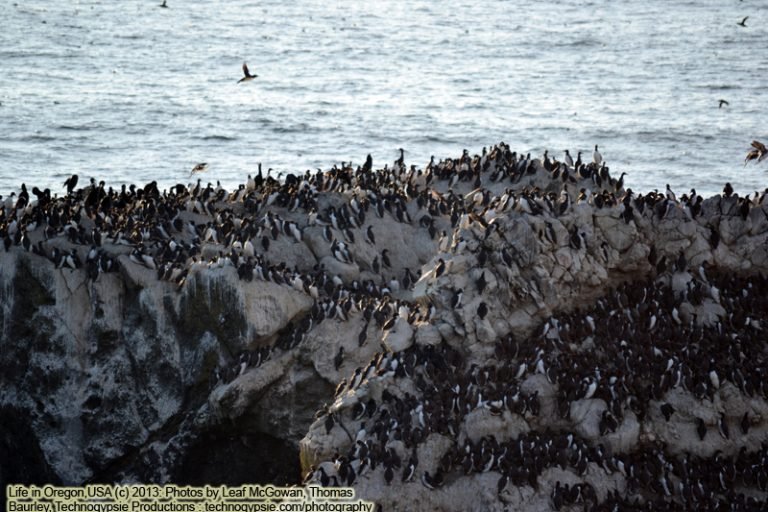
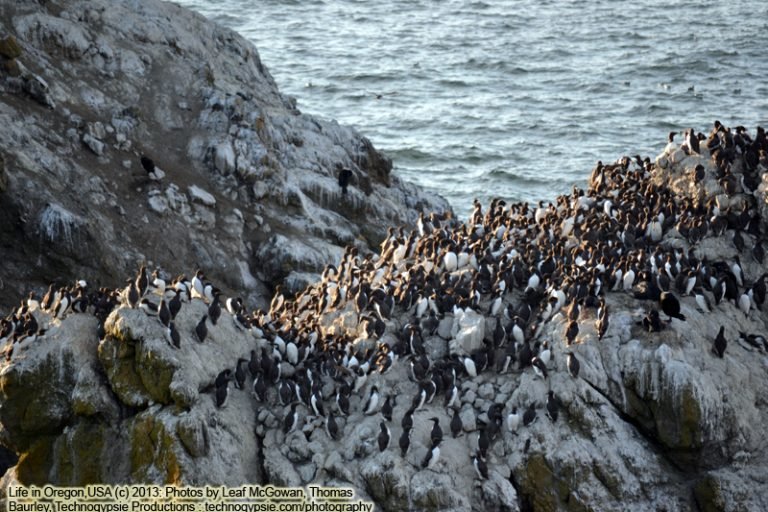
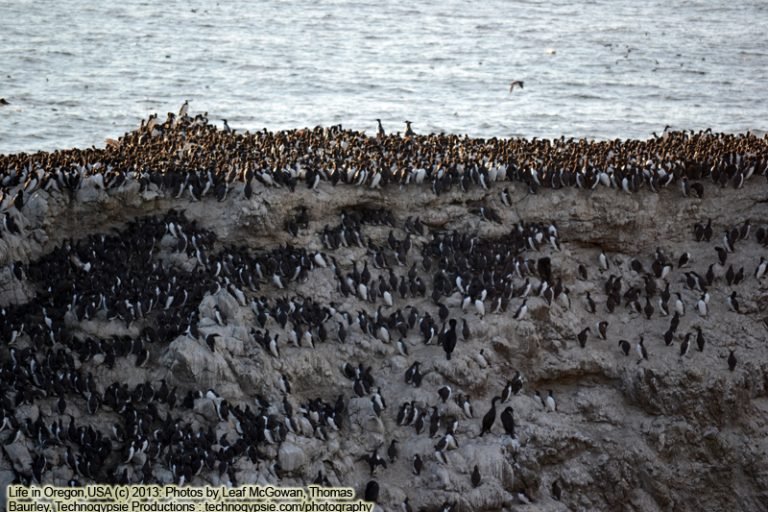
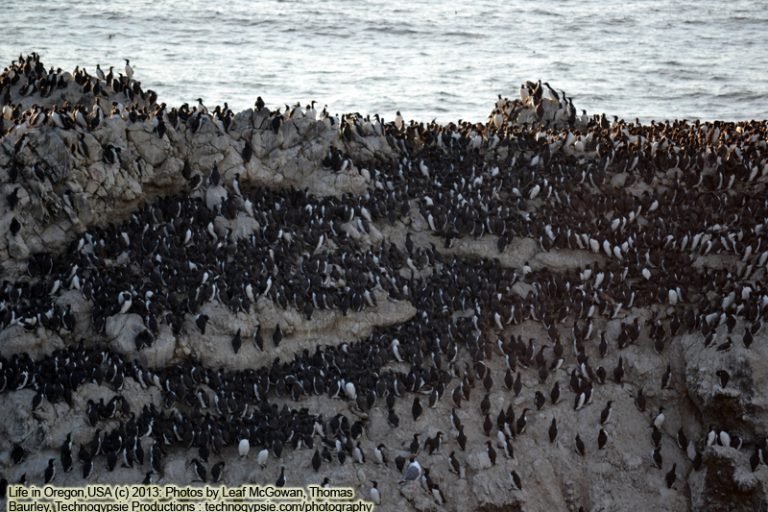
Yaquina Head Outstanding Natural Area NPS, Newport, Oregon. Oregon Coastline 2013: Oregon Coast, Oregon, USA. Friday, August 3, 2013. Continue reading →
Description: Known as the common murre or common guillemot, these birds are large auks, with a circumpolar distribution spending their time at sea except for breeding along rocky cliffs. “Guillemot” is a common name for these sea birds of the auk family. They fall under the genera Uria and Cepphus and the Uria are the Murres while the Cepphus is the Guillemot. They have fast direct flight but are not very agile, they maneuver well underwater diving to depths of 30-60 meters, though maximum depths recorded are around 180 meters.
They breed in colonies with high-density populations and are often in physical contact with their neighbors, they don’t make nests and lay single eggs they incubate on bare rock ledges which hatch around 30 days of incubation. The eggs are water-repellent and self-cleaning. The infant chick is born downy regulating its own body temperature around day 10, after 20 days they leave the nest for the sea although unable to fly yet upwards of 2 months after birth, they glide with fluttering wings often accompanying the male parent.
The female parent stays at the nest upwards of 14 days after the chick leaves. The chick learns to dive as soon as they hit the water. Murres sometimes nest through the winter, though northern populations spend winters farther from their colonies. They often grow to 38-45 cm in length with a 61-73 cm wingspan. It’s hard to tell the difference between males and females. The common species during breeding possess black on the head, back and wings, with white underparts.
They have a thin dark pointed bill and a small rounded dark tail. The face is usually white with a dark spur behind the eye, though some are dark brown rather than black. Legs and bills tend to be grey, though some have been recorded as yellow/gray. Feathers sometimes molt later in the year, but basic plumage occurs as late as May. The Uria together with the razorbill, dovekie, and extinct great Auk are the tribe Alcini with distinct white bellies, thick long bills larger than the Cepphus, with their dense reproductive colonies on the cliffs. The three living species of Cepphus create the Cepphini tribe and are smaller than the Uria with black bellies, rounder heads, and bright red feet.
Uses:
Folklore/Spirituality: The name comes from the Greek ouriaa – a waterbird mentioned by Athenaeus and the Old Norse alka or “auk”.
This is a work in production. It is not complete.
More information:
If you would like to contact the author about this article, would like to advertise on this page, or have information to add, please contact us at technogypsie@gmail.com.
Folk Name: Puffins, little brother, fraterculini, fratercula
Taxonomy: Animalia, Chordata, Aves, Charadriiformes, Alcidae, Fraterculini, arctica (F. arctica; F. cirrhata; F. corniculata; †F. dowi)
Locality: Two of the species can be found in the Northern realms of the Pacific Ocean, while the Atlantic Puffin can be found in the northern realms of the Atlantic Ocean.
Description: An amazing bird under Fraterculini that has three main species of alcids or auks. Puffins have a stocky build, large beaks that change coloring with seasons, and primarily black and white feathering. They have short-tails, black upperparts, and white to brown/gray underparts, head possessing a black cap, white face, orange-red feet.
They are silent at sea flying high above the water roughly 10 meters compared to the 1.6 meters that other auks fly. They possess a short wingspan which helps them with swimming and what appears to be a flying technique they use underwater. In the air, they are known to have upwards of 400 wing beats per minute especially when flying low over the ocean water. Puffins breed in large colonies along coastal cliffs, offshore islands, sea rocks, crevices, or burrows.
They have bright colored beaks during their breeding season. They shed these after breeding exposing a small dull beak. Their populations are declining. They are known for their feeding patterns by diving in the water for food. Fossils have been found in Oregon known as “Hydrotherikornis” an alcid that dates to the Late Eocene, and other fossils of Aethia and Uria date back to the Late Miocene. It is theorized they originated during the Paleocene in the Pacific regions.
Uses: the fatty meat of the younger birds are salted and eaten in various world diets primarily in coastal regions.
Folklore/Spirituality: The genus Fraterculini or Fratercula comes from the Latin “little brother” referring to the black and white plumage that resembles monastic robes. The English name Puffin comes from the appearance of the bird as being swollen or puffed up, with fat like appearance to the fatty salted meat of the young birds.
This is a work in production. It is not complete.
More information:
If you would like to contact the author about this article, would like to advertise on this page, or have information to add, please contact us at technogypsie@gmail.com.
Folk Name:Murre, guillemot, auk, thin billed murre
Taxonomy:Animalia, Chordata, Aves, Charadriiformes, Alcidae, Uria species (common: aalge)
Locality:
Common Murres are generally from the low-arctic and boreal waters of the North Atlantic and North Pacific. Most of its time Common Murres spend at sea, they only spend time on land breeding along rocky cliff shores or islands.
Description:
Known as the common murre or common guillemot, these birds are large auks, with a circumpolar distribution spending their time at sea except for breeding along rocky cliffs. They have fast direct flight but are not very agile, they maneuver well underwater diving to depths of 30-60 meters, though maximum depths recorded are around 180 meters.
They breed in colonies with high-density populations and are often in physical contact with their neighbors, they don’t make nests and lay single eggs they incubate on bare rock ledges which hatch around 30 days of incubation. The infant chick is born downy regulating its own body temperature around day 10, after 20 days they leave the nest for the sea although unable to fly yet upwards of 2 months after birth, they glide with fluttering wings often accompanying the male parent. The female parent stays at the nest upwards of 14 days after the chick leaves. The chick learns to dive as soon as they hit the water.
Murres sometimes nest through the winter, though northern populations spend winters farther from their colonies. They often grow to 38-45 cm in length with a 61-73 cm wingspan. It’s hard to tell the difference between males and females. The common species during breeding possess black on the head, back and wings, with white underparts. They have a thin dark pointed bill and a small rounded dark tail. The face is usually white with a dark spur behind the eye, though some are dark brown rather than black. Legs and bills tend to be grey, though some have been recorded as yellow/gray. Feathers sometimes molt later in the year, but basic plumage occurs as late as May.
Uses:
Folklore/Spirituality:
The name comes from the Greek ouriaa – a waterbird mentioned by Athenaeus and the Old Norse alka or “auk”.
This is a work in production. It is not complete.
More information:
If you would like to contact the author about this article, would like to advertise on this page, or have information to add, please contact us at technogypsie@gmail.com.
Yaquina Head Outstanding Natural Area NPS, Newport, Oregon. Oregon Coastline 2013: Oregon Coast, Oregon, USA. Friday, August 3, 2013. (c) 2013: Photo by Leaf McGowan, Thomas Baurley, Technogypsie Productions.