Skip to content

Faerie Lore and Legends

Exploring the Unknown, Myths, Lores, and Legends

  • Home
  • Sacred Sites
  • Page 4

Category: Sacred Sites

Posted on December 21, 2013 By Techno Tink No Comments on
God/desses, Mythology, Religion, Sacred Sites, Tuatha de Danann

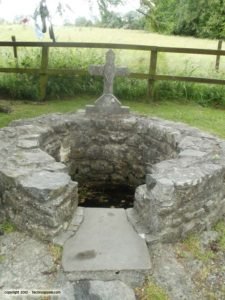
Goibnui, the Smith of the Tuatha Dé Danann Other names:Govannon (Welsh), Gofannon (Welsh), and Gobannos (Gaulish), Goibniu, Goibhnet, Goibhniu. Counterparts:There is suggestions that Goibnui, the Smith of the Tuatha Dé Danann, was replaced by Saint Ghobnatan. The site of Tobar Ghobnatan had archaeological evidence of a hut and artifacts such as iron slag, a crucible, … Read More “” »

Loughcrew Passage Tomb

Posted on August 17, 2013 By Techno Tink No Comments on Loughcrew Passage Tomb
Faerie Hills, Mythology, Sacred Sites

Sliabh na Caillí (Mountain of the Hag), also known as Lough crew, is a infamous passage tomb is one of the four main passage tombs in Ireland next to Brú na Bóinne, Carrowkeel and Carrowmore dating to roughly 3,300 BCE. The site consists of cruciform chambers covered by a mound structure. Within, and on the outside of kerbstones are a unique style of megalithic petroglyphs including circles, spirals, lozenge shapes, leaf shapes, radiating lines. Site has three parts – two of which are on hill tops, Carnbane East and Carnbane West, and the less preserved Patrickstown. Mythology states that it was created by a giant hag who while striding across the land, dropped her cargo of large stones from her apron as she was traveling to her home at Slieve Gullion. Local green gritstone is soft enough to carve making up the orthostats and structural stones of the monuments. In 1980, the archaeologist Martin Brennan discovered that Cairn T in Carnbane East was constructed to receive the rising sun on the Spring and Autumnal Equinoxes, shining down the passage and illuminating the rock art on the back stone. There are also alignments between Cairn L at Lough Crew, Knowth, and Dowth.

081612-001

Read More “Loughcrew Passage Tomb” »

Ossian's Grave (Cloghbrack/Cushendall, Northern Ireland)

Posted on July 13, 2012 By Techno Tink No Comments on Ossian's Grave (Cloghbrack/Cushendall, Northern Ireland)
Faerie Hills, Living Myth, Mythology, Sacred Sites

Ossian’s Grave
* Cloghbrack * Cushendall * Northern Ireland *

The fabled site of where the wandering poet, bard, and seer “Oisin” is believed to be buried. Atop a hill overlooking the valley and down into the Glen as well as over the Channel to be able to see Scotland on a clear day, the location for this small megalithic tomb is spectacular. The Tomb faces East, South-east next to an oval cairn dedicated to poet John Hewitt. Oisin’s Grave / Ossian’s tomb is a small megalithic semi-circular court opening into a two-chambered burial gallery. The back chamber is composed of two sidestones at the southwest, a back or sidestone at the northeast, with a pair of transverse jambs higher than the other stones as if they may have been originally designed as portals. The Forechamber is in very poor shape with only 2 sidestones intact with a pair of portal stones. Within the chamber lies a fallen stone that may have been the displaced roof-stone. The large court dominates the tomb, but additional stones suggest that the court may have belonged to two periods, relating to a back chamber and subsequent fore-portals.

A great irish poet, John Hewitt was very impressed with Ossian’s grave and the megalithic tomb that exists on this hill. So much that he wrote a poem about the site called “Oisin’s Grave: the horned cairn at Lubitavish, Co. Antrim”. Because of this, a stone cairn in Hewitt’s memory was constructed here in 1989 commemorating him as the “Poet of the Glens”.

    We stood and pondered on the stones
    whose plan displays their pattern still;
    the small blunt arc, and, sill by sill,
    the pockets stripped of shards and bones.
    The legend has it, Ossian lies

    beneath this landmark on the hill,
    asleep till Fionn and Oscar rise
    to summon his old bardic skill
    in hosting their last enterprise.

    This, stricter scholarship denies,
    declares this megalithic form
    millennia older than his time –
    if such lived ever, out of rime –
    was shaped beneath Sardinian skies,
    was coasted round the capes of Spain,
    brought here through black Biscayan storm,
    to keep men’s hearts in mind of home
    and its tall Sun God, wise and warm,
    across the walls of toppling foam,
    against this twilight and the rain.

    I cannot tell; would ask no proof;
    let either story stand for true,
    as heart or head shall rule. Enough
    that, our long meditation done,
    as we paced down the broken lane
    by the dark hillside’s holly trees,
    a great white horse with lifted knees
    came stepping past us, and we knew
    his rider was no tinker’s son.

Nearby in Glenariff Park, there is a myth that Oisin had once tried to outrun a band of Vikings in this forest. When they closed in on him, he climbed down a steep gully, as just as he was about to plunge to his death, a mysterious grey rope-like column appeared, he grabbed on to it, and climbed up to safety. When he reached the top he found it to be the tail of a white horse grazing in the field above. He thanked the horse and asked for its help. She turned into a mountain mist, falling to the ground as water, thereby washing away the Norsemen who pursued him. This is now the waterfall in the park known as the “Grey Mare’s Tail”. (myth as told from Causeway Coast and Glens Myths Tour).

Official information: http://www.doeni.gov.uk/niea/nismrview.htm?monid=1476
Related Documents…

ossians1.jpg (215.0 KB)
ossians2.jpg (259.5 KB)
More Information about these Documents…Opens in new window
CLOGHBRACK, OSSIAN’S GRAVE
 
SMR Number ANT 019:006                                   Additional Information…
Edited Type COURT TOMB: OSSIAN’S GRAVE OR CLOGHBRACK
Townland
LUBITAVISH
Council MOYLE
County ANT
Grid Ref D2129028460
Protection State Care and Scheduled
Parish LAYD
Barony GLENARM LOWER
Town
General Type MEGALITHIC TOMB
Condition SUBSTANTIAL REMAINS
General Periods  [description of Periods]Opens in new window
NEOLITHIC
PREHISTORIC
Specific Type Specific Period
COURT TOMB NEOLITHIC
Bibliography
BORLASE,W. 1897, I, 262-3
EVANS,E.E. & GAFFIKIN,M. B.N.F.C. SURVEY OF ANTIQUITIES:
GRAY,W. JRSAI 16, 1883-4, 360
GRAY,W. P.B.N.F.C., 1883-4, APP.236 NO.6
HISTORY OF IRELAND (?)
MEGALITHS AND RATHS. I.N.J. 1935, V, 247
O.S. FIELD REPORT NIO.132
O’LAVERTY,J. 1887, VOL.IV, 542
PSAMNI 1940, 9
UJA 13, 1907, 84, PLAN & PHOTO

Read More “Ossian's Grave (Cloghbrack/Cushendall, Northern Ireland)” »

Shannon Pot and the Salmon of Knowledge

Posted on June 3, 2012 By Techno Tink No Comments on Shannon Pot and the Salmon of Knowledge
Faeries, Living Myth, Mythology, Sacred Sites

Shannon Pot and the search for the Salmon of Knowledge (crossposted via WordPress PressThis: Article by Rob Wildwood – visit link for full article) I was becoming intrigued by the Celtic tales of magical fish living in holy wells. My experience at the Pigeon Hole near Cong, on the border between County Galway and County … Read More “Shannon Pot and the Salmon of Knowledge” »

Irish Fairy Forts

Posted on January 9, 2012 By Techno Tink No Comments on Irish Fairy Forts
Faeries, Living Myth, Mythology, Sacred Sites, Sightings

These intriguing fortresses of old has always fascinated me conceptually once I read about them in the many legends and folklore of the Irish Faeries. However, it wasn’t until the last two years that I’ve had the chance to explore these raths of myths and tales in-depth and personally wondering if they are truly gateways into the Land of the Young, Tir Na Nog or the Faerie Otherworld.

The Faerie Abduction of Reverend Kirk

Posted on August 13, 2011 By Techno Tink No Comments on The Faerie Abduction of Reverend Kirk
Adbductions, Faeries, Sacred Sites

It was in 1644 that Aberfoyle’s most loved reverend was born. He was an infamous writer throughout his day, most notable for providing the first translation of the Bible into Gaelic and for the publication of “The Secret Commonwealth of Elves, Fauns, and Faeries” in 1691. While dedicated to Christ, he was obsessed with studying … Read More “The Faerie Abduction of Reverend Kirk” »

Faerieworlds 2010

Posted on January 20, 2011 By Techno Tink No Comments on Faerieworlds 2010
Events, Sacred Sites


Faerieworlds 2010
* Friday, 30 July 2010 – Sunday, 1 August 2010 * Mt. Pisgah, Eugene, Oregon * http://www.faerieworlds.com/ *
Every year the portals between the worlds of mortals and faeries open in Eugene, Oregon. For these last two years, this magical space has manifested itself at the Buford Recreation Park in the Mount Pisgah Arboretum just south of Eugene, Oregon. Every year, Faerieworlds becomes more and more spectacular – and this year was none-other. Faerieworlds has become re-designed with an inner circle of camping consisting of over 300 camp sites on its eastern end with night-time activities going from dusk and beyond to dawn’s sparkling lights. Every year, more and more mortals and faeries come together to dance, celebrate life, frolick, play, dress-up, make music, art, and tell stories. A health-conscious food court awaits those hungry souls for culinary delights; hundreds of artisans and merchants brandishing their wares for the shopper’s pleasure, and costumery, face painting, books, authors, and artistry awaits those intrigued by written and artistic beauty with ability to meet the world reknown faerie artists such as Brian and Wendy Froud and Amy Brown. Mesmerizing music from Faun, Woodland, Delhi 2 Dublin, Tricky Pixie, David Helfand, Brother, Man Overboard, Gypsy Nomads, Talesma, Tyler Fortier, Taarka, Stellamara, Mingushki, Marcus Fire, Ghillie Dhu, Vixy and Tony, High Priestess, Madrona, and SJ Tucker amongst others. A new addition of a sacred Celtic standing stone circle and a wishing tree to enchant wandering souls in Faerieland. More recycling and conscious attention to healing of the Earth. Fires for music jam sessions, spinning, and storytelling in the evenings; a dome with DJ’s and dance parties. Aerial arts, hullahooping, fire spinning, and belly dancing. Lots of activities for the kids and adults alike. Swimming and cooling off with the selchies and mer-people in the Willamette River and hiking trails full of woodland creatures and winged pixies. As always, Faerieworlds never disappoints and was a spectacular whirlwind of fun and otherworldly pleasure. Still hands down the best Faerie festival I’ve had the pleasure of attending. Rating: 5 stars out of 5.
Faerieworlds: Day 1 – Good Faeries Day


Faerieworlds Day 2: Bad Faeries
Faerieworlds Day 3: Family Faerie Day

Read More “Faerieworlds 2010” »

Wishing Trees

Posted on December 16, 2010 By Techno Tink No Comments on Wishing Trees
Faeries, God/desses, Living Myth, Mythology, Religion, Sacred Sites, Sidhe
Brigid’s well, Kildare, Ireland

Wishing Trees
“Wishing Trees” are very common throughout Ireland, England, and Scotland. They are usually individual trees upon which “folk magic”, “folk spells”, “faerie offerings”, or “prayers” are offered. Sometimes it is particular to a specific species, where the tree lives, or how it looks. Many times they are associated with faeries or a particular Deity. They are very common alongside sacred wells in Ireland and the UK. The practice usually involves petitions or offerings made to the tree, a nature spirit associated with the tree, a Saint, a God/dess, or the ancestors with a request for a wish to be fulfilled.

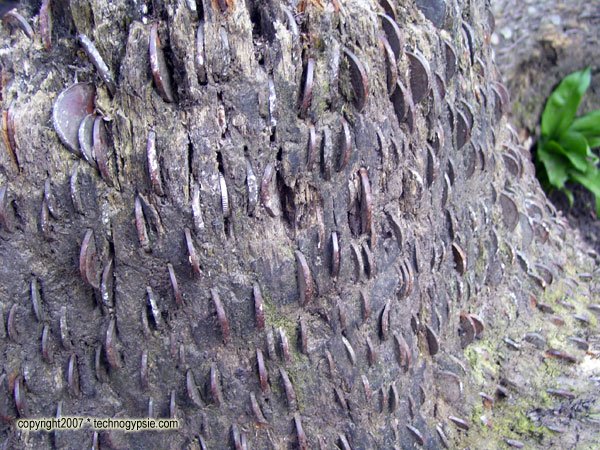
Coin trees involve the offering of coins to a particular tree. These are often hammered into an old trunk, branch, or small tree. Sometimes these are oaks, rowan trees, hawthorns, ash, or thorn trees. Some hawthorns serve for fertility magic such as a common one in Argyll, Scotland by the Ardmaddy House. Sometimes hundreds of coins are hammered into the bark and wood with the belief that a wish will be granted for each of the coins added. A similar one that is well known is the sacred well of ST. Maree in Loch Maree, Gairloch, Scotland has hundreds of coins hammered into it. Also all over the Yorkshire Dales, such as in the pictures shown here I took during a hike, are found hundreds of coins offered to nature spirits and/or faeries for a granting of a wish.

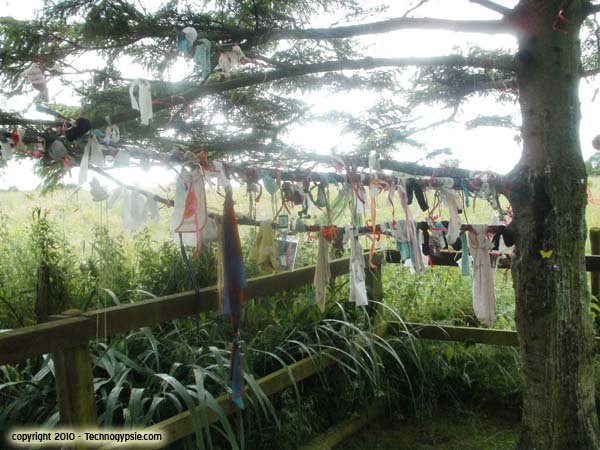
Clootie Wish Trees (a.k.a. Cloughtie or Rag Trees) are found next to sacred wells throughout England, Scotland, and Ireland. This involves the practice of tying a piece of cloth, often called “clouties”, “clooties”, or “cloughties” to ask for an answer to a prayer, a wish, and/or a petition. As the rag decays, so will the illness; or so will the petition come true. It is a form of sympathetic magic. One of the most well-known “wishing trees” is the Madron Well in Cornwall. With the Madron well, a sacred well of healing, it is believed that as the cloth rots, the ailment that one is seeking a cure for disappears. Even Charles Darwin recorded the finding of a “wishing tree” in his travels in Argentina called “Walleechu” which was treated by the local inhabitants as a Deity. It was festooned with offerings such as cigars, food, water, and cloth hung from the branches by bright strips of colored thread. A popular wishing tree in Hong Kong is the “Lam Tsuen Wishing Tree” near the “Tin Hau Temple” in Lam Tsu where paper is tied to an orange and thrown up in the trees that stick will grant the petitioner a wish. The wishing tree next to Brigid’s Well in Kildare is a common tree for petitioning healing requests.

Penny offerings for good luck and as gifts to the Fae "Wishing Tree" Yorkshire Dales, England

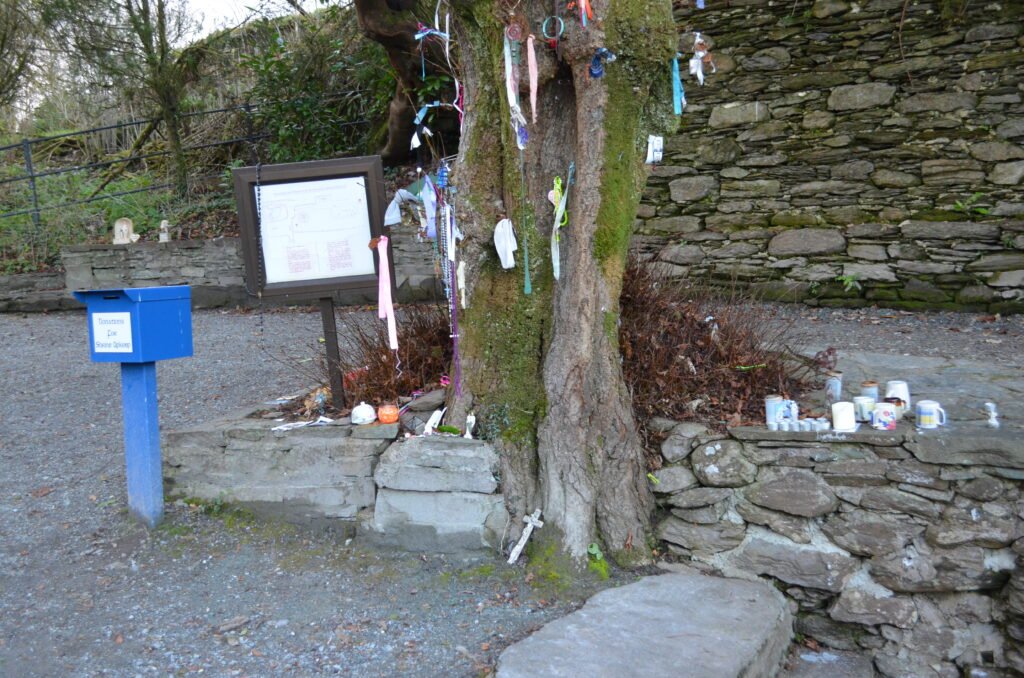
The Wishing Tree at Tobar Ghobnatan Holy Well
not only consists of rags, but trinkets, rosaries, jewelry, prayer cards, toys, personal effects, and other items given as offerings. You can see these at Tobar Ghobnatan Wishing Trees. The concept is to leave behind something of yourself or someone that you love who is in need of prayers, healing, or petitions. The concept with the rags is that when it decays so will the illness that it represents. This is a kind of sympathetic magical rite.

Unfortunately, some pilgrims to the sites don’t realize how the spell or magic works. You can see this when they tie a piece of a plastic bag on the tree. Plastic will take forever to decay, and so will the illness it is to represent. If only they knew! In addition to the rags, others leave coins, jewelry, rings, prayer cards, figurines, toys, personal effects, and clothing items such as belts, shoes, garments, and trinkets. The cloutie and Wish trees found at Tobar Ghobnatan are considered to be dedicated to the Matron Saint of Ballyvourney and sacred Bee-Keeping mistress, Saint Ghobnatan holy pilgrimage site and monastic settlement known as “Tobar Ghobnatan”. This is the legendary home of St. Gobnait/Ghobnatan. It is located a kilometer south of the village of Ballyvourney where her church Móin Mór (a.k.a. Bairnech) was built.

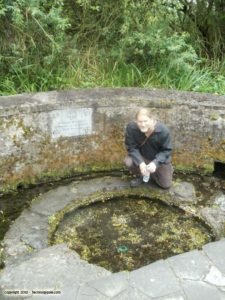
Tobar Ghobnatan Holy Well

Read More “Wishing Trees” »

Brigids Sacred Wells in Kildare, Ireland

Posted on December 14, 2010 By Techno Tink No Comments on Brigids Sacred Wells in Kildare, Ireland
Mythology, Religion, Sacred Sites

Brigid’s Well #1, the “Wayward Well”, Kildare, Ireland

Brighid’s Holy Wells in Kildare
* Kildare, Ireland
The Goddess or St. Brigid has two holy wells in Kildare? She certainly does. Some say that one of the wells belongs to the Ancient Goddess Brigid, while the other well belongs to St. Brigid. Both are sacred, both are holy, and both hold Brigid’s magical healing waters.

Well #1 is the ancient “original” sacred well of Brigid. Well #2 is the dressed-up sacred shrine and park of Brigid with her well. They were two distinctly different entities … an Ancient Goddess whose ethereal Godly presence could manifest as a human female and the actual magical human nun turned Saint who was the personification of the Deity. One and the same? could be. Two differently distinct entities who share the common thread? very possibly.

Two wells … that seems to be the case. One for the Goddess and One for the Saint? I would say “both” wells contain “both” the Saint and the Goddess in them. I’ve come to notice a pattern with this, that the “ancient” Pagan “original” well is often offset from the “Christian” one. This seemed to be the case when I went to see the Madron well in Cornwall, England (though technically that one had “three” – the original one buried in the marsh, the Pagan “original” one offset from the one underwater, and the Christian well house.).

There are many Brigid wells in Ireland as well as Britain. As wells were the sacred sites of veneration in the Druidic faith, many also have an associated sacred tree with them that is covered with votive offerings. These are often called “Wishing Trees”. Trees covered with “clotties” or ribbons of cloth are done as a prayer for healing or a spell to obtain something. Pilgrims come here to get in touch with the well inside themselves. Wells are sacred places where people for thousands of years have come to pray, worship, and reflect.

Pagan and Holy wells are often seen as the entrance to the womb of Mother Earth, the source of life. Each holy well is always related to healing, and each well usually has a specialty that it performs. Brigid’s wells are pretty powerful for healing sore eyes. Brigid is associated with all healing. Her girdle is capable of curing all disease and illness, and this well is rumored to make “the blind man seeing, the dumb girl speaking, etc.”

Brighid’s Holy Well #1 a.k.a. “The Wayside Well”
The first well is the ancient Pagan sacred well of the Goddess Brigid. It is located just next to the car park of the Japanese Gardens. This well/spring itself feeds and nourishes the Gardens themselves. This is the spring source whose waters run off and feed the newer well. It’s not really decorated and is simple, rustic, ancient, and silent. Seemingly forgotten. It has only an inscription sign in Irish that translates as “St. Brigid, Mary of the Gael, pray for us.” However, it is still a major focal point for pilgrimages and ceremonies.

The Brigid Eve ceremonies (January 31st) start at a small fire set up just outside the Japanese Gardens car park with a chanting to the Goddess Brigid, which is followed by a candlelit journey of contemplation about the Goddess and the Saint and the spirit that weaves them together. The candlelit journey goes to this well and ends at the second well. It is customary to gather this well water in a bottle because of its strong healing properties and, in exchange, to leave an offering for the spirits and faeries who dwell there.


“Tobair Bride” / St. Brigid’s Well, Kildare, Ireland

Brighid’s Holy Well #2 a.k.a. “Tobair Bride” (St. Brigid’s Well)
The second well is the “supposed” Christian well of St. Brigid. It’s the tourist one. It’s the “Official” one. This is the one in the tourist guides, signposts, and advertisements. It is located in a landscaped grotto at the end of a short lane close to Well #1. The local Catholic clergy moved Christian devotion and practices to this site in the 1950s, supposedly out of concern for people’s safety in accessing the original well, which was at the bend in a narrow, busy road. It is here that the Roman Catholic healing well is located. While pilgrims often visit both wells, this is the well where an involved ceremony, similar to the “stations of the cross,” is conducted. Pilgrims reflect on the Goddess and/or Saint Brigid and how they weave together.

Read More “Brigids Sacred Wells in Kildare, Ireland” »

Brigids Sacred Flame at Kildare

Posted on December 14, 2010 By Techno Tink No Comments on Brigids Sacred Flame at Kildare
Brigids Sacred Flame at Kildare
Mythology, Religion, Sacred Sites

or well over 1,000 years, if not 2,000 years or more, the sacred fire of the Goddess Brigid (now St. Brigid of Ireland) has existed and kept holy/sacred by her followers, priestesses, and/or members of her Order. In Ancient times, the Priestesses of Brighid kept her flame eternally lit with 19 Priestesses keeping vigil that the flame was never extinguished.

Posts pagination

Previous 1 … 3 4 5 Next

Categories

New Posts

  • Thunder Mountain
  • Area 51
  • The Old Tonopah Cemetery
  • The Clown Motel
  • Thomas the Rhymer / Tam Lin

Pages

  • About Faerie Lore ....
  • Donate
  • Newsletter

Archives

  • Home
  • About Faerie Lore ….
  • Evolution
  • Haunted Locations
  • Herblore
  • Magic & The Occult
  • Media, News, Tales
  • Mythology
  • Folk Songs
  • Giants
  • God/desses
  • Living Myth
  • Monsters
  • Otherkin
  • Prophecies
  • Shadow beings
  • The Undead
  • Urban Legends
  • Religion
  • Traditions
  • Newsletter
  • Donate

Copyright © 2026 Faerie Lore and Legends.

Theme: Oceanly News Dark by ScriptsTown