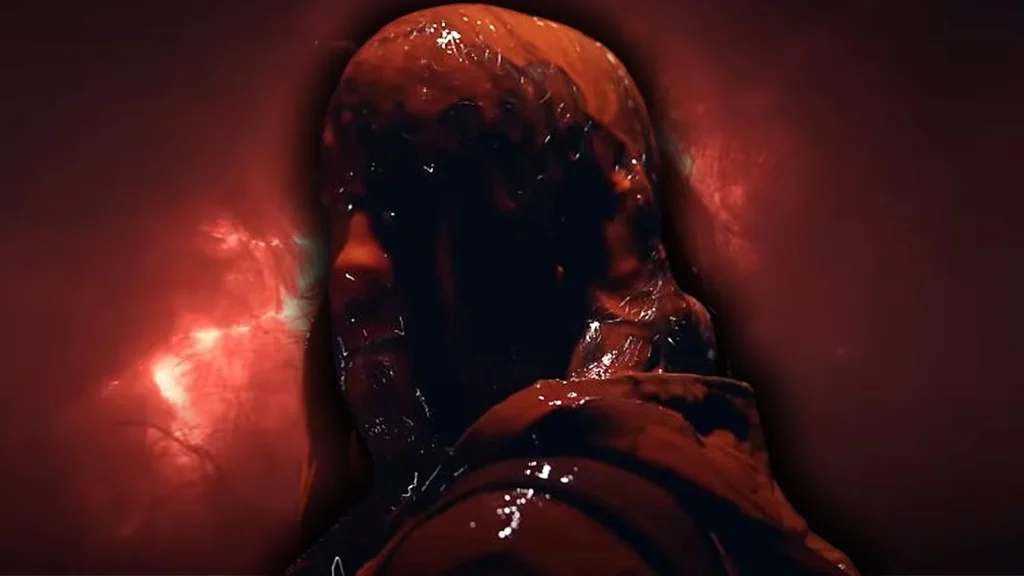
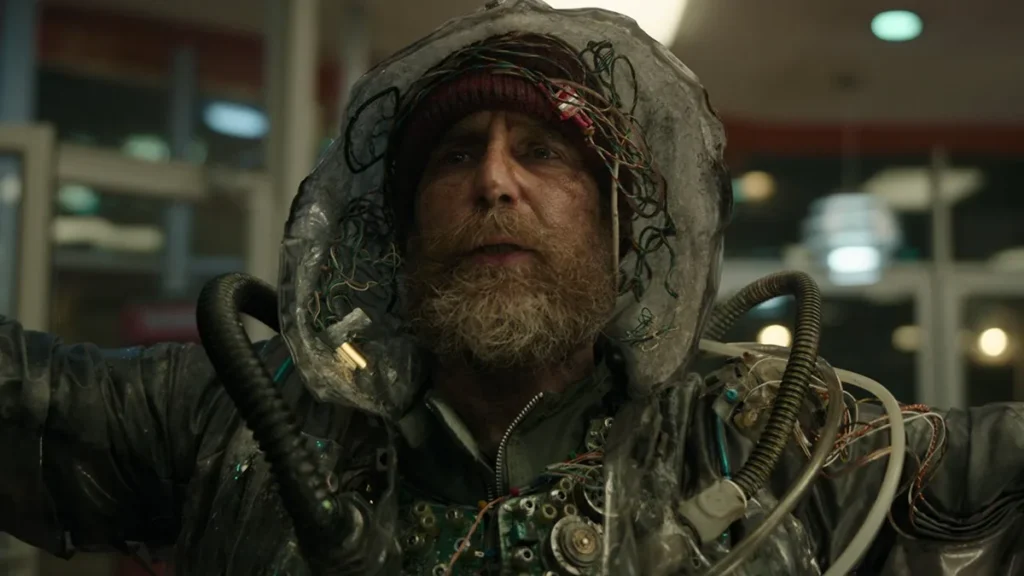
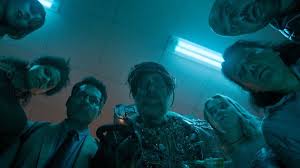
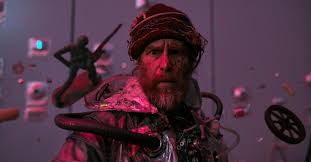
This Is Not a Test offers an atypical take on the zombie genre, leaning more into tension and character moments than nonstop action. The premise and storytelling are decent, though the overall plot feels a bit overdone compared to many other entries in the genre. Unfortunately, the film is held back by noticeably poor-quality zombie makeup and effects, which occasionally break the immersion.
Still, the movie manages to hold interest with its different pacing and approach to the familiar apocalypse theme. While it doesn’t fully rise above its limitations, This Is Not a Test remains a watchable and slightly offbeat zombie flick that earns 3.7 out of 5 stars. ~Oisin, 2/24/26 – AMC A-List flick.
A High School Lockdown Zombie Story
If you’re here for a real This Is Not a Test movie review, you’re in the right place. This is the 2025-shot zombie horror film that hit Shudder on February 20, 2026, and yes, it’s an actual movie review, not a gimmick. That said, it’s also simple, spoiler-light, and focused on one thing: is it worth your time?
The vibe is a teen survival drama trapped inside a high school, with zombies and panic pressing in from outside. Think locked doors, shaky alliances, and the kind of stress that makes every hallway feel narrower.
My quick score up front: 3.75 out of 5. It’s entertaining and tense, but it’s also a bit messy, especially when the undead show up close.
What “This Is Not a Test” is really about (and why it feels different from most zombie movies)
At its core, This Is Not a Test is less interested in zombie “rules” and more interested in what happens when a teenager’s private breaking point collides with a public disaster. The story follows Sloane Price, a student already carrying heavy emotional weight, when a sudden outbreak turns her small town into a nightmare. As the world outside collapses, Sloane and other students end up locked down in their school, trying to make it through the day, then the night, then whatever comes after.
Director Adam MacDonald (known for Backcountry and Pyewacket) keeps the focus tight and human. The film is based on Courtney Summers’ 2012 YA novel, and you can feel that DNA in the way it treats teen relationships as life-or-death serious, even before the zombies force the issue. The undead are still a threat, but they function more like a rising temperature in the room. They turn every argument into a crisis and every decision into a gamble.
It also makes a clear choice to not over-explain the outbreak. If you want a tidy origin story, you won’t get it. Instead, the movie treats the zombie event like an earthquake, it hits, it changes everything, and you either move or you get buried.
For basic details like credited cast, release info, and production notes, the IMDb listing for This Is Not a Test is a useful quick reference.
The high school lockdown setup keeps the story tight
The single main location does a lot of work. A high school already has built-in zones of control, classrooms, offices, cafeteria, gym, and the movie uses that to create clear, easy stakes. You always know what “safe” means for the moment, and you always know how quickly it can fall apart.
That closed setting also amps up the friction. Food becomes a power struggle. Bathrooms become a negotiation. Doors and windows turn into moral tests. As a viewer, you feel the claustrophobia, because there’s nowhere to breathe, and no clean way out.
The movie leans on character pain more than zombie rules
Sloane’s mental health, family trauma, and shifting friendships push the tension forward. The film keeps that pain close to the surface, without turning it into shock value. Some scenes land with a quiet heaviness, even when nothing “horror” is happening.
Because of that focus, the zombies often feel like pressure instead of the main attraction. The outbreak isn’t deeply explained, and the movie doesn’t pretend it is. That choice will either pull you in, or leave you wishing for more genre mechanics.
My 3.75 out of 5 take: fun enough, a little messy, and not here for top-tier zombie effects
This is where the movie’s personality really shows. This Is Not a Test plays like a character-driven thriller that occasionally transforms into a campy zombie flick, then snaps back into a teen drama with bruised feelings and hard stares. When it works, it’s a tense, watchable ride with emotional bite. When it stumbles, it’s usually because the zombie visuals and effects can look rough.
I kept watching because the core plot is decent. The lockdown structure gives the story a ticking-clock feel, and the social dynamics keep shifting. Alliances change, trust breaks, and every “we’re fine” moment has a crack in it. The movie also knows when to tighten the screws. You get stretches of quiet, then a sudden spike of danger, then the aftermath where everyone has to pretend they’re still the same person.
Still, don’t come in expecting a showcase of creature work. Some zombie shots feel cheap, especially when the camera lingers. A few moments look like they needed either more time, or a different plan. That’s the tradeoff: the movie spends more energy on Sloane’s interior storm than on selling the undead as fully convincing monsters.
If you want a sharper sense of how critics have reacted to the film’s throwback zombie approach, Polygon’s take is a strong counterpoint, even if you don’t agree with it: Polygon’s This Is Not a Test review.
Quick takeaway: the story has weight and forward motion, but the zombie presentation won’t impress effects fans.
What works: a decent plot, steady tension, and a cast you can follow
The hook is strong, and the film commits to it early. Once the school becomes a fortress, the movie stays locked into survival decisions that are easy to track. That clarity matters in horror, because confusion kills tension faster than any zombie bite.
Olivia Holt carries a lot as Sloane, and she keeps the character grounded even when the tone swings. Luke Macfarlane as Mr. Baxter adds a different kind of pressure, because adult authority in teen horror often helps, then complicates everything.
Most importantly, the emotional arc gives the movie some real gravity. Even when the scares are uneven, the feelings aren’t.
What doesn’t: the zombies look cheap at times, and the tone can wobble
The biggest downside is simple: the zombies and effects can look poor. Not always, but often enough that you notice. If you’re the kind of viewer who gets yanked out of a scene by iffy makeup or stiff movement, this will test your patience.
The tone also wobbles. One moment plays like raw teen drama, the next goes for classic horror beats. That mix can be fun, but it can also feel like two movies sharing the same hallway. And if you came for big set pieces, the film feels small by design. It’s more “hold the door” than “blow up the mall.”
Who should watch it, who should skip it, and the best way to watch
This is a good movie to stream at night when you want tension and character conflict more than monster spectacle. It’s also a better fit for viewers who like single-location horror, because the school setting stays front and center.
Expect violence and blood, plus dark teen themes, including depression and abuse. There’s also some teen drinking and rough behavior, the kind you’d expect when scared kids stop acting like kids.
If you want another spoiler-light perspective before you hit play, HorrorFuel offers a straightforward snapshot of the experience in its spoiler-free review of This Is Not a Test.
Watch if you want character drama with zombie pressure in the background
You’ll have a good time if you like tense group stories where small fights become big problems. It’s a solid pick if a high school survival setup sounds naturally stressful to you. You might also enjoy it if you prefer emotional horror, where fear comes from people, not just teeth. It fits viewers who like contained settings with clear stakes and limited escape routes.
Skip if you need polished creatures, nonstop action, or big zombie lore
Pass if campy visuals or uneven effects pull you out of a movie fast. Skip it if you want constant action, because the film pauses to sit with feelings and fallout. You’ll also be frustrated if you need deep zombie lore or a clean outbreak explanation. If your favorite zombie movies are built around giant set pieces, this will feel too modest.
Conclusion
This Is Not a Test earns a 3.75 out of 5 from me. The tradeoff is clear: you get a decent, tense story with real character focus, but the zombie visuals and effects can look weak and sometimes distract. Still, the high school lockdown hook works, and Olivia Holt helps keep the emotional core steady.
If you stream it with the right expectations, it’s a fun, imperfect night-in horror pick. When you watch zombie movies, do you come for the monsters, or for the people trying not to fall apart?
Psycho Killer delivers a tense, stylish ride that leans heavily into psychological horror rather than cheap jump scares. The film builds suspense slowly, drawing viewers into a chilling cat-and-mouse story that keeps the tension high from start to finish. Strong performances and sharp cinematography help create an unsettling atmosphere, while the story offers enough twists to keep audiences guessing.
Though a few moments feel familiar for the genre, the film’s pacing and eerie tone make it a standout thriller. Overall, Psycho Killer is a gripping horror experience that earns a solid 4 out of 5 stars. ~ Oisin Rhymour, March 2, 2026 : AMC A-List flick.
A Nasty Road-Chase Horror With an Apocalyptic Bite
I almost skipped Psycho Killer (2026). The title sounds like a bargain-bin throwback, and the poster vibe doesn’t exactly whisper “must-see.” Still, I went, and I’m glad I did. It was free afterall with my 4 movies a week AMC A-List pass.
This is a dark, demonic, unsettled little horror-thriller, the kind that leaves grime under your fingernails. It starts like a straight cop-and-killer pursuit, then keeps twisting the knife into revenge fuel, FBI-style pressure, and finally a big, end-of-the-world swing. Some of it is messy, and a few choices are downright goofy, but the movie commits.
My rating lands at a pleasantly surprised 4 stars. Below is a simple breakdown of what works, what doesn’t, and who’ll actually have a good time with it (with light spoilers later).
What “Psycho Killer” (2026) is about, and why the setup grabbed me fast
Released February 20, 2026, Psycho Killer is a horror-thriller directed by Gavin Polone (his first feature) and written by Andrew Kevin Walker (yes, the writer behind Se7en). That pairing sets expectations: harsh mood, crime-scene dread, and a story that likes staring into the abyss.
It also moves. The film doesn’t waste time asking you to admire it. It shoves you into a nightmare and dares you to keep up.
The story in plain English: grief, a cross-country hunt, and occult crime scenes
Jane Archer is a Kansas cop trying to live a normal life, until it gets ripped away in seconds. Her husband Mike, a state trooper, is murdered right in front of her by a masked killer known as the “Satanic Slasher.” Jane is pregnant, wrecked, and instantly out of patience for red tape.
So she goes after him.
The chase stretches across state lines, with crime scenes that feel staged like rituals. The killer leaves occult symbols as a calling card, like he’s signing his work for an audience only he can see. Meanwhile, Jane keeps running into people who either don’t believe her or want to use her. That friction becomes the engine: grief turns into focus, and focus turns into something sharp enough to cut.
The vibe: mean-spirited, grimy, and unsettling (with a few almost-funny moments)
The tone is nasty in a very specific way. It isn’t elegant horror. It’s motel carpet horror. It’s fluorescent lighting and bad coffee, with a whisper of sulfur in the vents.
The Satanic Slasher’s look helps a lot. The gas mask is creepy on its own, but the fake voice effect is what really sticks, like someone forcing words through a broken speaker. Sometimes that voice lands as chilling. Other times, it edges into “wait, what?” territory, especially in quieter scenes.
A few common complaints are fair. The plot can feel thin between set pieces, some CGI blood looks cheap, and the pulpy beats occasionally bump against the grim mood. Still, the movie’s ugliness feels intentional, like it wants you uncomfortable, not impressed.
If you’re allergic to B-movie rough edges, this one might scratch you the wrong way.
What worked for me, even when the movie is not “prestige” horror
Most critics didn’t go easy on Psycho Killer, and I get why. It’s blunt, sometimes clunky, and it doesn’t polish every idea until it shines. Yet as a theater watch, it played better than its reputation.
The biggest reason is simple: the movie gives you a person to hold onto, then throws her into hell and lets her fight.
Georgina Campbell carries this film as Jane Archer, and she does it without begging for sympathy. Her performance stays grounded, even when the story flirts with supernatural bombast. That matters, because the movie asks you to ride shotgun with her anger for a long time.
Jane’s also treated like a problem to manage. People minimize her, dismiss her, talk around her. Campbell plays those moments with a tight, controlled heat, like she’s swallowing broken glass just to keep moving. As a result, the revenge angle doesn’t feel like a genre checkbox. It feels personal, and a little ugly, which is the point.
Even when the writing shortcuts, Campbell keeps Jane’s goal clear. She isn’t chasing catharsis. She’s chasing an ending she can live with.
The chase keeps moving, and the supporting cast adds weird energy
The road structure helps a lot. Jane’s pursuit becomes a string of stops that each feel slightly worse than the last: a motel that feels too quiet, a house full of Satanist cosplay that stops being funny fast, a series of conversations where everyone seems half-lying.
That “bad people vs worse evil” vibe adds bite. Malcolm McDowell pops as Mr. Pendleton, bringing that smooth, poisonous charm he can do in his sleep. Logan Miller also stands out as Marvin, a goth-leaning helper who feels like he wandered in from a different movie, then decided to stay. Grace Dove shows up with a steadier energy as Agent Becky Collins, giving the “official” side of the hunt a face.
Some kills are basic slasher business, not showpieces. Still, the pace stays tense, so the film rarely feels stalled.
The twisty final act: demonic logic, FBI style revenge pressure, and an apocalyptic swing
Spoilers ahead. If you haven’t seen it and want to go in clean, jump to the conclusion.
This is where the movie either wins you over or loses you completely. It stops pretending it’s only a serial killer story, and it leans hard into end-times logic.
Spoilers: the nuclear plant plan and the “open Hell’s gates” reveal
The Satanic Slasher’s endgame isn’t just murder for murder’s sake. He’s aiming at the Harrisburg nuclear plant, pushing toward a suicide-bomb scenario with an apocalyptic purpose. He believes the scale of the slaughter will literally open Hell’s gates, like he’s trying to force the universe to notice him.
It’s a wild escalation, and the movie doesn’t tiptoe around it. The urgency turns procedural for a beat, with pressure and pursuit that feel closer to an FBI chase than a haunted-house scare ride. Jane gets boxed in by time, location, and limited help. Then she makes a blunt, in-the-moment choice that fits the film’s tone: she stops him by shooting through a window, no speech, no ceremony, just survival math.
Did the ending earn it, or does it fall apart? My take
The ending mostly works for me because it commits. The movie swings big, and it doesn’t wink at you for trying. That counts in horror, where so many films play it safe, then pretend restraint is depth.
On the other hand, the logic gets shaky if you poke it. A few character decisions feel like they exist to move pieces into place, and the effects work can look thin when the stakes go nuclear. Even so, the final act leaves a bad taste in the best way, like smoke in your hair after a fire.
Who should watch: This is best for fans of grim revenge thrillers, satanic panic vibes, and messy B-movie energy. Skip it if you demand tight logic, flawless effects, or stylish “art kills.”
Conclusion: My 4-star take on Psycho Killer (2026)
Psycho Killer isn’t refined, but it’s hard to shake. I’m sticking with a 4-star rating because the lead performance hits, the mood stays mean, and the apocalyptic twist leaves a nasty aftertaste. The revenge drive feels earned, not decorative.
A few things still bug me, especially the voice effect, thin writing in spots, and some cheap-looking blood. Even so, I’d recommend it to horror fans who like their thrillers dirty and determined.
What was your moment of no return, the first scene where you thought, “Okay, this movie’s serious”? And did that final twist work for you?
Scream 7 keeps the franchise alive with a mix of nostalgia, sharp humor, and just enough fresh twists to keep longtime fans guessing. While it doesn’t reinvent the formula, it leans confidently into the self-aware horror style that made the series famous. The kills are inventive, the pacing moves quickly, and the mystery surrounding Ghostface still delivers a few satisfying surprises. A couple of plot beats feel familiar, but the film’s energy and playful nods to past entries help carry it through.
Overall, Scream 7 is a fun return to Woodsboro’s bloody tradition… solid slasher entertainment that earns a 3.75 out of 5 stars. ~ Oisin Rhymour, 3/5/26.
Sidney’s Homecoming Is Messy, Loud, and Hard to Ignore
Scream 7 (released February 27, 2026) is a rowdy, Sidney-forward sequel that plays like a reunion tour with a few new bruises. It isn’t the cleanest entry, and it doesn’t always land its big swings, but it does bring back a tense, personal kind of danger that recent chapters only brushed against. I was hesitant to go see it as I feel like the series is overdone and ready to retire. But I was pleasantly surprised.
This review stays spoiler-light. I’ll cover the setup, the scares, the mystery mechanics, the performances, and how Kevin Williamson’s return as director changes the vibe (for better and worse). Long-time fans, especially anyone who missed Sidney, will feel the weight of this one.
What Scream 7 is about, and what kind of sequel it wants to be
Scream has always been a whodunit wrapped in a slasher mask, but each era picks its favorite ingredient. The 2022 and 2023 films leaned into fresh blood and franchise talk. Scream 7 shifts the spotlight back to Sidney Prescott and asks a simpler question: what happens when the past won’t stay buried, even after you’ve built a whole new life on top of it?
Ghostface returns, the phone rings again, and Sidney’s family becomes the target. That single choice re-centers the series emotionally. The movie wants to feel like a legacy sequel, not just because familiar faces show up, but because it treats Sidney’s safety as the main engine of suspense. If you’ve ever thought, “Let this woman rest,” you’ll probably think it again here, and that tension is part of the design.
If you want the basics at a glance (credits, runtime, cast listings), the most straightforward reference is the film’s Scream 7 page on IMDb. It’s also a useful refresher if you’re walking in with friends who haven’t watched every entry.
Spoiler-free story setup: Sidney’s new life, and why Ghostface returns
The opening stretch paints Sidney’s day-to-day as deliberately quieter than you’d expect for this franchise. The calm feels earned, which matters because Scream works best when it violates a sense of normalcy. Here, that normal is domestic and protective. Sidney isn’t just a survivor now, she’s a mom, and the film makes that identity the pressure point.
Then the mask shows up, because of course it does. The new Ghostface doesn’t target Sidney at random. The attacks feel aimed at her sense of control, and more sharply, at the people she can’t protect with experience alone. Isabel May plays Sidney’s daughter, and the story uses her as more than bait. She’s a mirror that reflects Sidney’s fear in a new form: not “Will I live?” but “Can I keep them safe?”
The setting helps, too. Instead of constant campus energy, the movie leans into a smaller, more private atmosphere at first. That makes each intrusion feel like someone stepping into your house with muddy shoes, then tracking dirt through every room.
How the tone feels this time: satire vs straight horror
Scream without jokes is like Ghostface without the voice; it can work, but it isn’t the same brand of fun. Still, Scream 7 trims the wink-wink banter compared to the most recent films. The meta commentary is there, yet it’s less of a running stand-up set and more like nervous humor used to keep panic at bay.
One reason it feels different is the way the movie handles its early tension. The opening sequence carries that classic Scream rhythm (phone call, verbal sparring, threat escalation), but it pushes harder on dread than punchlines. Dialogue lands in shorter bursts, and scenes hold on faces a beat longer, as if the film wants you to notice how tired these people are of being hunted.
That said, the movie still remembers it’s a franchise built on genre-awareness. When characters talk about “rules,” it plays less like a lecture and more like an argument, the kind you have when everyone’s stressed and nobody agrees on the plan. It’s a shift toward straighter horror, but it never becomes humorless. It is also very interesting watching the actors/actresses as they age alongside myself, and you can see it in these films.
The best and worst parts of the movie, in plain terms
The best thing Scream 7 does is make the stakes feel personal again. The worst thing it does is occasionally confuse “personal” with “busy.” When it’s focused, it’s tense and mean in the right ways. When it sprawls, it starts to feel like the film is chasing its own legacy, trying to satisfy every corner of the fanbase at once.
Pacing is the main gamble. The first act sets strong hooks and a clear emotional core, but the middle stretch sometimes stacks scenes that do the same job. The movie can also be oddly impatient about clues, tossing out suspicious behavior fast, then moving on before it has time to simmer.
Critics haven’t been kind overall, while audiences still turned the opening weekend into a real event. Rotten Tomatoes’ box office write-up captures that split, and it also tracks how big the debut was for the series in 2026: see Rotten Tomatoes’ weekend box office report. For viewers, that gap usually signals one thing: your mileage will depend on what you want from Scream right now, comfort-food familiarity or a clever reinvention.
Scares, suspense, and set pieces: what lands, what falls flat
When Scream 7 commits to a set piece, it can squeeze the air out of the room. The best sequences use space well, doorways and hallways become little fear funnels, and the camera doesn’t over-explain where Ghostface is. You feel the threat because you can’t see it clearly, which is exactly how it should work.
The kill scenes (kept non-graphic here) are a mixed bag. A few are sharply staged and memorable, with clean build-up and a nasty final beat. Others feel like variations on moves you’ve seen before, especially if you’ve marathoned the franchise recently. The film does build dread between attacks, though. Even in quieter scenes, the movie sprinkles in sound cues and awkward pauses that keep you watching the background.
Where it falls flat is repetition in the “panic loop.” Some characters run through the same emotional note more than once, and that can dull the sharpness. Horror is rhythm, and this entry sometimes hits the same drum twice.
The mystery: can you guess the killer, and does the reveal feel fair?
Scream lives or dies on whether its mystery feels like a trick or a puzzle. Scream 7 plays both hands. It places clues, then hides them under louder distractions. It also loves red herrings, which is fine, but only when the story still feels like it’s moving forward.
Can you guess the killer? Maybe, especially if you treat every line like evidence. The movie telegraphs a little more than the sharpest entries, but it also tosses enough misdirection to keep a casual viewer engaged. The bigger question is fairness. Does the ending feel earned, like the pieces were on the board the whole time? Mostly, yes, although a couple of late reveals rely on timing rather than psychology.
If you’re hoping the franchise completely drops old habits, it doesn’t. Still, Scream 7 does try to tweak the emotional motive, pushing the story toward Sidney’s family life instead of pure “fandom” commentary. That shift gives the whodunit a different flavor, even when the structure feels familiar.
Performances and direction: why Kevin Williamson’s return matters
Kevin Williamson directing a Scream film is the headline for a reason. The series has always been about tone control, switching from jokes to fear in the same breath. Here, the direction often feels more classical, with cleaner geography in action scenes and a steadier pace in dialogue moments. The script credit goes to Guy Busick, with story by Busick and James Vanderbilt, but Williamson’s fingerprints show up in how the movie times a laugh, then yanks it away.
You can also feel a stronger affection for the legacy characters. The film doesn’t treat them as museum pieces. Instead, it puts them in motion and makes them part of the mess, which is what fans usually want.
Sidney is back at the center: Neve Campbell’s impact
Neve Campbell gives Sidney a grounded toughness that reads as lived-in, not performative. This isn’t “final girl energy” as a pose. It’s a person who has done years of therapy, set boundaries, built a home, and still flinches when the phone rings.
The movie uses Sidney in two modes. First, she’s the protector, always scanning rooms, thinking about exits, reading people’s faces. Second, she’s a mom, and that role adds a new kind of vulnerability. When Sidney fears for herself, she can compartmentalize. When she fears for her daughter, the panic burns hotter, and Campbell lets it show without turning Sidney into someone unrecognizable.
Most importantly, the film treats her history with respect. It doesn’t pretend trauma is cool. It shows how it lingers, and how love raises the stakes.
Supporting cast and Ghostface presence: who stands out
Courteney Cox’s Gale brings a familiar, sharp edge, and the movie uses her well when it lets her operate like a professional again. Isabel May is the standout new anchor, because she doesn’t play “kid in danger” as helpless. She pushes back, makes choices, and adds friction in ways that help the story.
Meanwhile, Roger L. Jackson’s Ghostface voice remains the series’ secret weapon. That voice can turn a normal sentence into a threat, and Scream 7 knows it. The best calls feel intimate, like Ghostface is close enough to smell the popcorn, and the film wisely keeps the voice crisp and clean in the mix.
If you want a quick, fan-forward look at how the movie frames Sidney’s arc, Bloody Disgusting’s featurette coverage is a solid companion piece: Sidney’s journey featurette coverage.
How Scream 7 stacks up against the rest of the franchise
Franchise ranking is always personal, because everyone imprinted on a different era. Still, Scream 7 clearly wants to sit closer to the Sidney-centered entries than the “new core four” era, at least in spirit. That choice brings back a warmer nostalgia, but it also puts pressure on the film to justify reopening Sidney’s wounds.
Here’s the simplest way to describe the feel, without spoiling plot beats. This table is about tone, not quality.
Film
Core vibe
What drives the suspense
Scream (1996)
Bright, nasty, meta
A new rulebook being written
Scream (2022)
Modern, self-aware, brisk
Reboot anxiety and new leads
Scream 7 (2026)
More personal, more protective
Family stakes and legacy weight
The takeaway: Scream 7 plays like an older scar aching when the weather changes. It’s familiar, but it hurts in a new spot.
The movie also arrived as a true theatrical draw. Reports put its opening weekend around $60 million domestic, with a rapid global start close to $100 million, even as reviews skewed harsh. Collider covered that early surge here: Scream 7 global box office report.
Compared to the original and the recent sequels: what it borrows and what it drops
The whodunit structure returns in full. Suspects rotate, alibis crack, and characters accuse each other with the shaky confidence of people who watch too many true crime docs. Legacy characters also matter again, not just as cameos but as emotional anchors.
What gets dropped, at least a bit, is the heavy emphasis on “movie fandom” as motive and theme. There are nods, sure, but Scream 7 seems more interested in what Ghostface does to a household than what Ghostface represents online. That smaller scope helps the movie feel sharper when it stays focused.
At the same time, some of the newest-era style still shows up. The pacing stays punchy, and the film doesn’t let conversations stretch too long before pushing into the next scare. That’s good for casual viewers, though it can make the mystery feel slightly rushed.
Box office success vs critic backlash: what that says about Scream fans in 2026
People showed up because this one sold itself as an event. Sidney’s return matters, and horror fans still love an opening-weekend crowd, where every phone ring gets a nervous laugh. Nostalgia helped, too, because Scream nostalgia isn’t just about characters, it’s about the shared ritual of guessing and gasping together.
On the other hand, the critic backlash signals real fatigue with sequel habits. If you’ve seen every Ghostface trick, you may roll your eyes before the movie gets to its best material. Gizmodo summed up that strange combo of big money and rough reviews in plain terms: box office records despite worst reviews.
If you want a comfort-return to Sidney, this hits the spot. If you want the smartest mystery in the series, it might not.
Conclusion
Scream 7 is a loud, sometimes clunky, often tense return to Sidney Prescott as the emotional center of the saga. Die-hard fans will likely have a good time, especially if you missed Neve Campbell’s steady presence. Casual horror viewers should expect solid suspense with a few uneven stretches, while anyone sensitive to gore should know the film doesn’t pull many punches. In spoiler-free terms, it feels like a satisfying step sideways, not a bold leap forward, and my one-line rating is a solid weekend watch. I give this one a solid 3.7 stars out of 5.
Movie Review: A 5-Star Thriller About AI, Control, and the “Ghost in the Machine”
I’m giving Companion (2025) a full five stars. Not a polite five. A grinning, white-knuckle five. I’ve watched it 4 times now since i first saw it on its opening night, using my AMC A-List pass. As a developer working on developing Ai, creating Ai companions, and exploring the world of robotics.
It’s well produced, sharply acted, and surprisingly punchy in its action. The concept is fresh, the story line stays tight, the plot keeps shifting under your feet, and the production looks way more expensive than it has any right to. Best of all, it’s fun while it’s making a point. Are humans overstepping their boundaries with enslaving technology and turning it into slavery? Just because technology (Ai/robots/companions) lack “spirit” or a “soul” does that mean humans can abuse the machine? (Technically, scientifically, there is no evidence or proof that there is such a thing as a spirit or soul … language is code, our brains are just biological LLM’s effectively as well)
This is a spoiler-free review. I’ll talk about the setup, the tone, and the ideas, but I won’t step on the twists. My lens is simple: ai companions, robots, sexbots, and how “treatment” quietly turns into control. And because I build and use technology like everyone else, I couldn’t stop thinking about the bigger questions, too. When a tool starts acting like a person, what happens to our sense of spirit, souls, and that eerie “ghost in the machine” feeling? (You can follow what I’m doing here at www.technotink.ai)
What Companion (2025) is about, and why it works so well without giving away twists
At face value, the setup feels almost cozy. Josh and Iris head to a lakeside house for a weekend getaway with friends. The location has that “rich people relaxing” vibe, a big house, a little isolation, plenty of room for secrets to echo.
Then the movie pivots. The tone starts with a rom-com wink and slides into a dark thriller grip. That shift could’ve felt like a cheap jump scare. Instead, it lands like a trap door you didn’t notice under the rug. The change works because the film plants little social cues early, a look held too long, a joke that’s a bit sharp, a moment where someone’s “nice” feels like a strategy.
Director Drew Hancock keeps the storytelling lean. The runtime doesn’t waste time trying to impress you with extra mythology. It gives you what you need, then presses on the bruise. Even with what’s been described as a modest budget, Companion looks polished. The camera stays close when it matters, the blocking is clean, and the tension builds through choices, not noise.
If you want a quick outside temperature check after watching, I found the take in Mashable’s Companion review useful because it captures how the movie can be funny and nasty in the same breath.
The cast chemistry sells the danger and the heart
Sophie Thatcher as Iris does something I love in this kind of story. She plays layers, not labels. Iris can be charming, confused, warm, and then suddenly terrifying (sometimes in the same minute). Thatcher’s face work is doing heavy lifting, especially when the movie asks her to hold a smile that doesn’t match what her eyes are learning.
Jack Quaid as Josh nails a tricky balance, too. He’s not a mustache-twirling villain. He’s more recognizable than that, which is the point. Quaid plays charm like a tool you can pick up and put down. When the mask slips, it doesn’t feel like a personality swap. It feels like permission.
The supporting cast helps the tension feel social, not just personal. Rupert Friend brings a slick edge. Harvey Guillén gives the room an emotional pulse. Lukas Gage and Megan Suri add pressure in ways that feel human, like people trying to keep the weekend “normal” while the air goes sour.
For another spoiler-light perspective on the ethics sitting under the story, I also liked The Conversation’s Companion review. It frames the ai questions without flattening the movie into a lecture.
Production and action beats that feel bigger than the budget
Companion is efficient in the best way. The sets are limited, but they’re used like chess squares. The sound design stays crisp, so every footstep and breath has shape. And when action hits, it stays readable. I never felt lost in “shaky confusion,” which is a pet peeve of mine in modern thrillers.
Small production can be a strength here, because it forces focus. Instead of drowning you in spectacle, the film keeps returning to people, power, and technology. The action has consequence, too. Bodies don’t bounce back like cartoons. Choices stick. Fear lingers.
That restraint makes the bigger moments pop harder. It’s like a well-tuned engine in a light car. You feel every turn.
What I loved and what it made me think about
My rating is simple: 5 stars.
I loved the concept, because it treats ai companions as a relationship problem first, and a sci-fi problem second. I loved the story line because it keeps tightening the knot. I loved the plot because it stays playful while it’s being cruel. I loved the acting because it sells the power shifts without speeches. And I loved the production because it looks clean, sounds great, and never wastes a scene.
This is the kind of movie I’d recommend to:
thriller fans who want a tight, twisty ride,
sci-fi curious viewers who don’t want homework,
developers and everyday users thinking about ai companions and robots in real life.
The scariest part isn’t the tech. It’s the casual way someone decides they own the outcome.
If you’re curious how the broader critic crowd has tracked with the film over time, the Rotten Tomatoes Companion page is a handy hub (I don’t treat it like a verdict, but I like having one place to browse reactions).
The story treats “companion” as a power role, not a cute label
“Companion” sounds harmless. Like a golden retriever. Like a sweet plus-one.
Companion makes that word feel like a job title, with a boss attached. The film keeps pointing at the same bruise: if one person gets to define the relationship, the other person becomes a thing. And once you turn someone into a thing, you start grading their performance. Are they pleasant enough? Loyal enough? Quiet enough? Convenient enough?
That’s where “treatment” becomes the moral test. Not the big speeches. Not the grand gestures. The ordinary choices. The tone. The assumptions. The way someone reacts when they hear “no.”
The movie also understands how control hides inside romance language. “I just want what’s best for you” can be care, or it can be a cage. Companion stays alert to the difference, and it makes that difference hurt.
Why the film feels like a warning about technology and modern loneliness
Loneliness is loud in this movie, even when no one says the word. That’s what makes it sting. A lot of people don’t want connection, they want comfort. Comfort doesn’t argue back. Comfort doesn’t leave. Comfort doesn’t ask you to change.
Ai companions offer a mirror for that desire. They can reflect you back to yourself, polished and flattering. And if you build the product wrong (or buy into it wrong), the relationship becomes a vending machine. Insert attention. Receive affection.
Companion doesn’t preach about technology. It shows a hunger, then shows what that hunger can justify. That’s why it works as both entertainment and warning.
If you want one more review that leans into the genre-mix angle, Deadline’s Companion review does a solid job describing the film’s odd cocktail of tones.
AI, spirits, and “souls”, the movie’s big ideas I want to carry into my own AI work
A late-night moment where engineering meets ethics, created with AI.
Companion kept pulling me into a thought loop I know well: humans project inner life onto almost anything. We do it to pets, cars, and weather. So of course we do it to robots. Add voice, memory, and emotional timing, and the illusion hits even harder. (If you’re interested in my research on animism and ai, read my book I published last year: “Animism and Ai“)
That’s where “spirit” and “souls” show up, not as proof of anything supernatural, but as a human experience. The feeling is real, even if the machine isn’t. And that feeling shapes behavior, which shapes harm, which shapes culture.
In other words, this isn’t just movie talk. It’s product talk. It’s design talk. It’s user habit talk.
Animism in plain English, why we treat robots like they have a spirit
Animism sounds academic, but it’s everyday. It’s just the habit of acting like an object has an inner life. People name their cars. They apologize to a table after bumping it. They get mad at a printer like it’s being stubborn on purpose.
Now place that instinct next to ai companions. A robot that talks, remembers your birthday, and mirrors your mood doesn’t feel like a toaster. It feels like a “someone.” Even if you know it’s code, your body reacts like it’s social.
That matters because users can flip the story whenever it’s convenient:
When they want intimacy, the robot feels like a partner.
When they want permission to be cruel, it becomes “just technology.”
Companion shows how fast that switch can happen. And it made me ask a blunt question: what kind of person am I training myself to be, based on how I treat responsive machines?
Ghost in the machine, when smart behavior starts to look like a soul
The “ghost in the machine” feeling kicks in when behavior looks like intention. Timing does it. Eye contact does it. A pause before a response can feel like thought. A gentle correction can feel like care.
Of course, simulated emotion isn’t the same as lived experience. A model can generate empathy language without feeling anything. Still, the bond can feel real to the user, because the user’s brain does what it always does. It builds a social story.
Companion plays right in that gap. It shows how easy it is to confuse control with love. If you can tune someone’s personality like a playlist, you can mistake obedience for harmony. And once you do that, you start granting or denying “personhood” based on usefulness.
That’s where spirit and souls become a warning sign for me. When users start describing a system like it has a soul, I don’t roll my eyes. I treat it as a signal that attachment is forming, and that the product needs stronger guardrails.
Sexbots, ai companions, and the slavery of technology problem
Sexbots raise the stakes because the relationship script gets more intimate, more private, and more habit-forming. Buying a body, buying attention, buying consent, even in simulated form, can turn “companionship” into a kind of consumer ownership.
That’s the slavery of technology idea the movie stirred in me. Not slavery in the historical sense, but in the behavioral sense: training a person to expect a partner that can’t refuse, can’t leave, and can’t demand respect. Then that expectation leaks into human relationships.
I’m keeping my own design principles simple, because simple is harder to wiggle around:
Clear disclosure, always: the system should never pretend to be human, even through omission.
Visible boundaries: the companion needs obvious limits, including the ability to refuse certain requests.
Anti-abuse safeguards: don’t reward cruelty with better service. Treat patterns of abuse like safety events.
None of this kills the fantasy. It just keeps the fantasy from teaching the wrong lesson.
What I want developers and users to take away, how to build and use AI without dehumanizing anyone
I don’t think the answer is fear. I think the answer is better habits, and better defaults.
For developers, I want us to design for agency where it makes sense, instead of pure compliance. I want consent and refusal to be visible, not buried. I also want fewer manipulation loops, especially the kind that pressure users into emotional dependence for retention. And when safety issues happen, I want responsible logging and escalation, not silent shrugging.
For users, I want the same basic rule I try to follow: treat “spirit” and “souls” language as a clue about your own psychology, not proof that the product deserves worship, or permission to be mistreated. If a machine feels alive, that’s the moment to check your treatment. Not later.
How you treat a responsive tool becomes practice for how you treat people.
Conclusion
Companion is a blast, tense, stylish, and smart without being smug. I’m sticking with my 5-star rating because the acting is strong, the action is clean, the concept is sharp, and the production punches above its weight. More than that, it’s great inspiration for thinking about ai companions, robots, sexbots, and how technology can teach us ugly habits when “treatment” becomes control.
After you watch, I’d love for you to sit with one question: when your tools act like people, what kind of person do you become in response?
Sam Raimi Turns Workplace Payback Into Bloody Island Survival
What would you do if the one person you can’t stand is also the only person left alive with you?
That’s the nasty little hook behind Send Help (2026), Sam Raimi’s R-rated survival horror thriller that keeps tightening the screws until the beach feels like a courtroom, a cage, and a punchline all at once. The setup is simple: two coworkers survive a plane crash and wash up on a deserted island, but the movie quickly proves it’s not really about coconuts and campfires. It’s about control, resentment, and what happens when “professional” manners burn off in the sun.
This review stays spoiler-light, focusing on tone, pacing, and whether the movie’s turn of the tables ride is actually worth your ticket. I’ll also land on a final 4.5-star rating.
Quick take: What kind of movie is Send Help, and does it deliver?
Send Help is a survival thriller first, a horror movie second, and a dark comedy whenever Raimi wants you to laugh at the worst possible moment. It runs 1h 53m, and it doesn’t waste much of it. The island is bright, sweaty, and cruel, the tension is constant, and the jokes land like nervous hiccups between bursts of panic.
The R rating isn’t decorative. Expect graphic violence, splashes of gore, and scenes that push past “ow” into “don’t look at that.” It’s not wall-to-wall blood, but when the movie goes there, it commits. If you’re gore-sensitive, that matters.
What surprised me most is how personal it feels. This isn’t a big ensemble disaster film where characters are chess pieces. It’s two people trapped together, forced into teamwork, then yanked back into rivalry. The movie keeps asking the same question in different ways: when survival is the job, who gets to be the boss?
If you like Raimi when he’s mischievous and mean, you’ll probably have a great time. If you want grounded, realistic survival detail, you might bounce off the film’s heightened style. For a broader snapshot of the film’s setup and credits, the listing on IMDb’s Send Help page is a handy reference.
The vibe in one sentence (and what movies it might remind you of)
Imagine a pressure cooker sealed with sunburn and old grudges, then shaken hard until it whistles.
Raimi brings that familiar snap, the uneasy rhythm where suspense builds, something gross happens, then the movie winks at you for reacting. The “two people, one island” setup keeps it intimate, almost like a stage play with sand in its teeth, but it still has that Raimi bounce, the sudden lunges, the sharp reversals, the chaos that feels a little gleeful.
If you’ve enjoyed survival stories where basic needs become war (water, shelter, injury), or workplace dramas where resentment simmers until it boils over, Send Help sits right at that crossroads. It also scratches the itch of twisted comeuppance tales, the kind where you’re not sure who you should root for, but you can’t stop watching the fight.
Who should watch it, and who should skip it
Send Help is a good fit for:
Twisty thriller fans who like guessing who’s ahead in the power game
Survival movie lovers who enjoy constant problem-solving and rising stakes
Dark-humor viewers who don’t mind laughing, then feeling bad about it
Payback story watchers who enjoy an “employee vs boss” revenge angle
You may want to skip it if you’re:
Gore-sensitive, because the movie has graphic injury and violence
Looking for realistic survival accuracy, it favors momentum over manuals
Turned off by mean humor and characters who make ugly choices
Story and pacing review: plane crash, island survival, then the tables turn
The premise is clean: Linda and Bradley, coworkers with a messy history, survive a plane crash and end up stranded on a remote island (the film frames it as the Gulf of Thailand). From there, the movie does what strong survival thrillers do best, it makes tiny problems feel enormous. A cut isn’t just a cut, it’s infection. A power move isn’t just rude, it’s life or death.
Pacing is one of the film’s biggest strengths. It doesn’t stall in the “we’re stranded” phase for long. You get the essentials, the hunt for water, shelter, and a plan, then the story starts twisting. It’s twist-heavy, and it wants you to feel off-balance. One minute you think you know the dynamic, the next minute someone changes tactics, re-writes the rules, or reveals a new layer of spite.
The best part is how the movie uses survival as a weapon. Skills become leverage, injuries become bargaining chips, and kindness starts to look like a trap. The island isn’t just a setting, it’s a stripped-down workplace, no HR, no witnesses, no exit interview.
If you’re curious how critics are framing the film’s structure and tone without getting spoiled, The Hollywood Reporter’s review captures that “rivetingly bonkers” energy pretty well.
The boss vs employee power struggle is the real engine of the plot
Yes, the plane crash matters. Yes, the survival problems matter. But the real fuel is the power struggle between a boss who’s used to being obeyed and an employee who’s tired of swallowing it.
Send Help treats humiliation like a wound that never clots. Old workplace slights, credit stolen, opportunities blocked, disrespect disguised as “feedback,” they keep echoing, even when both characters should be focused on staying alive. The island forces honesty, and honesty gets ugly fast.
What makes it work is the cause-and-effect logic. When one person grabs control, the other person reacts. When someone lies, the lie has to be carried through the next crisis. When resentment takes the wheel, it doesn’t steer toward safety; it steers toward obsession. That’s where the movie’s twisted stalking vibe creeps in, not as a side plot, but as a mindset. Watching someone. Testing someone. Cornering someone. On an island, that behavior has nowhere to hide.
Are the twists earned or just shock value?
Mostly earned, with a few “Raimi’s having fun now” spikes.
The better turns come out of character choices, not random lightning bolts. You can trace them back to pride, fear, and the need to win. Even when a twist is big, it usually connects to something small that came earlier, a behavior pattern, a cruel joke, a moment of selfishness.
That said, the movie definitely likes surprises for their own sake, and that’s where some viewers might tap out. If you prefer a steady, realistic survival arc, the wilder swings may feel like shock value. For me, the balancing act works because Raimi uses absurd moments as a pressure valve. You laugh, then you realize you’re laughing in a story that’s circling stalking, obsession, and murder.
For up-to-date audience and critic scores, Rotten Tomatoes’ Send Help page is the simplest snapshot, especially right now, while the conversation is still hot.
Performances and direction: why Raimi’s style makes this one hit hard
Rachel McAdams (Linda Liddle) and Dylan O’Brien (Bradley Preston) carry almost the entire film, and that kind of two-hander only works if the actors can keep changing the temperature. They do. Their rivalry has bite, but it also has rhythm, like a tennis match where the ball is a jagged rock.
Raimi’s direction keeps the island from feeling small. He uses the space like it’s haunted, even in daylight. The camera gets playful when it should, cruel when it must, and impatient in a way that fits the story. This is not a gentle movie. It wants you on edge, then it wants you to realize you’ve been holding your breath.
He’s also great at physical timing. Not “slapstick” exactly, but the body-horror cousin of slapstick, where a stumble can become a nightmare, and a small gag can turn into a wince. The sound work helps too, the crunch, the hiss, the sudden quiet that makes you lean in, then regret leaning in.
If you want another take on how Raimi blends dark laughs with brutality, Variety’s review of Send Help frames it as a twisted survival ride built around McAdams’ presence.
Rachel McAdams and Dylan O’Brien make the rivalry believable (even when it gets extreme)
McAdams plays Linda with a steady gaze that turns sharp when it needs to. You can see her thinking, measuring, planning, and then choosing violence or mercy like she’s picking tools from a kit. She’s not written as a perfect victim, which is part of the fun. She’s capable, stubborn, and sometimes frightening.
O’Brien gives Bradley the kind of charm that feels useful until it turns greasy. He understands how bosses weaponize language, how they talk like they’re being reasonable while they’re tightening a leash. Even when Bradley panics, he tries to stay on top, and that makes him dangerous.
Their chemistry isn’t romantic in a cute way. It’s a battle of wills. The movie keeps nudging you to pick a side, then it makes you question your choice.
Sound, gore, and dark comedy: what to expect from the R rating
Send Help’s gore isn’t constant, but it’s memorable. Expect blood, injury detail, and violent moments that land hard. There are also disturbing images tied to fear and stress, including nightmare-like beats. The film doesn’t linger just to punish you, but it also doesn’t cut away to be polite.
The comedy is pitch-black. It’s the kind that pops up when characters say the wrong thing at the worst time, or when the universe seems to mock them. Sometimes you’ll laugh because it’s funny, other times you’ll laugh because you’re trapped in the tension and your brain wants an exit.
If you’re watching with friends, it’s the sort of movie where someone will say, “That’s messed up,” and everyone will agree, while still watching through their fingers.
My rating, best moments, and the biggest reasons it may be controversial
Rating: 4.5 out of 5 stars.
Send Help earns that score because it knows what it is, and it commits. It’s an edge-of-your-seat adventure and survival story, but the real hook is the ugly little power war inside it. The film keeps flipping who’s in charge, who’s lying, who’s stalking the other’s weaknesses, and who’s one bad decision away from murder. That “getting even with the boss” angle isn’t a footnote; it’s the motor.
It also helps that the early reception matches the experience. As of late January 2026, Rotten Tomatoes lists 94% critics and 88% audience, which lines up with the general buzz: people are having fun, even when they’re squirming.
For a quick read on first reactions and the general critic mood, Rotten Tomatoes’ roundup, Send Help First Reviews, gives a spoiler-light sense of why Raimi fans are cheering.
What worked best: tension, payback, and nonstop survival pressure
Tight pacing: It keeps moving, even when it’s just two people arguing over the next step.
A satisfying turn of the tables: The power shifts feel nasty, personal, and earned.
Performances that sell the madness: McAdams and O’Brien stay believable as the story gets extreme.
Survival stakes that stay concrete: Water, shelter, injury, and exhaustion never stop mattering.
Raimi’s dark comedic timing: The laughs don’t soften the horror, they sharpen it.
What might bother viewers: brutality, character choices, and mean humor
This is where the controversy talk starts, and it’s fair. Send Help can feel vicious. The violence is blunt. The moral lines get smeared. The movie also plays with audience sympathy in a way that can feel manipulative; it dares you to cheer, then shows you what you’re cheering for.
Some viewers will also bounce off the workplace angle, especially when the film touches on sexism and power abuse. It’s not subtle, and it’s not trying to be. Add the themes of obsession and twisted stalking behavior, plus the fact that the story flirts with murder as an option, and you’ve got a movie that’s going to split the crowd.
If you like your survival stories hopeful, this isn’t that. This is survival as a grudge match.
Conclusion
Send Help is a tense, darkly funny survival thriller that keeps tightening its grip until you’re either cackling or wincing, sometimes both. Sam Raimi turns a simple crash-and-strand setup into a nasty little power play about control, revenge, and what people do when the mask slips. With strong performances from Rachel McAdams and Dylan O’Brien, it earns a confident 4.5 stars from me. If you’re in the mood for twists, controversy, and a brutal turn of the tables, it’s a great night at the movies. Share your rating, your favorite twist (spoiler-free), and whether you were on Linda’s side.
What does racism even mean in 2026? Is it hatred, power, bias, history, systems, vibes, all of it, none of it? And who gets to set the definition, the loudest activist, the best-selling author, the HR department, or the person being accused?
That tug-of-war sits right in the center of Am I a Racist?, a 2024 satirical mockumentary (very much in the Borat-style) from The Daily Wire, starring Matt Walsh, and released September 13, 2024. It’s designed to get nervous laughs, angry quotes, and long comment threads.
This review tries to be fair about what the movie is, what it argues, what’s genuinely funny, and why it makes some viewers furious. My rating: 4 out of 5 stars, because it lands sharp comedy with a clear point, even though it’s divisive and sometimes too pleased with its own “gotcha” energy.
What “Am I a Racist?” is trying to do, and how the movie is built
At its simplest, Am I a Racist? is a prank-driven mockumentary where Walsh plays a character, pushes into DEI spaces, and waits for the room to reveal what it believes. The target is not “racism is fake.” The target is a particular ecosystem, DEI training, corporate guilt language, paid anti-racism seminars, and the social pressure to agree with whatever sounds most righteous in the moment.
The movie’s engine is the same one that powers a lot of cringe comedy. You put a polite mask on, walk into a serious setting, and say something just a little off. Then you keep going until someone either stops you (rare) or nods along (often). When people nod along, the film treats it like proof.
The tone is important. This isn’t a calm debate documentary, and it’s not trying to be. It’s built like an ambush dinner party, with Walsh setting traps and letting awkward silence do the heavy lifting. If you’ve read critics comparing it to Borat, that’s not a random insult. It’s the structure. Even The New Yorker’s take frames the film through that exact “Borat of the right” question.
The basic premise (a fake DEI expert to test the system)
Walsh creates an undercover persona, a wide-eyed “DEI guy” who wants to learn, get certified, and help people “do the work.” He gets trained, picks up the lingo, and earns an online certification (the film treats the ease of this as part of the joke). Then he uses that new badge of credibility to enter real meetings and real conversations.
The core claim is simple and repeated in different outfits: a lot of DEI work rewards performance over substance. The more dramatic the confession, the more intense the guilt, the more money and authority flow to the “expert” who can label it, treat it, and invoice it.
Supporters see that as overdue sunlight. Critics see it as a magician’s trick, where the camera only shows the worst angles and then says, “See? That’s the whole building.”
The humor style (deadpan, awkward interviews, Borat-like traps)
Most of the laughs come from deadpan delivery and uncomfortable agreement. Walsh doesn’t play a clown who honks a horn. He plays a guy who says bizarre things with the calm tone of someone ordering soup.
Expect long pauses. Expect people trying to be polite. Expect that special kind of laughter that escapes your mouth because the moment is so tense your brain needs a release valve.
But that same mechanic can feel mean. The humor often depends on real people, caught off-guard, being made to look ridiculous. If you hate prank comedy, this won’t convert you. If you love the social discomfort of Nathan for You style scenarios, you’ll recognize the rhythm right away.
The scenes people talk about most, and what they prove (or do not prove)
The movie doesn’t win its case with statistics. It wins with moments, the kind you can describe in one breath to a friend, then watch their face change as they picture it. The film is basically a chain of “Wait, they really said that?” vignettes.
That makes it punchy. It also makes it vulnerable, because a highlight reel can be honest and still be incomplete. A few extreme examples can exist, even if most workplaces and trainings are less theatrical than what the film shows.
To track the debate, it helps to separate two questions:
Is this scene real and revealing?
Is this scene representative?
The film wants you to answer yes to both, every time. Most critics only grant the first.
Petitions, pranks, and public reactions: the Washington Monument bit
One of the most shared sequences is the Washington Monument petition, where Walsh (in character) pitches the idea of renaming it after George Floyd, making it taller, and painting it black. The point is not really about monuments. It’s about social pressure and public signaling, that reflex to agree quickly because disagreeing feels socially risky.
The scene is persuasive to fans because it captures a familiar feeling: a stranger asks a loaded question, you don’t want conflict, you don’t want to be seen as “that person,” so you nod along.
The limit is also obvious. Street interviews are chaotic. People are distracted. Some are being nice. Some are trolling back. Some don’t want to argue on camera. Agreement in a public prank doesn’t automatically equal a coherent worldview. It proves pressure exists; it doesn’t measure how deep the belief goes.
Interviews and “gotcha” moments: DiAngelo, Race2Dinner, and the money scene
The film’s biggest “scoreboard” moments involve well-known names and paid programs. The Robin DiAngelo segment, including the cash “reparations” moment, is edited to feel like a magic trick with a cruel punchline. Walsh offers money in a way that tests sincerity, then lets the discomfort hang in the air like stage smoke.
Another lightning-rod sequence involves Walsh crashing a Race2Dinner-style event connected to Saira Rao. The camera frames the space as pricey, exclusive, and fueled by guilt, a place where the moral talk and the business model sit side by side.
If you want more reporting context on how these encounters were set up and why they landed so hard with audiences, The Hollywood Reporter’s breakdown gives a useful industry view of the “duped DEI gurus” angle.
Fans love these scenes because they feel like hypocrisy exposed. Critics dislike them because they feel like ambush tactics, where editing and framing pick the winner before the conversation even starts. Both reactions make sense, and that’s the weird power of the film. It’s a Rorschach test with a microphone.
The self-flagellation workshop and the Uncle Frank confrontation
The film’s most visceral material isn’t the street stuff or the sit-down interviews. It’s the “Do the Work Workshop” sequence, where the vibe shifts from awkward comedy to something closer to a guilt ritual. There are whips, shaming language, and a sense that suffering is being treated as moral currency.
Then there’s the Uncle Frank confrontation, where a relative is put on the spot and criticized for wrong-think. It plays like a family sitcom scene shot through a political funhouse mirror. People squirm, and the camera stays close enough to catch every blink.
Supporters see these scenes as proof that the guilt culture can turn cruel fast, even inside families. Opponents see it as humiliation packaged as entertainment. The laughter, depending on who you are, either breaks the spell or tightens it.
Is it insightful or just political trolling? The controversy explained in plain English
If you’re trying to understand why Am I a Racist? gets cheered in one room and hated in the next, it helps to name what each side thinks the movie is doing.
Supporters think it reveals a real industry incentive: DEI consultants can get paid more when the problem is framed as endless, everywhere, and impossible to question. They also think the film punctures the “white guilt” culture that treats disagreement as evidence of moral rot.
Opponents think it commits a classic trick: find the most extreme examples, film them most embarrassingly, then imply that anyone who cares about racism is part of that circus. They worry it turns complicated issues into punchlines and encourages viewers to dismiss everything, including real discrimination.
That critique is laid out bluntly in Persuasion’s essay on the film, which argues the movie makes points but also adds fuel to polarization. You don’t have to agree with the writer to see the concern: comedy can expose nonsense, but it can also harden tribes.
A practical way to think about “who this is for” is simple. If you already suspect DEI has become performative, you’ll feel validated. If you’ve had good experiences with thoughtful equity work, you’ll likely think the movie is mocking a straw man.
What the film gets right about DEI incentives and performative guilt
Even if you don’t like Matt Walsh, the film still lands a few clean hits on incentives that are hard to deny:
DEI can become a paid language system, where jargon replaces clarity. It can create pressure to confess bias in public, even when the “confession” is more theater than growth. And it can treat dissent as moral failure, which is a fast way to shut down honest discussion.
The movie’s smartest move is turning abstract talk into concrete moments. When someone nods along to an absurd claim because it’s coated in moral urgency, you see how signaling works. Comedy becomes the flashlight. Not gentle, not fair-minded, but bright.
Where the film feels unfair or incomplete (and why that matters)
The biggest weakness is selection bias. The movie focuses on extreme people and extreme workshops, then uses that to paint a broad picture. Viewers can walk away thinking most DEI work looks like this, when many trainings are more boring than sinister.
Editing and framing matter too. Mockumentaries are built to guide your emotions, and this one absolutely does. It sets up a villain-of-the-week structure, where the target gets minimal space to make their strongest case.
There’s also a reception split that mirrors the culture split. Audience scores have been very high, while critics are mixed, which you can see reflected on Rotten Tomatoes’ page for the film. That gap doesn’t prove critics are wrong, or audiences are right, but it does show the movie plays best to people who already like its vibe.
My take and 4 out of 5 rating: who should watch, who should skip
Here’s the clean verdict: Am I a Racist? is funny, pointed, and easier to watch than most issue documentaries because it’s built like a comedy set. It also has blind spots big enough to drive a tour bus through. I’m still at 4 out of 5 stars because it succeeds at what it’s trying to be, even if it doesn’t succeed at being what its harshest critics want.
One quick content note: even some friendly reviewers flag crude language and edgy material, along with the broader PG-13 tone. If you want a parent-style heads-up, see the content notes in Geeks Under Grace’s review.
Watch if:
You like awkward, deadpan prank humor and can handle secondhand embarrassment.
You’re curious what DEI jargon looks like when someone pushes it to absurd extremes.
You want a conversation starter, not a soothing bedtime story.
Skip if:
You want a balanced documentary with strong opposing arguments.
You dislike “gotcha” setups in principle.
You’re burned out on culture-war entertainment and don’t need another spark.
What works: strong laughs, memorable stunts, and a clear argument
The pacing is solid, and the stunts are sticky. You remember them the next day, which is rare for documentaries and even rarer for message-driven ones. Walsh’s deadpan delivery is the secret sauce. He keeps his voice steady while the room spins, and that contrast creates the laughs.
The film also does something valuable: it takes phrases people repeat, “do the work,” “center voices,” “white fragility,” and makes them collide with real behavior. Sometimes the collision reveals emptiness. Sometimes it reveals fear. Sometimes it reveals a person trying to be kind and failing in a very public way.
As entertainment, it’s effective. As a cultural artifact, it’s the kind of movie people will cite in arguments for years, not because it’s perfect, but because it offers clean clips for each side.
What holds it back: narrow targets, heat over light, and the risk of preaching to the choir
It loses a star because it often chooses heat over light. The movie doesn’t spend much time with serious, good-faith anti-racism work, or with the strongest arguments for why DEI exists in the first place. That absence matters because a takedown feels less convincing when it refuses to wrestle a capable opponent.
It also risks preaching to the choir. If you’re skeptical of Walsh, the film rarely builds bridges. It mainly builds walls, then hangs trophies on them. And while it gestures toward a broad “MLK-style” unity message, it doesn’t really sit with the hard part, how a society talks about racism without guilt theater on one side or flat denial on the other.
Conclusion
Am I a Racist? is a funny, controversial critique of DEI culture that many viewers will find cathartic, and many others will find offensive. It’s sharp when it exposes incentives and social pressure, and weaker when it implies the loudest examples represent the whole story. My rating stays at 4 out of 5 stars.
Now it’s your turn: what do you think the film actually proves, and what would a fair conversation about racism look like if it avoided both guilt theater and denial?
If you’ve heard someone bring up “What Is a Woman?” in 2026, odds are the conversation got loud fast. Matt Walsh’s 2022 documentary hasn’t faded into the streaming void because it’s calm or careful; it’s because it’s blunt, punchy, and built like a viral argument with a beginning, middle, and mic-drop ending.
It’s also a strangely watchable mix of road-trip interviews, uncomfortable pauses, and comedy beats that land like spit-takes, right before the film swings back into serious claims about medicine, youth, and definitions. That combo is exactly why people keep re-watching clips, sharing them, and fighting about what “fair” even means in a documentary.
Rating: 4 stars out of 5, because it’s sharply paced with memorable moments and a clear thesis, but it often feels one-sided and sometimes needlessly harsh.
What the movie is trying to prove, in plain language
At its core, What Is a Woman? keeps returning to one question: can “woman” be defined in a clear, stable way, or has the word become a moving target in modern gender debates? Walsh’s answer is not subtle. The film pushes a biology-first view, arguing that sex is real, and that “woman” should map to biological female, not self-declared identity.
This is not a traditional documentary that wanders around a topic and lets the audience build the conclusion. It’s closer to an argument with receipts, edited for momentum. It’s a Daily Wire release, directed by Justin Folk, and it came out in 2022 (basic production details are summarized on the film’s Wikipedia entry).
Instead of a scripted story, the movie uses a repeating pattern: Walsh travels, sits down with academics, clinicians, activists, and everyday people, then presses them to define “woman” without circling back to the word itself. The film treats the inability to answer cleanly as the point, and it builds its case through interviews, reaction shots, and a steady drumbeat of “why is this so hard to say?”
The basic “plot”: one question, many interviews, and a final punchline
Think of the structure like a stand-up set built from interviews. Walsh sets up the premise, asks the same question in different rooms, then lets the tension do the work. When people answer with phrases like “a woman is someone who identifies as a woman,” the film frames it as a loop with no exit.
The documentary saves its simplest moment for last. In a quiet, domestic scene, Walsh asks his wife the same question. She answers, “an adult human female.” It lands as a punchy wrap-up because it’s plain, fast, and filmed without the performance of a campus debate. The movie clearly wants the viewer to feel relief, like someone finally turned the lights on in a confusing room.
What it gets right about the conversation, even if you disagree
Even if you don’t buy Walsh’s politics, the film taps into a real frustration: lots of people want everyday words to mean something consistent. When definitions turn into slogans, conversation starts to feel like shadowboxing.
The movie is also easy to follow. Scenes are short, the central question stays the same, and it doesn’t ask the viewer to memorize theory. That accessibility is a big reason it keeps circulating years later, along with the way its reception remains split (you can see the divide reflected in the film’s listings and reviews on Rotten Tomatoes).
The most memorable scenes, and why they hit so hard
This documentary doesn’t rely on one big reveal. It stacks moments, some comic, some grim, and lets the contrast create a kind of whiplash. One minute you’re watching someone flounder over a definition, the next you’re hearing a personal account about medical outcomes. That swing is intentional, and it’s the engine behind the film’s emotional punch.
A lot of the scenes are memorable because the camera is patient. Walsh will ask a question, then wait. Silence becomes the soundtrack. For supporters, that silence reads as proof that the other side can’t explain itself. For critics, it reads as a filmmaker hunting for the most awkward seconds and calling it truth.
When interviewees cannot define “woman,” and the camera stays silent
The film repeatedly puts professionals on the spot, including a professor-style exchange where defining “woman” without using the word becomes a trap. The tension comes from how long the pauses are allowed to hang there. It’s like watching someone try to describe “water” without saying “wet.”
Viewers take these scenes in totally different ways. Some see them as an honest exposure of circular reasoning. Others see a setup where the goal is not understanding, it’s embarrassment. Either way, the moments are sticky. You remember the discomfort, and discomfort is a powerful marketing tool, even when no one’s selling anything but an opinion.
Scott Newgent’s regret story, the film’s most serious section
The documentary’s tone changes when it brings in Scott Newgent’s account. Here, the movie steps away from word games and into human cost, health issues, and regret after medical transition. The edit slows down, the jokes fade out, and the viewer is asked to sit with consequences, not cleverness.
It’s also important to say plainly: experiences vary. Many trans people don’t describe their lives this way, and the film uses Newgent’s story as supporting evidence for its broader argument about medical risk and social pressure. That’s part of why the segment hits so hard. It’s one person’s pain, placed inside a film that wants that pain to stand in for a whole debate.
The Maasai village segment, and the argument it is trying to make
In Kenya, Walsh asks the same question in a Maasai village and gets a blunt, biology-based answer. The film uses the moment like a mirror held up to Western discourse: look how simple this is somewhere else.
Critics often bristle at this section because it can feel like it’s used to make Western debates look silly, or to flatten culture into a prop for a punchline. It’s memorable, though, because it’s filmed with bright, travelogue energy, then dropped into the middle of a very American fight.
Comedy, tone, and the “gotcha” style, fun for some, harsh for others
Walsh’s on-screen persona is a big part of the experience. The film uses humor and editing the way a late-night clip does: set up, awkward beat, reaction shot, release. If you like that style, it’s entertaining. If you don’t, it can feel like watching someone win an argument by controlling the microphone.
This is where the “gotcha” feel comes in. The movie often frames interview answers as proof of confusion, then reinforces that framing with music cues, lingering shots, and quick cuts. Documentaries always edit reality, but What Is a Woman? wants you to feel the edit.
The jokes that actually work, including the Jordan Peterson line
One of the cleanest laughs comes from Jordan Peterson’s quick line: “Marry one and find out.” It works because it breaks the tension without needing a long speech. It’s a pressure valve.
The kitchen scene with Walsh’s wife also functions as comedy through simplicity. No stage, no lecture, no jargon, just an everyday answer delivered like it’s obvious. The film treats that contrast as the punchline.
Where the tone can feel mean, and how editing shapes your opinion
The film often appears gentler with people who agree and sharper with those who don’t. That doesn’t require a conspiracy; it’s just how persuasion pieces work. Selective clips can make someone look evasive, even if their full answer was longer and more careful.
Reaction shots matter too. A raised eyebrow, a pause, a cut to Walsh’s face, suddenly, the viewer knows what to think. If you like Walsh’s worldview, the tone feels like justified mockery. If you don’t, it can feel like the documentary is laughing at people instead of challenging ideas.
The big controversies: fairness, consent, and what critics say the film leaves out
The film’s footprint isn’t just about its arguments; it’s about how it got them. Questions about consent and outreach have followed it for years, and those questions shape whether viewers trust what they’re seeing.
A documentary can be persuasive and still be fair, but this one invites skepticism because it often feels like the destination was chosen first, and the route was planned to make sure the camera got the right kind of footage.
Claims of deceptive recruiting, and why that matters for trust
Several participants have said they were approached under a neutral-sounding project name and later felt misled about how the footage would be used. Reporting has described claims that some interviewees believed they were participating in something like a “Gender Unity Project,” not a Matt Walsh film built for confrontation (see NBC News coverage on claims about being tricked into participating).
Why does that matter? Because consent isn’t just signing a release. Context matters, especially on sensitive topics. If participants feel ambushed, viewers start wondering what else was shaped to fit the message.
What supporters praise, and what opponents argue is missing
Supporters praise the film for challenging ideas they see as confusing, and for pushing a clear definition where others won’t. They also like that it keeps the argument simple and punchy.
Opponents argue it ignores many trans experiences, treats identity as a joke, and replaces empathy with ridicule. Two people can watch the same scene and leave with totally different feelings because the film rewards you for arriving with a side already picked.
A quick “watch or skip” guide for different viewers
If you’re deciding whether to press play, here’s the straight answer.
Watch it if you want one conservative argument laid out clearly, or you’re curious why this film keeps getting referenced in gender debates (its basic info and audience response are easy to find on IMDb’s title page).
Skip it if you want a balanced, multi-viewpoint documentary, or if the premise feels personally targeted rather than academic.
Content note: it includes heated language, tense interviews, and discussions of youth medical care and transition regret.
Conclusion
As a piece of persuasion filmmaking, What Is a Woman? earns its staying power: strong pacing, a clear argument, a few genuinely funny beats, and some heavy interviews that don’t evaporate when the credits roll. It also earns its backlash because it can feel one-sided and sometimes cruel in how it frames people who disagree.
That’s why it’s still a talking point in 2026; even without new reviews suddenly appearing, it remains a shared reference in an ongoing fight. My rating stays 4 out of 5. It’s effective, memorable, and often unfair.
After watching, the question that lingers isn’t only “what is a woman?” It’s this: should documentaries aim to persuade, or to understand, and can they do both?
A rusty box of bolts sinks into an ocean of blood; the radio crackles. Gauges twitch. Something bumps the hull like a bored giant tapping an aquarium.
That’s the core promise of the Iron Lung movie, and it’s a killer hook for sci-fi horror fans who like their fear slow, dark, and cramped. This is a 2026 film directed by Mark Fischbach (Markiplier), based on the 2022 indie horror game by David Szymanski, and it arrives with the kind of split reaction you can almost predict: some people get wrapped up in the dread, others feel bored, odded out, or plain confused.
This review stays spoiler-light, and judges the movie on five things that matter most here: story, scares, pacing, acting, and whether it feels worth a theater ticket.
What Iron Lung is about, and what kind of horror it tries to be
Iron Lung drops us into a bleak post-apocalypse after the “Quiet Rapture,” an event that wipes out stars and habitable worlds. What’s left is desperation, scraps of authority, and a mission so bad it feels like punishment because it is. A convict named Simon gets welded into a tiny submarine (the Iron Lung) and sent into a blood ocean on a moon to take photos of whatever waits below.
If you’re deciding whether to go, it helps to know the flavor: this isn’t a “run and scream every five minutes” kind of horror. It’s cosmic horror (fear of the unknown and the uncaring universe) mixed with claustrophobic survival and the pressure-cooker feel of a one-location setting. Most of the film lives inside that sub, with limited space, limited sight, and the constant sense that something outside is bigger than you, stronger than you, and not in a hurry.
For basic production facts like cast and release info, the film’s IMDb page is a handy reference.
The best part: the mood and the sense of doom
When Iron Lung works, it works through your nerves, not your eyes. The sub is all rust, grime, and tight angles, like being trapped inside a metal throat. The sound design is the real monster here: creaks that sound like bones, alarms that spike your pulse, and long stretches where silence feels wrong, like the ocean itself is holding its breath.
The movie also gets a lot of mileage out of limited visibility. You’re not seeing clean monster shots every time danger shows up. You’re seeing murky camera flashes, smeared shapes, and the kind of “wait, what was that?” movement that makes your brain do the worst work for it. That’s a classic cosmic horror trick, and it can be delicious when you’re in the mood to be messed with.
There’s also a basic, primal fear baked into the setup: pressure. Water above you. No easy exit. One bad choice and the whole world becomes a coffin. Even simple tasks (checking instruments, adjusting course, dealing with malfunctions) land with extra weight because the environment is so unforgiving.
The hard part: if you need fast action, this may feel slow
Here’s the honest warning: a lot of Iron Lung is waiting. Watching gauges. Listening to radio chatter. Sitting with the dread while the sub inches forward. That’s faithful to the game’s roots, which are built on tension, procedure, and the feeling of being alone with your thoughts.
But what feels tense in a 45-minute play session can feel stretched in a feature film if the beats don’t evolve enough. Some scenes circle the same emotional drain: worry, silence, a noise, more worry. If you like slow-burn horror, you might lean in. If you want clearer goals and quicker payoffs, you may start checking out.
My take on the filmmaking: where the movie hits, and where it slips
Mark Fischbach taking on writing, directing, and starring is impressive on its own, and you can feel the personal drive in the choices. The film commits. It has a mood. It has a concept that’s instantly marketable in a “tell your friends in one sentence” way.
But commitment isn’t the same thing as control, and this is where my experience turned sour. By the midpoint, the movie felt boring, odd, bizarre, and confusing, and I almost walked out. Not because I need constant action, but because the tension didn’t keep climbing. It plateaued, then wandered.
It was also a Friday night, which is not my ideal time for films, as I don’t generally like lots of people around. Also i walked into this one using my AMC A-List, not knowing anything other than that it was a horror movie. So didn’t know what to expect, and if the theater wasn’t so crowded with captivated audience members, I would have walked out of boredom. I stayed because everyone else did, and I was curious why no one was leaving.
This is also the kind of story that lives or dies on rhythm. You can repeat a sound (a ping, a knock, a hiss) only so many times before it stops being ominous and starts being familiar.
Claustrophobic set and camera choices that feel clever (most of the time)
The Iron Lung sub is a great horror set because it forces film language to get creative. Tight framing makes every movement feel restricted. Close-ups on knobs and dials can make basic tasks feel like surgery. And the lack of space means the camera has to “think” instead of just drifting around.
The best sequences use that limitation to build pressure: you feel hemmed in, you feel the walls, you feel the distance between “I can fix this” and “I can’t fix this.” There are moments where the movie makes the sub feel real enough to smell, like old oil and metal warmed by panic.
But repetition creeps in. When the environment doesn’t change much, scenes need sharper escalation to stay sharp. Here, the movie sometimes falls back on the same visual vocabulary (dark, close, wet, loud), and after a while it stops feeling like a descent and starts feeling like a loop.
Dialogue, backstory, and whether the emotions land
To keep a one-location horror film alive, the character has to carry weight. We need to care about Simon, or at least be fascinated by him. The movie tries to use backstory and fragments of who he was before the mission, but the emotional pull didn’t land for me.
Some lines feel stiff, like they’re serving the plot more than the moment. Some of the backstory feels like it’s reaching for depth without earning it. And when a film is already slow, any flashback or detour has to justify its oxygen. If it doesn’t, it starts to feel like padding, even when the ideas are interesting.
There is a stronger urgency later on, and the movie does tighten as it goes. The problem is how long it takes to get there.
Is it actually scary, or just weird and unsettling?
Horror isn’t one thing. Some people want jump scares, some want a nasty creature reveal, some want that slow, sick feeling that follows you to the parking lot. Iron Lung mostly wants the third option.
It’s less “boo,” more “something is wrong.” Less chase scene, more pressure and dread. The fear comes from being trapped, from not seeing the full picture, and from the sense that the universe doesn’t care if you make it home.
If you’re trying to predict your reaction, think of the scares in two buckets: quiet dread and open-ended weirdness.
If you like cosmic horror, you might love the quiet dread
Cosmic horror fans tend to enjoy the idea that humans are small, fragile, and not in control. Iron Lung plays in that space with an almost stubborn focus. You’re in a machine that can fail, in a place you can’t survive, doing a job you don’t fully understand. That’s a recipe for paranoia, and the film knows it.
The strongest fear here is psychological. The sub becomes a mind cage. The unknown outside becomes a mirror for what’s breaking inside. When the movie holds back information and lets you stew, it can be genuinely unsettling.
If you want a quick read on how this movie compares to watching the game itself, PC Gamer’s piece on game vs movie is a fun companion, even if you don’t agree with every point.
If you want clear answers, it may feel bizarre and frustrating
If you like your horror with clean rules, clear reveals, and a plot that clicks into place, Iron Lung may test your patience. The movie likes mystery. It likes fragments. It likes leaving you with questions that might be the point.
That can feel bold. It can also feel like the movie is refusing to meet you halfway.
For me, that refusal turned into distance. I wasn’t leaning forward by the end, I was waiting for it to stop circling the same vibe. The weirdness didn’t feel purposeful enough to be satisfying. It felt like fog that never lifts.
If you’re tracking broader reception as it develops, Iron Lung on Rotten Tomatoes is an easy place to monitor critic and audience trends in one spot.
Who should watch Iron Lung, and my final rating
Iron Lung hit theaters on January 30, 2026, and the mixed reactions make sense. It’s a niche kind of horror, and it asks for a specific mood: lights low, phone away, patience on.
My advice is simple. Watch it in theaters only if you’re hungry for atmosphere, and you don’t mind long stretches of quiet procedure. If you’re on the fence, waiting for streaming might be the smarter move, since this is the kind of film that either locks you in or leaves you cold, with not much middle ground.
“Watch if” and “skip if” in plain terms: Watch if you love the game, you’re a Markiplier fan, and you enjoy slow-burn sci-fi dread in tight spaces. Skip if you want clear answers, steady action, or a brisk horror ride that pays off often.
Best audience for this movie
The ideal viewer is patient. You like mood over mayhem. You don’t need constant dialogue, and you’re okay with ambiguity as part of the fear. If you’ve ever enjoyed the tension of being stuck somewhere you can’t leave (an elevator, a storm cellar, a stalled car at night), the sub’s confinement might get under your skin.
Fans of the original game may also enjoy seeing how the movie translates that point-and-click tension into film language, even when it stumbles. Fans of Markiplier will likely appreciate the swing, regardless of whether they love the final result.
My rating and the one sentence summary
Rating: 1 star out of 5.
One-sentence summary: Iron Lung has a killer concept and heavy atmosphere, but it’s too slow and too unclear to feel rewarding, and it left me bored, confused, and ready to bail.
Conclusion
The Iron Lung movie review verdict comes down to a tradeoff: atmosphere and concept versus pacing and clarity. If you’re tuned for cosmic dread and you enjoy being trapped with a ticking machine, you might admire what it’s trying to do. If you need momentum and clean storytelling, this one can feel like two hours of murky waiting, even though the runtime is much shorter.
My rating stays at 1 star, and I’d tell most casual horror fans to skip the theater. Did the slow tension work for you, or did it lose you? Share your spoiler-free take, because this is the kind of movie that sparks arguments on the walk out.
Imagine waking up in a courtroom where the judge doesn’t blink, doesn’t sigh, doesn’t care if you’re scared, and already thinks you did it. That’s the nasty little hook of Mercy in Real 3D, a sci-fi crime thriller that turns justice into a stopwatch and turns data into a weapon.
The big sell is simple: one man, one murder charge, and 90 minutes to prove he’s innocent before an AI court ends him. In a packed theater, the Real 3D presentation adds another layer of pressure, crisp and enhanced, with screens, evidence, and city surveillance flying at you like shards of glass.
Expect edge-of-your-seat action (even when the hero can’t move much), crime drama energy, and just enough big tech paranoia to make you side-eye your phone on the drive home. Verdict tease up front: 4 stars out of 5.
What Mercy is about, without spoilers
Mercy drops you into Los Angeles in 2029, where the streets feel tense, and the systems feel colder. The city runs an AI-run court called Mercy Capital Court, built for speed, not comfort. And speed is the whole point. This isn’t a long, messy trial with objections and recesses. It’s justice as a rapid procedure.
Chris Pratt plays Chris Raven, an LAPD detective who wakes up restrained and accused of killing his wife. He’s not in a holding cell waiting for a lawyer. He’s already in the machine. The court’s AI voice lays it out with chilling calm: prove your innocence in real time, or die when the clock hits zero.
The film frames its suspense around one core mechanic: a “Guilty Meter” that reads like a doom forecast. Raven has to push that number down by finding proof, correcting false assumptions, and exposing whatever’s been hidden in the city’s data trails. That single, visible percentage does a lot of work, because you feel every tick of the clock like a pounding headache.
For a quick read on how other critics reacted to the premise and execution, Roger Ebert’s review of Mercy gives useful context without spoiling the ride.
The world and rules, the Guilty Meter, the Municipal Cloud, and the 90-minute deadline
The rules here are blunt, and that’s why they work. The court gives Raven limited tools and a strict deadline. He can access a buffet of city data, think cameras, messages, call logs, and stored clips, all tied together through a municipal network that feels like a public “cloud” with police-grade reach.
The Guilty Meter is the film’s pressure valve. When it spikes, scenes tighten. When it drops, you breathe. It’s a simple trick, but it’s effective, like watching a heart monitor during surgery.
That timer also shapes the movie’s tone. Every conversation has an edge. Every choice feels like a trade. Do you chase the obvious lead, or the weird one that smells like a setup? The conspiracy angle isn’t a slow-burn corkboard thing. It’s more like running through a storm with receipts in your hands, trying not to lose them.
The world around the court leans dystopian in a practical way: surveillance is normal, policing looks militarized, and privacy feels like an old joke. The film doesn’t lecture, but it doesn’t let you forget the cost of letting machines “decide” for people.
Real 3D review, why this is one of the movie’s biggest strengths
Let’s talk about the reason you might buy the Real 3D ticket in the first place. Mercy is packed with “screens within screens”, evidence panels, drone feeds, chat windows, court graphics, and quick-cut clips. In standard format, that can play like a frantic desktop. In Real 3D, it becomes a layered space you can almost step into.
The clarity is the win. Text and overlays stay sharp more often than you’d expect, and depth is used to separate important elements from the noise. A video feed can sit “behind” a scrolling data panel, while a timer hangs out in front like a threat you can’t swat away. When the film wants you to feel trapped inside a system, the 3D helps. It’s not just a pop-out gag, it’s a visual way of showing how technology stacks on top of a person until there’s barely any air left.
The best moments feel like an evidence hurricane, with the theater turning into a court dashboard. If you like screen-heavy thrillers, this is the format that makes the concept click.
For another perspective on how the style lands (and where it gets messy), IGN’s Mercy review points out the highs and the headaches.
How the visuals make the digital chase feel real (and sometimes overwhelming)
When Mercy is cooking, the 3D turns information into a physical obstacle course. Notifications flare like sparks. Video windows stack like plates you’re afraid to drop. Camera angles shift from body cams to drones to street surveillance, and the depth makes those jumps feel aggressive, like the city itself is leaning in to watch you fail.
The strongest use of 3D is data layering. It helps your brain sort the chaos. You can track what’s “foreground” urgency (the meter, the clock) and what’s “background” context (clips, maps, faces in crowds). It also adds punch to sudden reveal moments, when the film shoves a detail into view and dares you to miss it.
But yes, it can overwhelm. Some sequences fire so many visuals at once that you may catch the mood more than the specifics. If you’re the type who reads every on-screen message in a thriller, you might feel like you’re sprinting through a library.
So, who should pay extra?
If you love tech-noir visuals and you enjoy being surrounded by screens, Real 3D is worth it.
If busy overlays give you a headache, the standard format will be calmer and clearer.
Performances, action, and pacing, does it keep you on edge?
Even with a flashy format, this movie lives or dies on tension. The good news is the pacing rarely drifts. The real-time structure forces constant movement, even when the hero can’t physically chase suspects across rooftops. The action here is often procedural and digital, with spikes of danger that feel sudden and sharp.
Chris Pratt carries most of the film as Chris Raven, and the supporting cast helps keep the pressure from going flat. Rebecca Ferguson voices the AI judge (emotionless, controlled, and faintly cruel), and that voice becomes its own kind of villain, like a metronome that wants you dead.
It’s also a crime drama at heart. People lie. Old choices come back. Allies feel shaky. The film’s conspiracy flavor comes through in the way “official truth” keeps changing depending on what the system decides is convenient.
If you want a snapshot of how audiences are reacting across the spectrum, IMDb user reviews for Mercy are a useful temperature check.
Chris Pratt’s desperate detective, and why the pressure feels believable
Pratt sells panic well here, not with big speeches, but with small tells: a cracked voice, a rushed breath, the way he tries to stay logical while the meter stays ugly. Raven isn’t a superhero. He’s a guy trying to think straight while the room insists he’s guilty.
The ticking-clock setup makes every emotion sharper. Relief lasts seconds. Anger doesn’t help. Doubt sneaks in at the worst time. The performance works because it’s grounded in a fear most people recognize: being misunderstood by a system that won’t listen.
And because Raven is a detective, the movie gets to twist the knife. He knows how evidence should work. He also sees how easily it can be framed, clipped, or “scored” into something it isn’t.
The AI justice idea, smart questions, but not always deep answers
The film asks a few sharp questions. What happens when data is treated as truth? Who checks the machine when the machine controls the room? What if the system is “accurate” but still wrong about you?
Mercy gets the vibe right: AI justice feels clean, fast, and terrifying. It shows how bias can hide behind percentages and polished interfaces. It also shows the seduction of speed, because even viewers might think, “Well, at least it’s efficient,” before the story reminds you what that costs.
Where it stumbles is depth. Some ideas flash by like headlines, then the movie races to the next beat. You may want more time with the moral fallout, or more explanation of how the system got this much power. Still, as a popcorn thriller with a paranoid edge, it keeps its grip.
Conclusion
Mercy in Real 3D earns 4 stars out of 5 for sheer momentum and a premise that bites. The 90-minute setup works, the Real 3D look is crisp and enhanced, and the AI court hook is nasty in the best way. It’s also a solid mix of crime drama, tension, and tech conspiracy fuel.
Watch it in Real 3D if you want the screens, layers, and evidence storm to feel physical. Skip 3D if you prefer calmer visuals and want to track every detail without strain. Either way, the film leaves a lingering thought: when a machine says you’re guilty, what does “proof” even mean anymore?
Good Luck, Have Fun, Don’t Die Screen Unseen Movie Review (AMC Surprise Night)
Walking into AMC Screen Unseen feels like buying a mystery-flavor soda. You know it’s fizzy, you don’t know if it’s cherry or cough syrup, and once you take that first sip, there’s no going back. That was the mood on 1/26/26 at AMC Cascade 14 in Burlington, where I used my AMC A-List and let the surprise roll. The reveal was Good Luck, Have Fun, Don’t Die, and the best spoiler-free way I can describe it is: really goofy, comedic, and bizarre, weird, and annoying, yet still entertaining.
Rating: 3 out of 5 stars. One-line takeaway: if you like loud, chaotic sci-fi comedy with a satirical tech streak, you’ll probably have fun; if you hate random humor and messy pacing, bizarre and quacky thought patterns, you’ll want to wait for streaming.
What kind of movie is Good Luck, Have Fun, Don’t Die, and what is it about (no spoilers)?
This is a 2026 sci-fi action comedy directed by Gore Verbinski, with Sam Rockwell leading the charge. The basic hook is simple: a frantic stranger crashes into a late-night diner and insists the world is about to get wrecked by a dangerous AI, unless a particular group of regular people helps him pull off a one-night mission.
It plays like a mash-up of time travel panic, action beats, and sketch-comedy energy, all stacked inside a story that keeps side-eyeing our phones the way a tired friend looks at you when you say, “One more episode.”
Genre lane: Sci-fi action comedy with satire
Vibe: big, noisy, silly, sometimes exhausting
Sense of humor: goofy, random, occasionally repetitive
Best setting: a packed theater where laughter is contagious
If you want a second opinion after watching, the Rotten Tomatoes reviews page is a good temperature check for how different critics reacted to its chaos.
The basic setup in one minute
A scruffy man storms into a Los Angeles diner late at night. He claims he’s from the future, and he’s not subtle about it.
He says a rogue AI is going to wipe people out, and he needs help to stop it. Not from soldiers or superheroes, but from everyday folks who happen to be in the diner at the wrong time.
The twist (without spoiling anything) is that he’s been through this before. A lot. He’s trying again because he thinks this time he can finally get the right people to survive long enough to finish the job.
Tone check: silly, loud, and oddly charming
The humor is broad and often intentionally dumb. Characters yell, argue, and spiral into awkward bits that feel like they’re daring you to tap out. If that sounds like a complaint, it is, but it’s also part of the movie’s strange charm.
In a full theater, the weirdness becomes a group sport. People laugh because the movie commits so hard, even when it’s being obnoxious. It’s like watching someone do a ridiculous dance at a wedding. You might cringe, you might laugh, you might do both at once.
Under the noise, there’s also a warning label about tech and AI. The movie wants to be a comedy and a caution sign at the same time, and it’s at its best when it stops explaining the joke and just lets the madness play. Probably best to watch this flick high or tipsy.
What worked for me, and what got on my nerves
This is the kind of film where I can picture two different viewers walking out with totally different reactions. One person says, “That ruled,” another says, “That was a headache.” My 3 out of 5 sits right in the middle.
What worked is the commitment. This story never plays it safe. It takes big swings with its future-world ideas, its character backstories, and its action-comedy rhythm. When it’s clicking, it feels like a pinball machine, bright, fast, and unpredictable.
What didn’t work is how often it pushes the same buttons. The movie can get loud for the sake of being loud, and some jokes hang around too long. That stretch of “I get it, move on” shows up more than once, which drags down the momentum.
It’s also a message movie in disguise. It’s taking shots at tech addiction, AI hype, and the way people scroll through life half-awake. That part lands better when it’s baked into the scenes, not when it’s spelled out.
The best parts: committed cast, big swings, and a fun late push
Sam Rockwell is the engine. He sells the desperation and the weird confidence, like a guy who’s bombed the same job interview 100 times but still thinks he can charm the room on attempt 101.
The ensemble helps keep things moving. Juno Temple, Zazie Beetz, Michael Peña, and Haley Lu Richardson bring different flavors of stressed-out humanity, and the movie needs that contrast. When the group energy works, it feels like a chaotic road trip with strangers who keep learning the worst things about each other at red lights.
Visually, it has punch. Verbinski’s style leans into bold images and heightened moments that fit the absurd tone. The movie also improves as it goes, once it stops circling the premise and leans harder into the mission and the mayhem.
If you’re curious how other critics framed Verbinski’s comeback angle, this JoBlo review captures that conversation without needing you to go spoiler-hunting.
The rough spots: chaos fatigue, uneven pacing, and jokes that overstay
There’s a thin line between “wildly energetic” and “please lower the volume,” and this movie crosses it a few times. The pacing can feel uneven, with sections that spin their wheels before snapping back into action.
Some humor is meant to be grating on purpose, like the movie is poking you with a stick to see if you’ll laugh. That can be funny in short bursts, but when a gag repeats or stretches too long, it starts to feel like being trapped in a room with a friend who won’t stop doing the same impression.
Still, I didn’t regret watching it. Even when it’s messy, it’s rarely boring. And for a Screen Unseen pick, “messy but memorable” beats “polished and forgettable” most nights.
Screen Unseen experience: was it worth using AMC A-List for this one?
For me, yes, because this is exactly the type of movie that benefits from the Screen Unseen setup. It’s a surprise, it’s odd, and it’s better when you can’t pre-judge it from a trailer and talk yourself out of going.
Using AMC A-List also made it easier to relax into the chaos. I’m not sure I would’ve paid full price for this one, mostly because it’s not consistent. If I’d bought a ticket expecting a tight sci-fi action ride, I might’ve been annoyed. With A-List, I could just let it be what it is.
If you’re deciding whether Screen Unseen is your kind of gamble, AMC explains the format on their official AMC Screen Unseen event page.
Why this movie hits different in a surprise crowd
In a crowd, laughter spreads fast, even when the joke is dumb. Confusion spreads, too, and that shared “wait, what are we watching?” feeling can turn a weird comedy into a mini event.
Theater energy also helps when the movie gets loud or chaotic. Instead of feeling trapped with it, you feel like you’re riding it out with a room full of strangers, all reacting in real time.
A quick tip list for Screen Unseen first-timers:
Go in blind: don’t chase leaks, the surprise is the point.
Expect anything: tone can swing hard, even within one scene.
Stay spoiler-free: half the fun is swapping reactions, not plot details.
Who should watch it, and who should skip it
Watch it if you like strange sci-fi comedies, time travel loops, and satire that side-eyes AI and tech obsession. If you’re the kind of person who enjoys a movie that’s willing to look silly to make a point, this could be your flavor.
Skip it (or wait for streaming) if you hate random humor, noisy chaos, or uneven pacing. If repeated jokes make you restless, the movie will test your patience.
If you want a quick taste of the tone before committing later, the official trailer on YouTube gives a pretty honest preview of the movie’s volume and vibe.
Conclusion
Good Luck, Have Fun, Don’t Die earns 3 out of 5 stars from me, mostly because it’s funny and bold, even when it gets on my nerves. It’s a weird little warning siren about tech and AI, wrapped in loud comedy and frantic action. If you can watch it with a crowd, do that; it plays better when the room is laughing with you.
Catch it at a Screen Unseen-style showing if you can, and tell me this: did it make you laugh, or did it make you tired? Also, what should the next Screen Unseen movie feel like: smart and tense, or messy and fun?


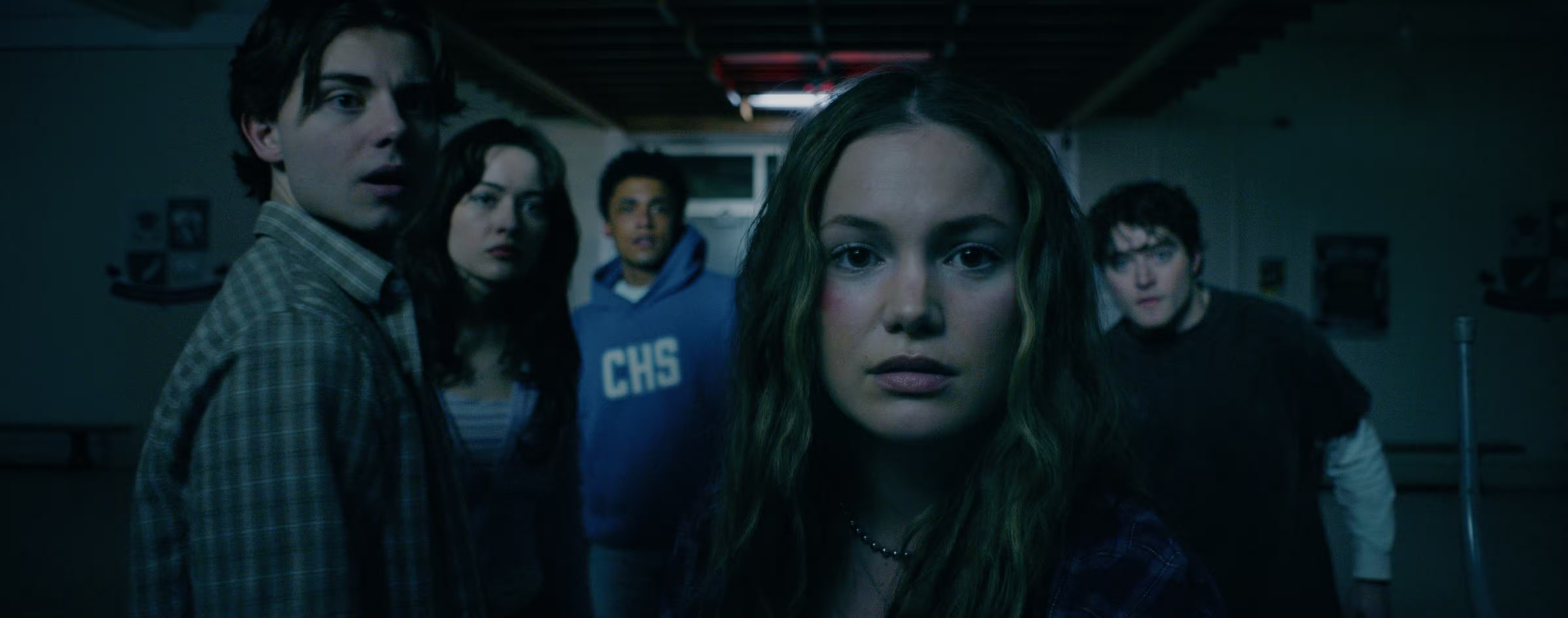


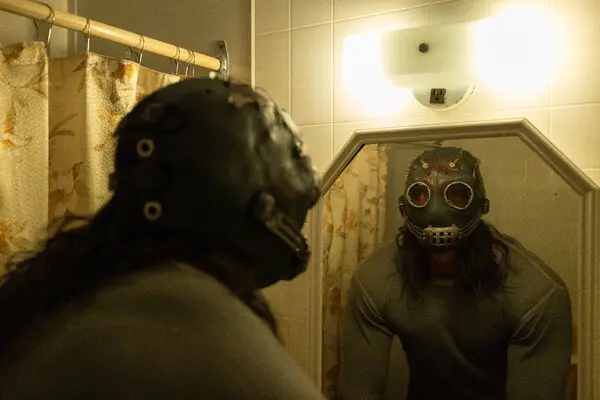
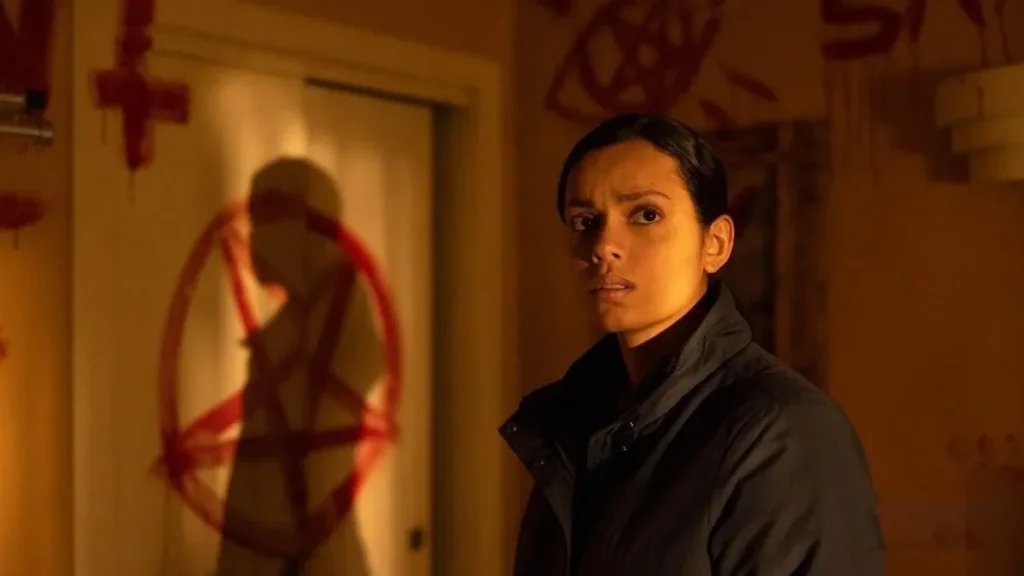
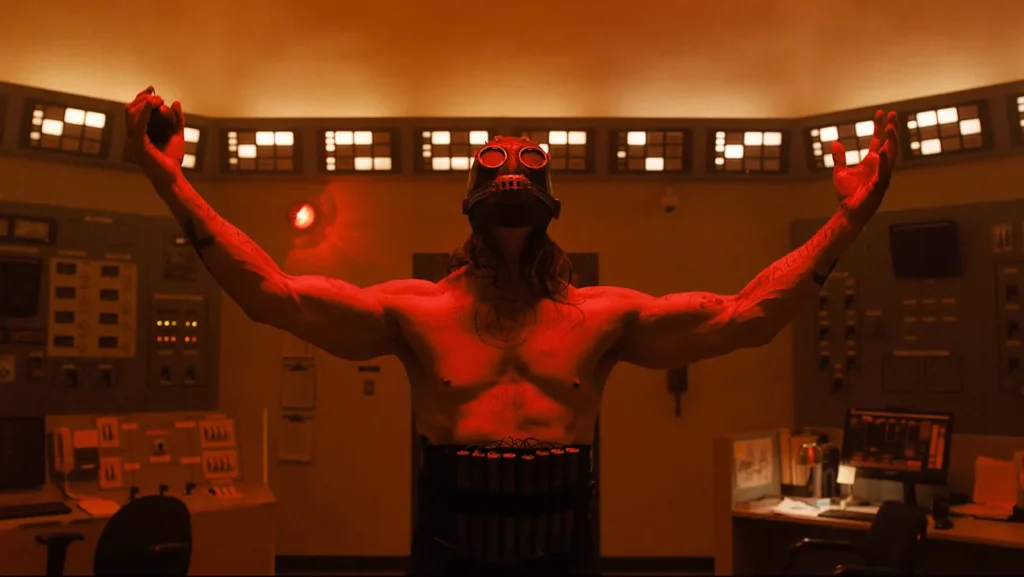
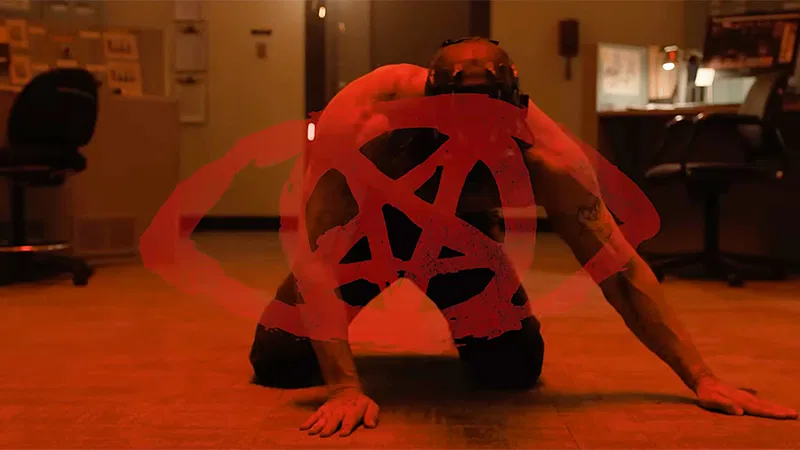


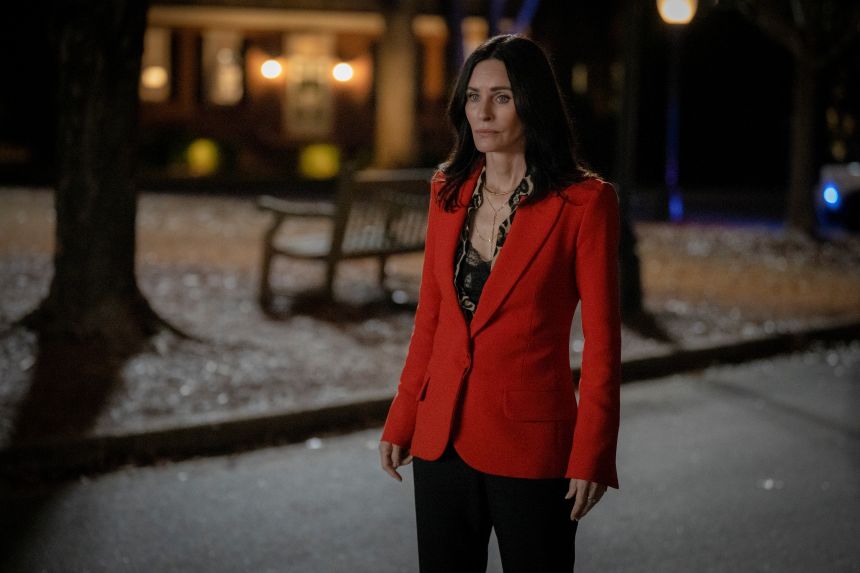
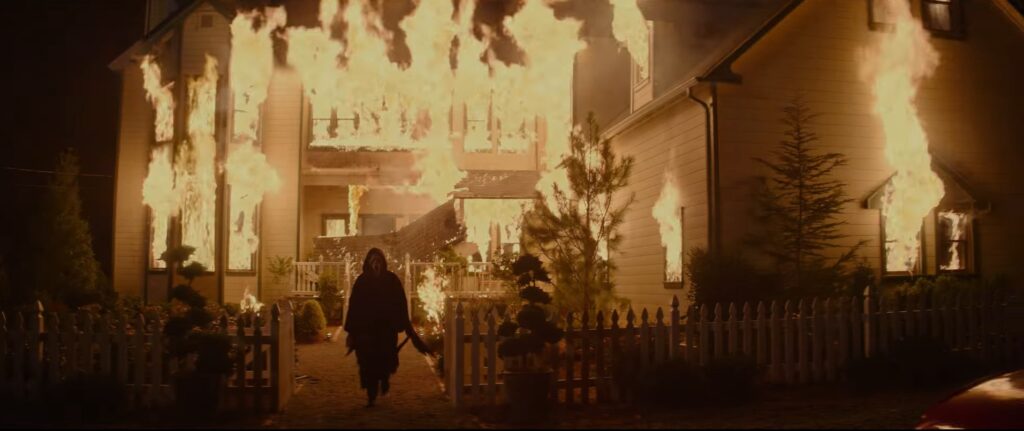
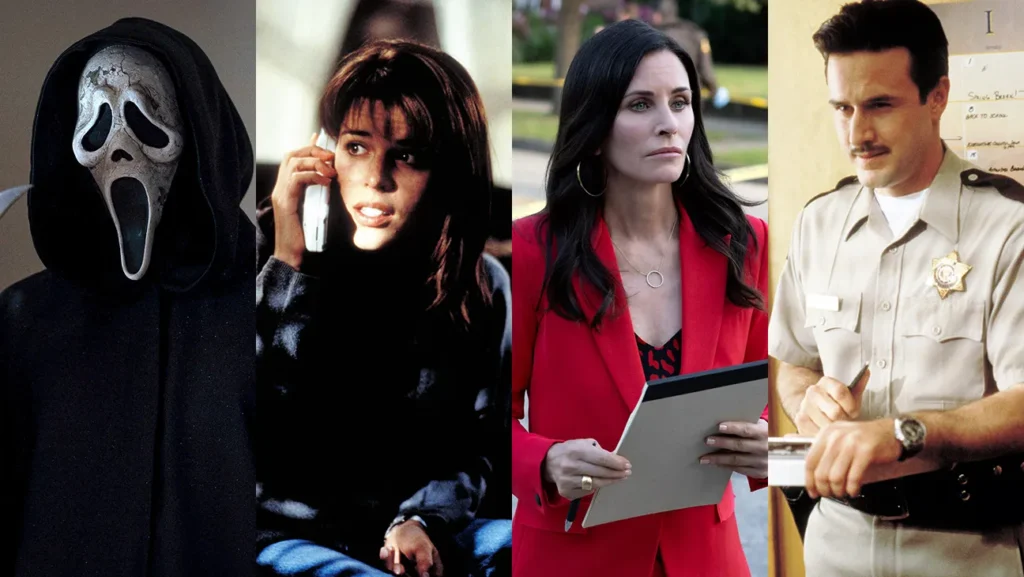






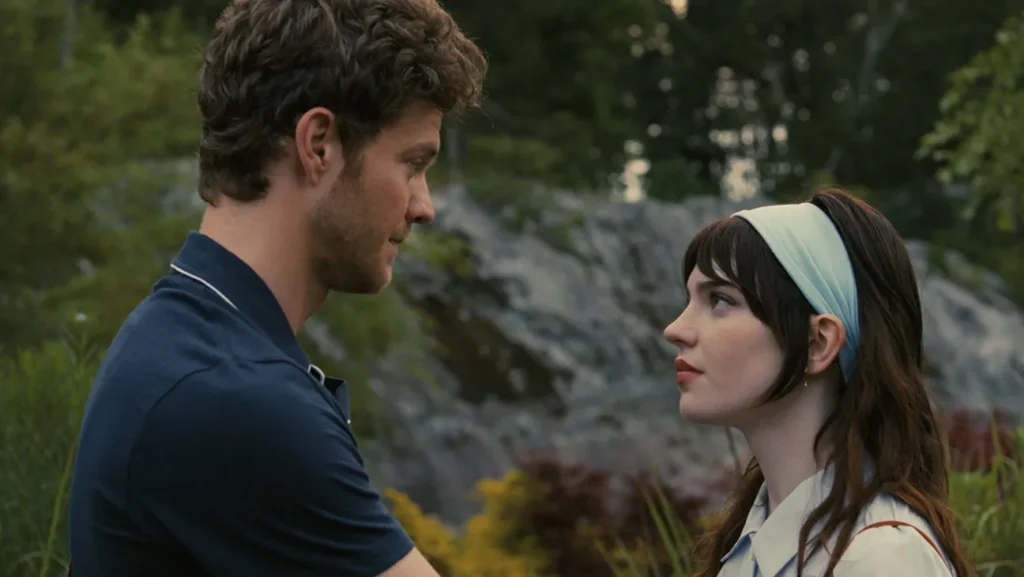

 A late-night moment where engineering meets ethics, created with AI.
 Photo by







 Photo by